“Sold 5.6 trillion won in Korean stocks, bought 10 trillion won in U.S. stocks” ... Retail investors shift to the U.S. stock market
- Input
- 2026-10-12 04:20:00
- Updated
- 2026-10-12 04:20:00
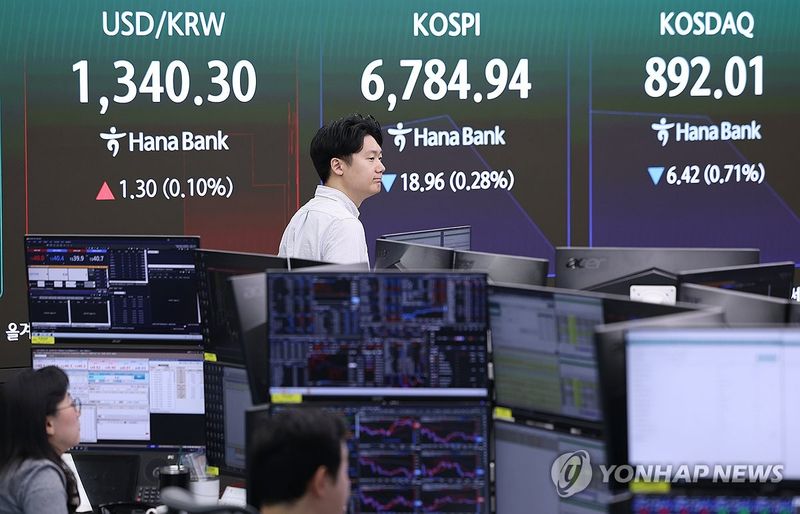
[Financial News] While the KOSPI has failed to recover the 7,000 level, individual investors have been selling domestic stocks and increasing their purchases of U.S. stocks. In the third quarter, they net sold more than 5 trillion won in domestic stocks, while more than 10 trillion won in buying funds flowed into U.S. stocks.
Samsung Electronics reported its highest-ever earnings, but the domestic stock market has been unable to shake off the pressure from interest rates and global oil prices. By contrast, the U.S. stock market has maintained its upward trend on expectations for growth in the artificial intelligence (AI) industry, prompting individual investors to increase their purchases of overseas stocks.
According to data from the Korea Exchange and Korea Securities Depository on the 11th, individual investors net sold shares worth 5.5902 trillion won on the KOSPI market in the third quarter of this year (July to September). Net sales in September alone reached 14.197 trillion won.
Over the same period, individual investors made net purchases of U.S. stocks worth $7.63224 billion (approximately 10.1468 trillion won). In domestic stocks, sales exceeded purchases, while U.S. stocks saw net buying.
In the first half of the year, individual investors led the stock market’s rise by net purchasing 99.1737 trillion won worth of domestic stocks. In the second half, however, sales of domestic stocks and purchases of U.S. stocks have become more prominent. Demand from individual investors for U.S. stocks has continued, and the value of U.S. stocks held in custody has also exceeded $200 billion.
Differences in returns between domestic and overseas stock markets are also influencing investors’ choices. The KOSPI climbed to 9,114.55 last June, setting an all-time high, but then turned downward.
Last week, the KOSPI fell 5.39% over the week to close at 6,625.93. Despite Samsung Electronics posting third-quarter operating profit in the 107-trillion-won range, continued selling by foreign investors and institutions pushed the index further away from the 7,000 level.
In the United States, rising share prices of AI-related companies are supporting the stock market. The won-dollar exchange rate’s fall from the 1,500-won range to the mid-1,300-won range also affected individual investors’ purchases of U.S. stocks. The cost of currency conversion fell because fewer won were needed to buy dollars.
Analysts said global investment funds are concentrating on the AI industry, which has strong growth prospects even in a high-interest-rate environment. They also said that the rise in the won’s value, which has reduced the burden of buying dollars, has contributed to domestic individual investors’ increased investment in the U.S. stock market.
The release of the United States’ September Consumer Price Index (CPI) and Producer Price Index (PPI) is seen as a key factor for the domestic stock market this week. Some forecasts also suggest that stock price volatility could increase depending on movements in U.S. Treasury yields and global oil prices.
Expectations for improved earnings at semiconductor companies could help limit declines in share prices. However, analysts say the domestic stock market may struggle to stage a clear rebound if pressure from interest rates and global oil prices persists.
Meanwhile analysts also say that, for the domestic stock market to rebound, external uncertainties such as interest rates and oil prices need to ease alongside improvements in corporate earnings. If the KOSPI fails to recover the 7,000 level and continues to move around similar levels, individual investors may continue buying U.S. stocks.
[email protected] Han Seung-gon Reporter