[Editorial] Labor issues are piling up; normalizing the social dialogue body is urgent
- Input
- 2026-10-11 19:12:50
- Updated
- 2026-10-11 19:12:50
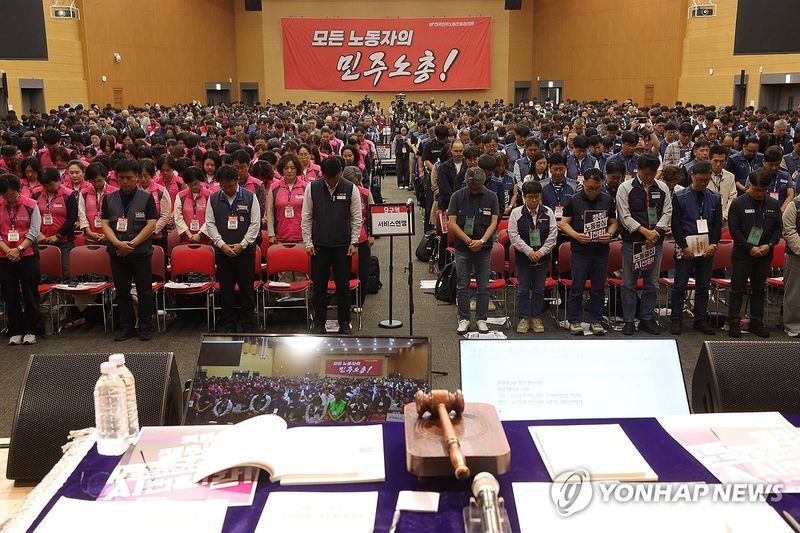
The long-awaited KCTU participation has once again hit a roadblock. At its extraordinary delegates’ convention on the 7th, the KCTU sought to hold a vote on whether to return to the ESLC, with key conditions including consensus-based decision-making. But about 270 members of the opposition faction left, and the vote was called off for lack of a quorum.
The KCTU vote’s failure is nothing less than a betrayal of public expectations. Despite putting forward major issues as conditions for joining the ESLC, the KCTU let the vote fail in the face of opposition from its dissenting faction. It is even questionable whether the union intends to join the ESLC at all. Despite the many pressing labor issues piled up, there is concern that the union’s “knee-jerk opposition” may be doing nothing but sowing confusion in workplaces.
Even if the KCTU’s willingness to reach an agreement is confirmed, many hurdles remain before the ESLC can resume normal operations. The key is to establish governance that people can agree with and abide by, rather than reducing the ESLC to a forum for formal decision-making. The government appears to be taking an open-minded stance, even willing to accept consensus-based decision-making. It seems prepared to accept the necessary conditions favorably, provided the ESLC can resume normal operations. Even so, it will not be easy for the ESLC to reach a unified position, as it brings together stakeholders representing the demands of diverse groups.
Conflict and strikes between labor and management continue unabated in South Korea. Data obtained by the office of People Power Party lawmaker Kim Wi-sang from the Ministry of Employment and Labor show that workdays lost through September this year totaled 489,190. That is already about 95,000 more than last year’s total of 394,000. Some predict that, once the figures are tallied through year-end, the total will reach its highest level in nine years, since 2017, when 862,000 days were lost. In other words, now is the time to activate the social dialogue body and resolve labor conflicts that are spreading like wildfire.
Labor-management conflicts and strikes have intensified with the recent implementation of the Yellow Envelope Act, and even more contentious issues lie ahead. The government is pursuing plans to apply special labor provisions in Mega Special Zones, while the expanded adoption of artificial intelligence (AI) and the spread of specially employed and platform workers are changing the very nature of jobs. Issues on which labor and management are sharply divided, including raising the retirement age and protecting platform workers and freelancers, are also lined up for discussion.
None of these issues can be resolved through the unilateral demands of either labor or management. When workplaces sink into a quagmire of conflict, everyone ultimately pays the price. Normalizing the ESLC is therefore a critical task in its own right, as well as a way to reduce these social costs. I hope all stakeholders engage in earnest, recognizing that now is the golden time to restore the ESLC as a fully constituted body.