Yemen’s Houthi rebels warn of further strikes on Saudi airports, saying “Saudi Arabia is responsible”
- Input
- 2026-10-11 17:53:22
- Updated
- 2026-10-11 17:53:22
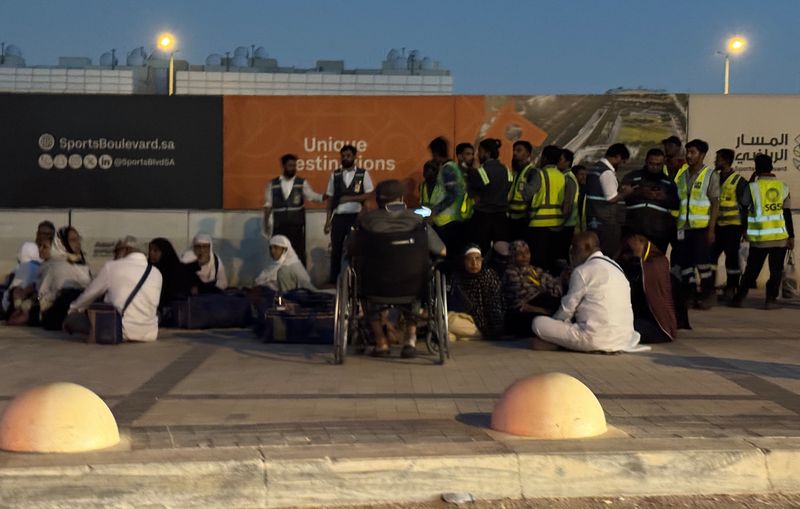
[Financial News] Yemen’s Houthi rebels, who have been attacking airports and key infrastructure on the Saudi mainland since the 5th (local time), have hinted at another large-scale airstrike targeting airports. They also pressured airport users and personnel to leave the area.
According to Saba News Agency, a media outlet run by the Houthi rebels, their spokesman Yahya Saree issued a statement on the 11th, saying, “I reiterate my warning to all airlines, experts, employees and travelers using Saudi airports and airspace.” He warned, “All airports in Saudi Arabia, except those in the Islamic holy cities of Mecca and Medina, could be potential targets and theaters of operations for our forces.”
Pointing to the expansion of Saudi Arabia’s offensive, Saree said, “We will establish a policy of responding ‘airport for airport, blockade for blockade, escalation for escalation’ until our objectives are achieved.” He added, “Everyone must take our warning seriously, and the Saudi government bears full responsibility for any failure to defend itself (including failures to intercept incoming projectiles with its air defenses).”
After nearly 30 years of dictatorship, Yemen saw President Ali Abdullah Saleh ousted and a transitional government established in 2011. President Abdrabbuh Mansur Hadi was elected head of the transitional government. However, the Houthis, an armed group from the Shia branch of Islam, joined forces with remnants of the Saleh government, launched an uprising and seized the capital in 2014.
Saudi Arabia, the leading Sunni Muslim power, formed a coalition with eight Middle Eastern countries, including Egypt, to oust Shia forces backed by Iran, and began airstrikes targeting the rebels in March 2015. The United States provided Saudi Arabia with military supplies and intelligence at the time, but declared an end to its support under the Joe Biden administration in 2021. Saudi Arabia also entered a ceasefire through UN mediation in April 2022.
The front in Yemen became dangerous again when the Houthi rebels resumed missile and drone attacks targeting Saudi cities this past July. On the 4th, the Saudi-led coalition and Yemeni government forces announced the launch of “Operation Dawn of Yemen” to retake Yemeni territory controlled by the Houthis, and began moving to reclaim key positions around the Bab el-Mandeb Strait, which connects the Red Sea and the Gulf of Aden.
Since the 5th, the Houthi rebels have responded with concentrated strikes on airports and oil refineries on the Saudi mainland. Attacks on Riyadh and Abha airports on the 6th and 7th left three people dead and 36 injured. On the 8th, two attacks targeting Riyadh’s King Khalid International Airport killed three people, including the captain of a Saudi airline.
On the 10th, Saudi Arabia’s General Authority of Civil Aviation (GACA) announced that King Khalid Airport had again been hit by a Houthi long-range projectile, leaving at least 12 people dead and 309 injured.
[email protected] Park Jong-won Reporter