U.S. cuts off ICC’s financial lifeline; Japan and Europe demand: “Lift the sanctions”
- Input
- 2026-10-11 16:16:51
- Updated
- 2026-10-11 16:16:51
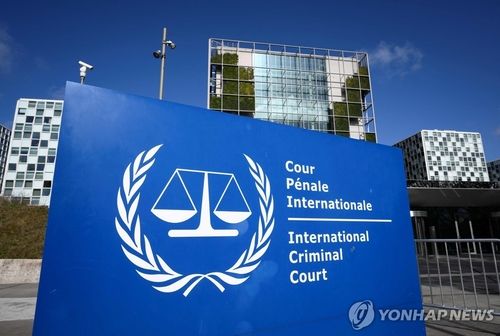
[The Financial News, Tokyo—Correspondent Seo Hye-jin] The Japanese government publicly expressed concern over U.S. sanctions against the ICC, saying they “are incompatible with Japan’s position.” The Bureau of the ICC Assembly of States Parties, comprising 21 countries including Japan, also called for the sanctions to be lifted. The United States, meanwhile, said in a call between the U.S. and Japanese foreign ministers that the sanctions were necessary to protect its sovereignty.
According to NHK, The Nikkei and other outlets on the 11th, Japanese Chief Cabinet Secretary Kihara Minoru said on an NHK program that he was “deeply concerned” about U.S. sanctions against the ICC. He stressed that “Japan consistently places importance on the rule of law in the international community and supports international courts, including the ICC.”
Foreign Minister Motegi Toshimitsu also spoke with U.S. Secretary of State Marco Rubio for about 15 minutes the previous evening and conveyed Japan’s position. According to the U.S. State Department, Rubio explained that the sanctions were necessary to respond to actions threatening U.S. sovereignty. Earlier, Motegi had also spoken with ICC President Akane Tomoko to discuss how to respond going forward.
In a statement on the 10th local time, the Bureau of the ICC Assembly of States Parties criticized the measure as an attempt to obstruct the independent judicial functions of the court and its staff. It called on the United States to lift even the existing sanctions against individuals, including President Akane. The foreign ministers of eight countries, including Japan, the United Kingdom, Germany, France and Canada, had also opposed the sanctions in a joint statement.
On the 9th, the Trump administration expanded its sanctions from individual judges to the ICC as a whole. It froze assets in the United States and, as a rule, prohibited transactions with U.S. companies, while allowing a 180-day grace period for some transactions needed to maintain operations. The United States, which is not a member of the ICC, maintains that it cannot recognize the court’s authority to prosecute U.S. citizens. The move also reflects backlash against the ICC’s issuance of an arrest warrant for Israeli Prime Minister Benjamin Netanyahu in 2024.
Europe is seeking ways to prevent the sanctions from disrupting the ICC’s operations. If access to the dollar payment network is blocked, transfers to overseas offices and support for victims of war crimes could be disrupted. If European banks, concerned about further U.S. sanctions, also halt transactions, paying staff salaries and utility bills could become difficult.
European countries, including the Netherlands, are asking companies in their jurisdictions to maintain transactions with the ICC. Within the European Union (EU), applying a “blocking statute” that prohibits companies from complying with foreign sanctions is being discussed as a possible response. Support measures could be discussed at the European Council meeting on the 15th and 16th.
The ICC has also been switching its information systems to European-made ones and moving to vendors that operate only within the EU.
However, it remains uncertain whether legal protections alone can prevent transactions from being halted. When the United States reinstated sanctions against Iran in 2018, the EU applied its blocking statute, but many European companies prioritized their U.S. business and ended their dealings with Iran. This time, too, the effectiveness of the response is likely to hinge on whether financial institutions and companies are willing to risk repercussions in their dealings with the United States.
The ICC is a permanent international criminal court that prosecutes individuals for crimes including war crimes and genocide, and has 125 countries and territories as members. Japan is its largest contributor, paying about 14.6% of the total last year.
[email protected] Seo Hye-jin Reporter