“Less worry about others’ reactions to taking parental leave”... Seoul support brings a “shift in attitudes”
- Input
- 2026-10-11 15:24:05
- Updated
- 2026-10-11 15:24:05
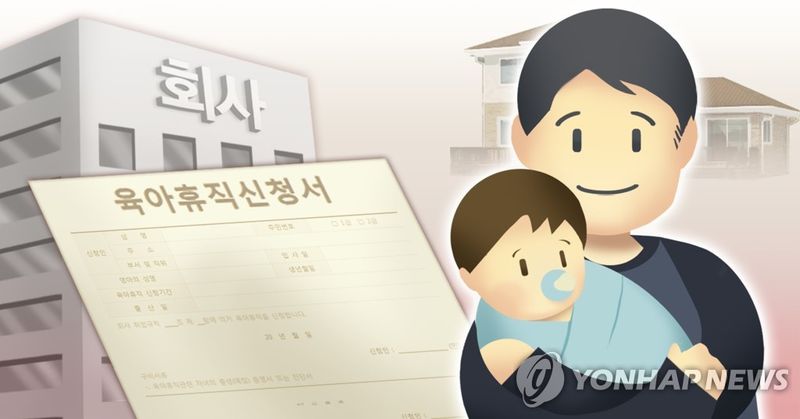
The Seoul Metropolitan Government said on the 11th that, in a survey of 283 companies participating in its ‘Support Program for Companies That Make Raising Children Easier,’ 97.5% of responding companies viewed positively the shift to a company-centered support system. A total of 92.9% said the company grants had helped promote a work-life balance culture.
The biggest benefit companies noticed was a reduction in labor costs. Of the companies that received grants, 91% said the support helped ease their cost burden. This suggests the policy has, to some extent, achieved its aim of creating an environment where employees can more easily use the available programs.
Starting this year, the Seoul Metropolitan Government has added grants for companies to its existing employee-centered support, easing the burden on small and medium-sized enterprises of administering maternity and childcare-related programs.
Companies with employees who have taken maternity leave receive a ‘Maternity Leave Company Support Grant’; those with employees who have returned from parental leave and worked for at least three months receive a ‘Parental Leave Company Support Grant.’ The grants amount to KRW 300,000 per employee per month for up to three months.
Support for employees is also being provided. A key example is the ‘Seoul City Maternity Leave Pay Support Grant,’ which covers up to KRW 900,000 of any income reduction that may occur during the final 30 days of maternity leave. Starting this year, the application process has been simplified so employees can apply directly without going through their companies.
By the end of August, a total of 498 applications for these grants had been received, and about KRW 350 million had been paid out in 460 cases.
There were also many cases of employees taking maternity and parental leave consecutively. The survey found that 60.8% of companies had female employees take parental leave immediately after maternity leave. Male employees had taken paternity leave at 39.2% of companies, while 14.1% had male employees take parental leave after paternity leave.
Changes were also observed in a separate pilot program that enabled employees to take part in childcare by reducing their working hours. In the ‘Pilot Program Supporting Reduced Working Hours for Parents of Young Children,’ which the Seoul Metropolitan Government ran from April through June this year, men made up 61% of participants.
The program allows employees with children aged 12 or younger or children in sixth grade or below, to reduce their working hours by one hour a day without a cut in pay. The Seoul Metropolitan Government provided participating companies with grants of KRW 300,000 per employee per month for up to three months.
Nineteen small and medium-sized enterprises and 46 employees took part in the pilot program. Although working hours were reduced by one hour a day, time spent focused on work actually increased by 0.11 hours, from 5.21 hours before the program to 5.32 hours afterward. Direct childcare time on weekdays also rose by 0.21 hours, from 3.37 to 3.58 hours. Life satisfaction increased by 0.95 points, from 6.58 to 7.53 out of 10.
The high participation rate among male employees stands out. Six or more out of every 10 participants were men, and employees at the middle-manager level or above accounted for 65.2% of participants.
Companies also said that shorter working hours do not necessarily lead to lower work efficiency. A total of 88.2% of participating companies said the reduced-hours program had helped improve organizational culture and work practices, support skilled employees’ career continuity, and encourage them to stay long term.
Based on the results of this program, the Seoul Metropolitan Government plans to expand support for companies and establish a system that provides continuous assistance from maternity leave through parental leave and reduced working hours after employees return to work. In particular, its policy will focus on creating conditions that enable companies, as well as individual employees, to operate the programs reliably.
With the number of births in Seoul continuing to rise, the view is that expanding family-friendly workplaces is a task in sustaining the rebound in the birth rate. Meanwhile, the number of births in Seoul has increased for 28 consecutive months since April 2024. The 4,443 babies born in July this year marked the highest figure for that month since July 2019. The cumulative numbers of births and marriages from January to July this year also rose by 17.9% and 12.4%, respectively, compared with the same period last year.
Ma Chae-suk, head of the Seoul Metropolitan Government’s Women and Family Office, said, “For the rebound in the birth rate to continue, a work-life balance culture must take root, and companies are at its center.” She added, “Having seen positive changes for both companies and employees, we will strengthen our support for creating family-friendly workplaces.”
[email protected] Lee Seol-young Reporter