'A Robot That Sorts Laundry, AI That Monitors Swallowing': Japan’s Care Solution? [On the Scene]
- Input
- 2026-10-12 05:59:00
- Updated
- 2026-10-12 05:59:00
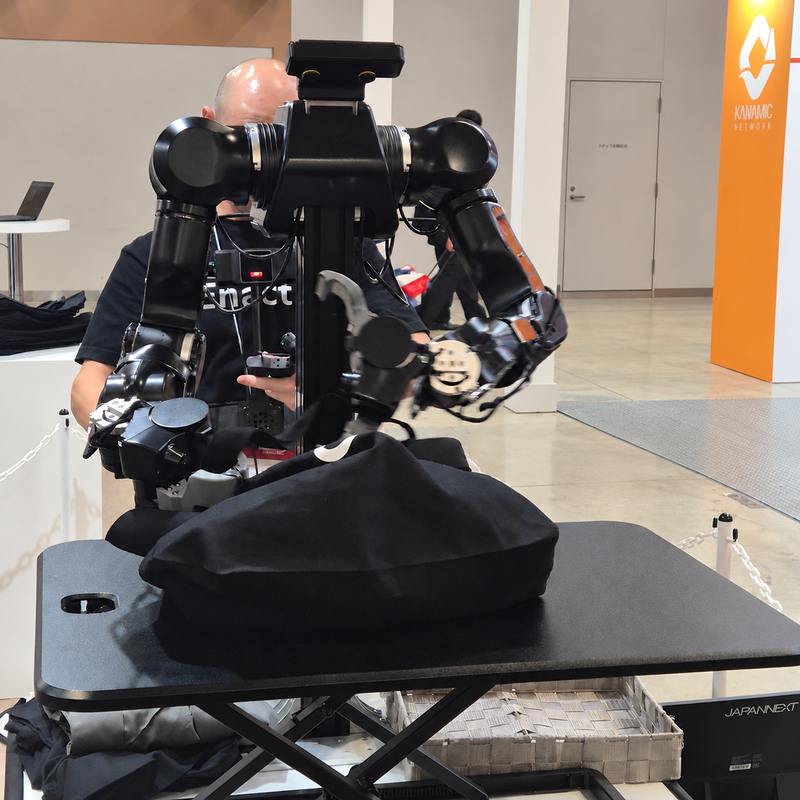
Tokyo Big Sight in Koto Ward, Tokyo, Japan, on the afternoon of the 8th. At the booth of robot developer Enactic, which took part in the International Home Care and Rehabilitation Exhibition (H.C.R. 2026), the Ena care-assistance robot was shown sorting laundry. Remotely operated by a company representative, it demonstrated folding laundry belonging to a facility resident and placing it in a bag.
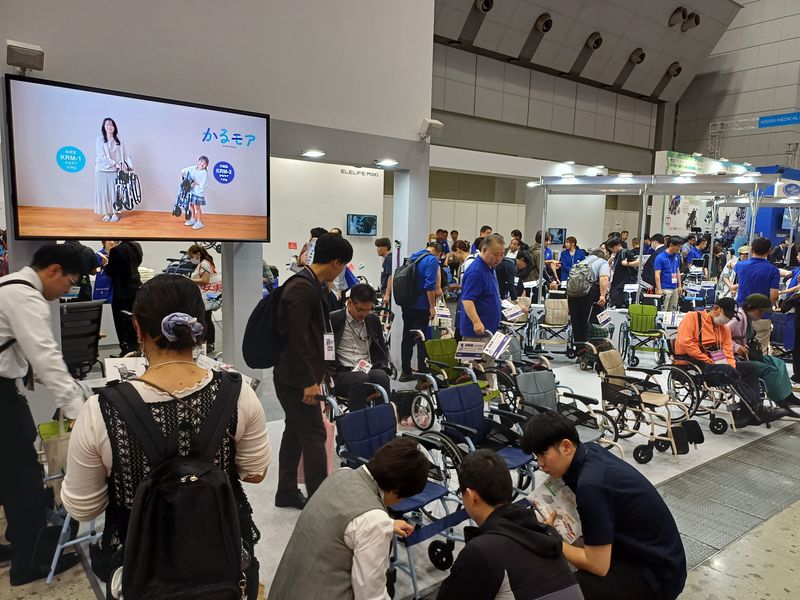
The robot, which is still in development and testing, is being trained to handle peripheral tasks involved in care, such as cleaning and sorting laundry. A company representative explained, “We are developing it so that tasks that do not necessarily have to be performed directly by care staff can be delegated to robots.”■Toyota and Nissan Set Up Large Booths... Panasonic and TOTO Also Take PartThe event, held from the 7th to the 9th, showcased a wide range of technologies and services, from products supporting independent living for older adults and people with disabilities—including mobility and walking aids; beds, transfer and care-assistance equipment; bathing, elimination and hygiene products; rehabilitation and health-maintenance equipment; care robots, sensors and information and communications technology (ICT); and age-friendly housing and daily-living aids—to care robots, ICT and systems for operating welfare facilities.
Technologies that delegate repetitive tasks to robots and use data to monitor users’ conditions were particularly prominent, drawing crowds of visitors.
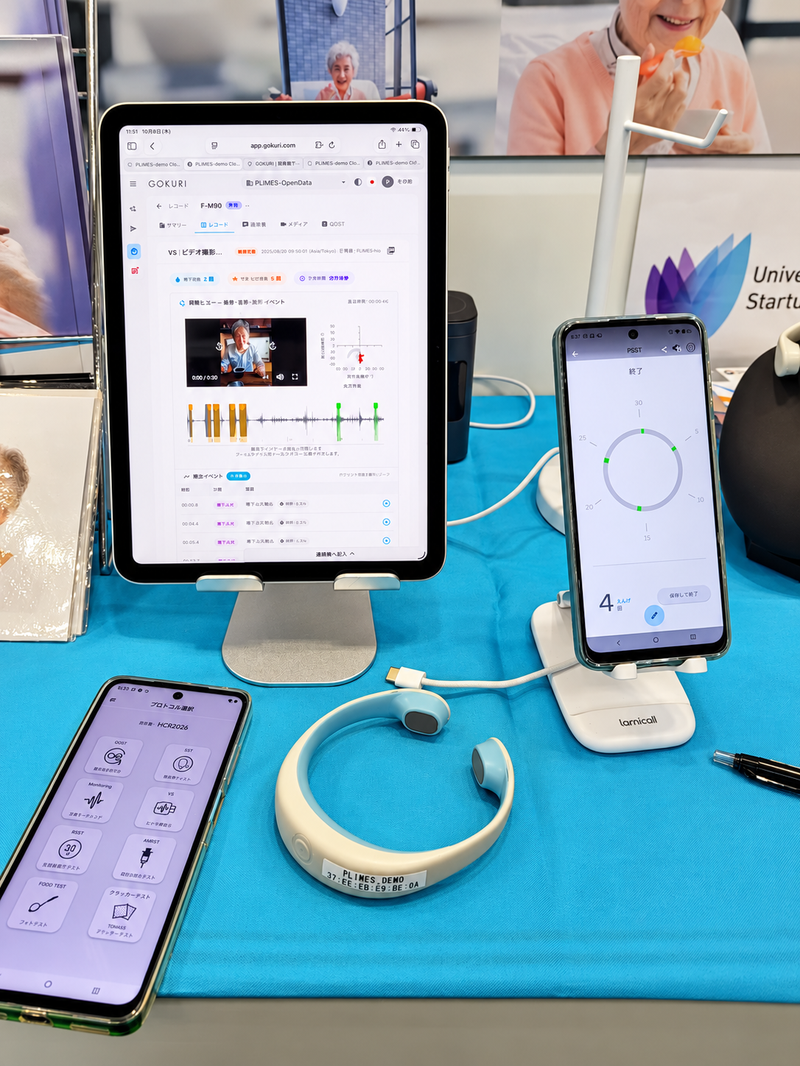
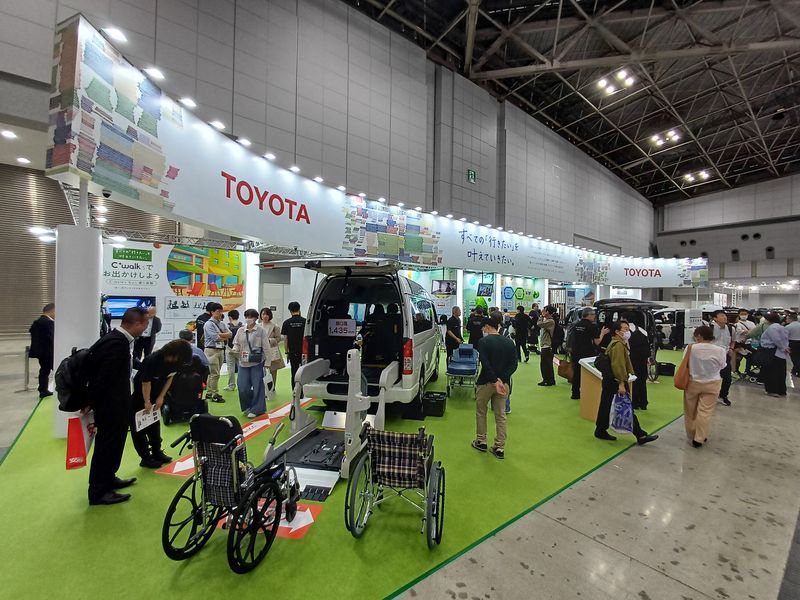
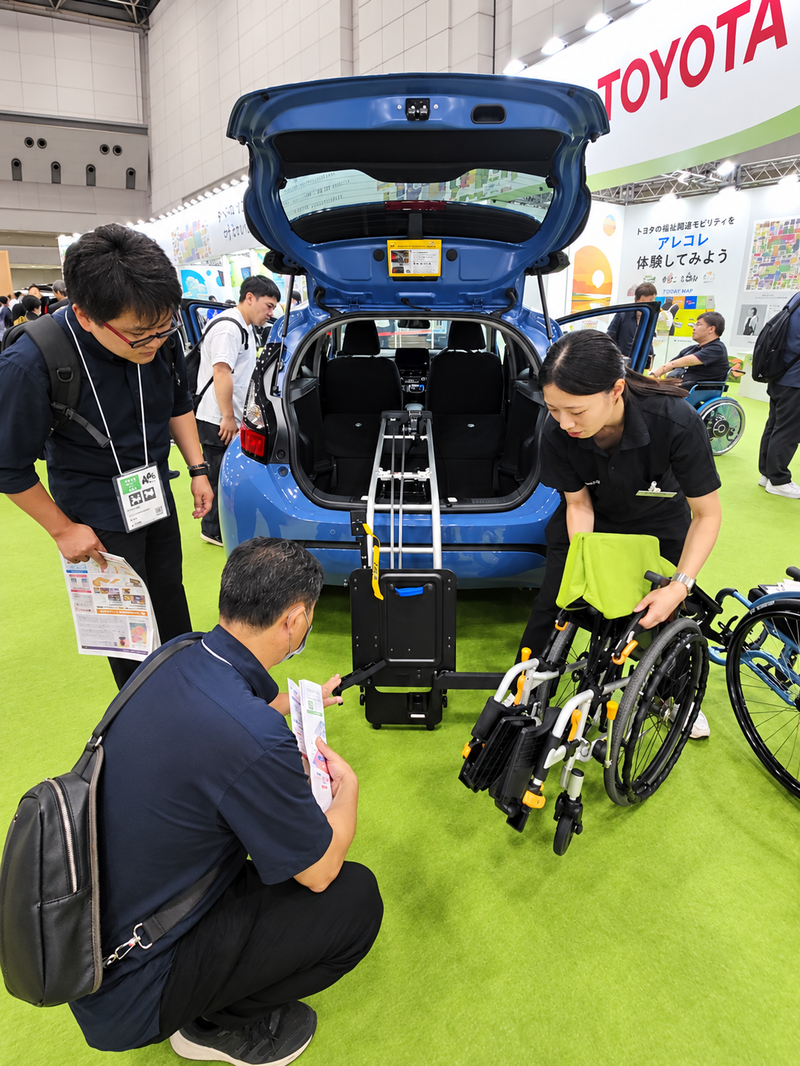
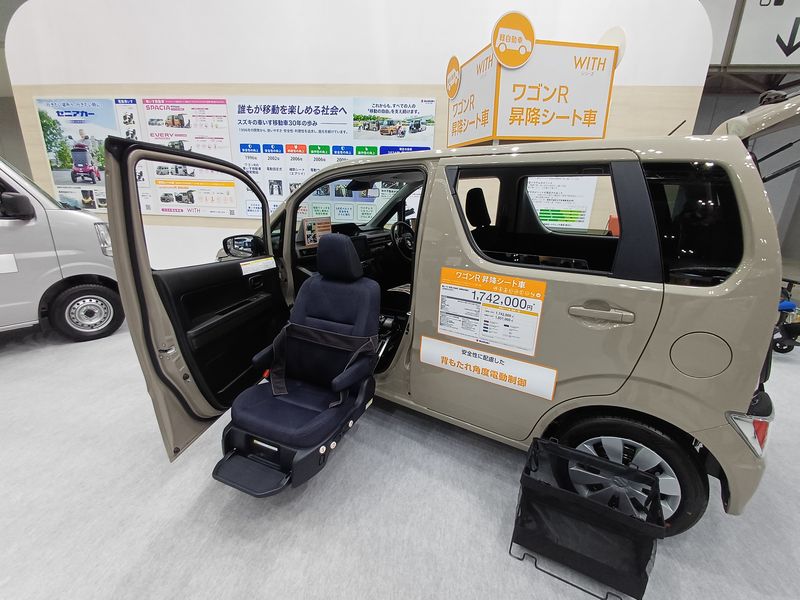
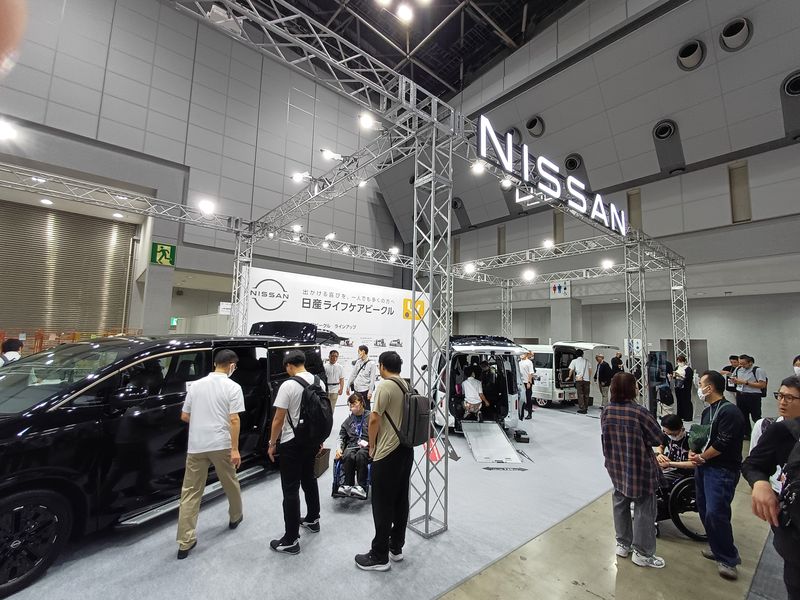
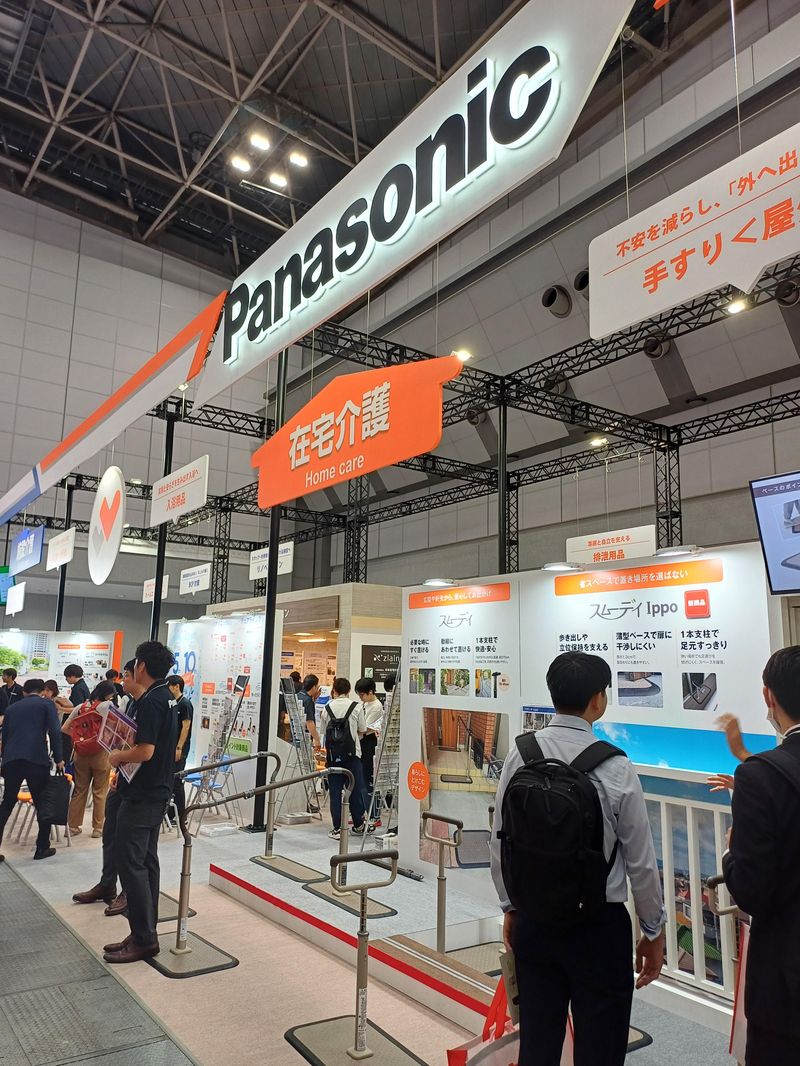
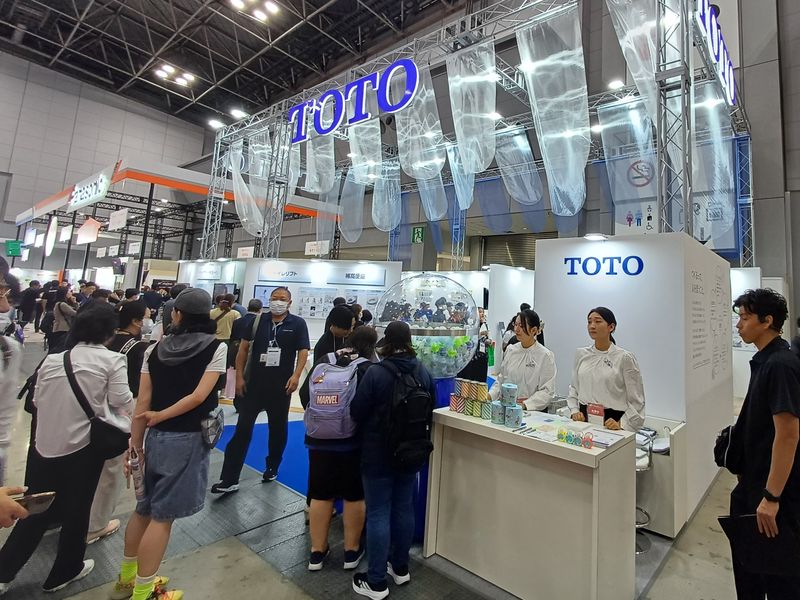
Automakers including Toyota Motor Corporation, Nissan Motor Co., Ltd., Daihatsu Motor Co., Ltd. and Suzuki drew attention with large exhibition booths. Electronics and home-equipment companies such as Panasonic Corporation and TOTO also took part, showcasing technologies to support the daily lives of older adults and people with disabilities, from accessible vehicles and mobility aids to home and hygiene equipment. A total of 382 companies participated, including 44 from overseas, and cumulative attendance over the three days was 110,958, according to the organizers.■Monitoring Meals, Sleep and Elimination Through DataAt the booth of Primes, a medical and welfare technology startup founded by researchers from the University of Tsukuba in Japan, a small sensor worn around the neck was on display. A tablet beside it showed video of a meal and waveforms of the accompanying sounds.
The device collects sounds through vibrations in the neck area, and AI distinguishes swallowing sounds. Experts use the information as a reference when reviewing the video and audio to adjust eating methods or food texture. Data recorded at facilities or at home can also be shared remotely.
A decline in swallowing function is also linked to the risk of pneumonia in older adults. Aspiration pneumonia can occur if food, saliva or other material enters the airway along with bacteria. In some cases, coughing or choking is not obvious, making it difficult to spot a problem from the person’s eating behavior alone. Recording swallowing sounds together with video can help experts assess a person’s condition while eating.
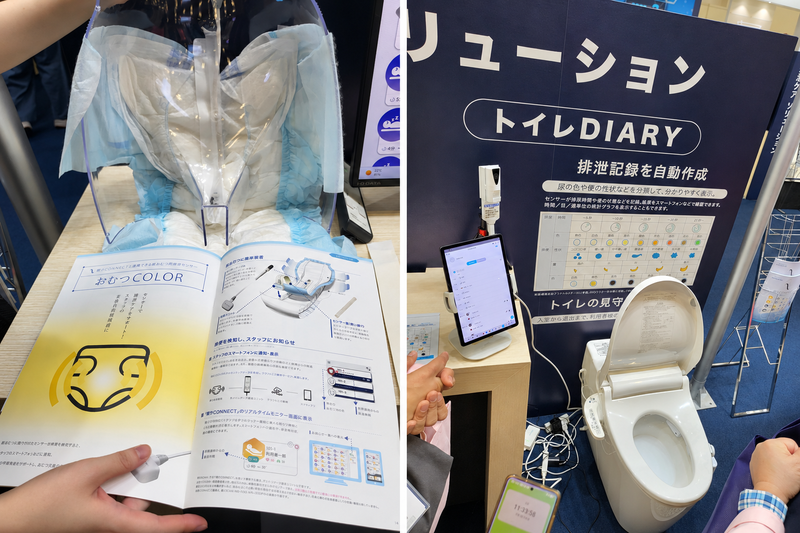
Staff need to check on sleep and elimination as well as meals. At the booth of Paramount Bed, a specialist in medical and nursing-care beds, a diaper model, an elimination-detection device and a tablet displaying records of toilet use were exhibited together near a bed.
The system links sleep information collected by a sensor beneath the mattress with information from the diaper’s elimination detector and records of toilet use. Staff can review information gathered for each user and use it as a reference when changing diapers or assisting users to the toilet. A urination-prediction device from another company can also be connected. The setup adds sleep and elimination management functions to a care bed that supports the body and helps users change position.■Expanded Device Connectivity... Seeking Ways to Address Staff ShortagesTechnology for viewing information from multiple devices together was also featured in a separate special exhibition. The Tohoku University laboratory and Brightvie, participants in the “Technology × Care” exhibition, presented a system that allows users to monitor and operate sensors, call devices, intercoms and robots from different companies through a single app. It is designed to reduce the hassle of switching between different apps to check devices that have already been installed.
The scope of support from the Japanese government has also broadened to include areas such as meals and rehabilitation. In 2024, the Ministry of Health, Labour and Welfare (MHLW) and the Ministry of Economy, Trade and Industry added functional training, meal and nutrition management, and support for the daily lives and care of people with dementia to the priority areas for care technology. Some areas explicitly included links with other devices and systems.
The backdrop is growing demand for care and the difficulty of securing enough staff. The MHLW estimated that about 2.72 million care workers would be needed in 2040, 570,000 more than in 2022.
The exhibition presented two approaches to addressing staff shortages: developing automation for peripheral tasks such as cleaning and laundry, and efforts to reduce staff time spent checking and recording information by connecting data on meals, sleep and elimination. Moving beyond the introduction of individual devices to integrating them into actual care workflows has emerged as a key challenge for Japan’s care technology sector.
[email protected] Seo Hye-jin Reporter