“Eight hundred million won for a two-bedroom home in Gangbuk?”... How much do you need to earn to raise a child in Seoul? [House Signal]
- Input
- 2026-10-11 19:00:00
- Updated
- 2026-10-11 19:00:00
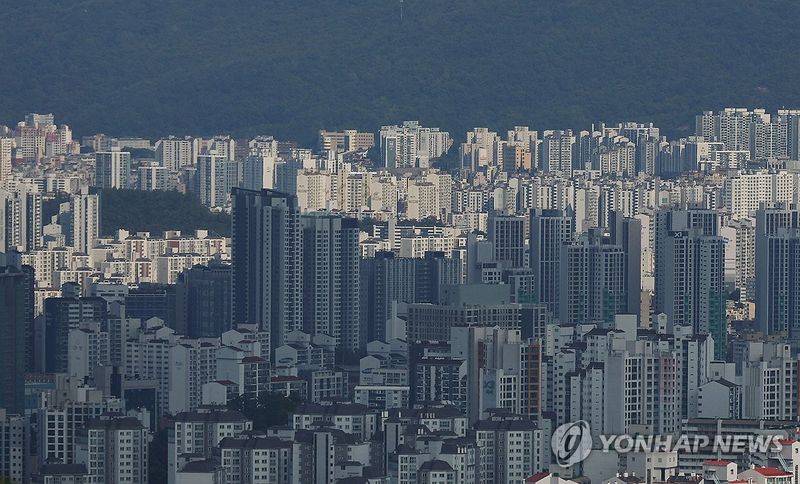
[The Financial News] ] For an ordinary family of three with a seven-year-old child, a 59-square-meter (about 24-pyeong) apartment is by no means an extravagant place to live. One main bedroom for the couple, a small room for the child, and a small living room where the whole family can sit together after work. It may feel cramped to some, but it is the minimum home the three need to enjoy an ordinary daily life.
But in Seoul today, the cost of renting this modest, ordinary space for two years is cruelly steep. This is not about luxury high-rise apartment complexes in Gangnam. It is the harsh reality unfolding in the jeonse market for small apartments in non-Gangnam areas of Seoul, including Eunpyeong, Seongbuk and Dongdaemun.
■ The weight of 800 million won... a mirage reachable only after saving 3 million won a month for 22 years
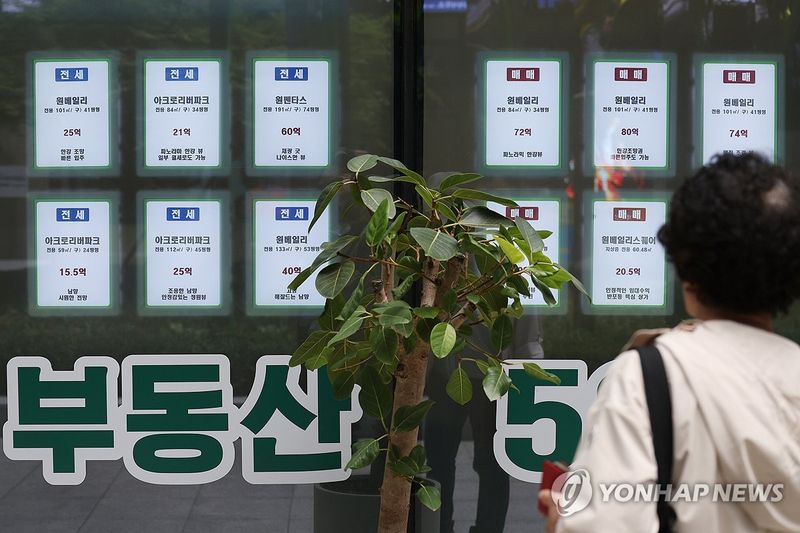
What does an 800 million won jeonse deposit mean for an ordinary office worker? Assuming they save 3 million won every month without fail, they would save 36 million won in a year and just 360 million won after 10 years. It would take no less than 22 years and three months to amass 800 million won.
That figure is based on the unrealistic assumption that there are no interest or investment returns and that jeonse prices do not rise by even a single won during that time.
In effect, money that a young person who starts working in their mid-20s can barely save by their late 40s—only by drastically cutting essential expenses at every stage of life, such as marriage, having and raising children, and supporting their parents—is spent to obtain the “right to live in someone else’s home.”
These figures are not mere conjecture; they are borne out by objective actual transaction data.
On the 11th, according to the Actual Transaction Price Disclosure System of the Ministry of Land, Infrastructure and Transport, a 59-square-meter unit at DMC Central Xi in Jeungsan-dong, Eunpyeong-gu, Seoul, was leased on a jeonse contract for 800 million won in July. That was 50 million won more than the 750 million won paid just five months earlier, in February.
Prices have risen even more sharply in some areas. The jeonse price for a 59-square-meter unit at Raemian Gileum Centerpiece in Gileum-dong, Seongbuk-gu, jumped from 650 million won in January to 830 million won in July. That was a surge of 180 million won in just six months, or 30 million won a month on average.
A unit of the same size at e-Pyeonhansesang Cheonggye Central Foret in Yongdu-dong, Dongdaemun-gu, also traded for 820 million won in September, up 70 million won from the beginning of the year. Meanwhile, a 59-square-meter unit at e-Pyeonhansesang Mapo River Park in Yonggang-dong, Mapo-gu, found a tenant for 997.5 million won in August, effectively heralding the “1 billion won era” for jeonse on small apartments.
■ Borrow 500 million won and pay 2.08 million won a month in interest alone... a home that has become a “bill”
If it is impossible to save the deposit on your own, you ultimately have to rely on a loan. Suppose you have saved 300 million won and borrow an additional 500 million won to rent a home on an 800 million won jeonse deposit.
At an annual interest rate of 5%, the interest alone would amount to 25 million won a year, or about 2.08 million won a month, payable to the bank. It is pure interest expense that vanishes into thin air without paying off even a single won of principal. With 2.08 million won a month, a family could cover a child’s education expenses and afford weekend meals out or trips together, giving them some breathing room in daily life. The jeonse deposit is returned at the end of the lease, but the interest paid to the bank is a net household loss that never comes back.
Some ask why people do not move to the outskirts to cut housing costs. But for dual-income households in their 30s and 40s raising young children, moving is not simply a shopping trip to find a “cheaper price tag.”
The moment they lower their deposit and are pushed to Seoul’s outskirts or the Capital Metropolitan Area, the childcare environment and school district they worked hard to secure for their child are disrupted. The couple’s commutes grow longer, which means losing the evenings they could otherwise spend face-to-face with their child after work and helping with homework. What they have to give up to save on housing costs is not merely physical space, but the time the family could spend together and their quality of life itself.
■ Seoul’s property market, where “ordinary” has become a luxury
With declining jeonse supply coinciding with demand concentrating in preferred areas, there is little sign that jeonse prices will ease. The monthly-rent market, seen as an alternative, is just as punishing.
According to Korea Real Estate Board statistics, the average monthly rent for an apartment in Seoul stood at 1,641,000 won as of August. It is a no-win situation: choose jeonse and you fall into a trap of astronomical upfront costs and loan interest; choose monthly rent and you have to hand over a substantial share of your disposable income every month.
Of course, 800 million won is not the average jeonse price for small apartments across all of Seoul. But the fact that the deposit for a 24-pyeong apartment in a non-Gangnam area has soared to such an unrealistic level raises a serious question for our society.
For most salaried workers who stretch their paychecks to save and live diligently, even holding on to an ordinary two-bedroom home has become a daunting challenge. Having a place where the family can rest easy. The city of Seoul is now turning even that perfectly ordinary, self-evident dream into an exorbitantly expensive luxury.
[email protected] Jeon Sang-il Reporter