‘Secret recording’ excluded, yet homeroom teacher’s child-abuse conviction over ‘bad at studying’ remarks upheld
- Input
- 2026-10-11 14:03:17
- Updated
- 2026-10-11 14:03:17
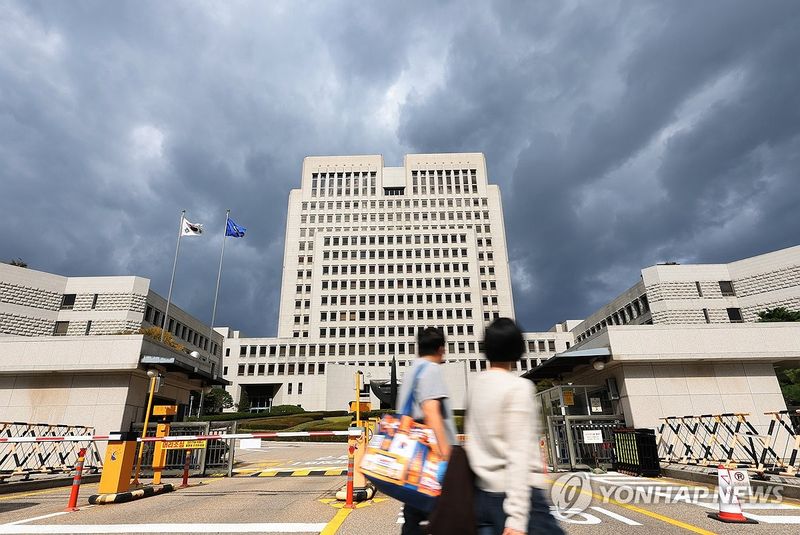
According to legal circles on the 11th, the Supreme Court’s Second Division, with Justice Eom Sang-pil as the justice in charge of the case, on the 10th of last month upheld the lower court’s ruling ordering Teacher A, an elementary school teacher indicted on charges of violating the Child Abuse Punishment Act, to pay a 5 million won fine and complete 40 hours of a child abuse treatment program.
A, who was in the 23rd year of a teaching career, was indicted on charges of repeatedly making remarks such as ‘You should study. How can you be so bad at it?’, ‘What are we supposed to do if you can’t study like that? You’re stressing me out,’ and ‘They did it? By themselves? They didn’t copy it?’ to the victim, who was then 9 years old, in a classroom with other students present. A was the homeroom teacher of a fourth-grade class at an elementary school in Gangseo-gu, Busan, from April 1 to 22, 2024.
The victim’s diary said they had been upset and gone to the bathroom to cry; that they were glad they did not have to see the teacher on weekends; that they felt anxious because of the teacher; and that their confidence was gradually fading because of the teacher.
Around April 8, 2024, the child’s mother began recording classroom conversations by putting a recorder in the child’s bag. She filed a complaint with the school on April 25 that year, and the homeroom teacher was replaced on May 13. A police report was made on May 20. The recording, however, was excluded from evidence starting at the first trial. In January 2024, the Supreme Court ruled that a teacher’s remarks during a classroom lesson fell under ‘conversations between other people that are not made public,’ which the Protection of Communications Secrets Act prohibits recording, and that recordings secretly made by parents could not be used as evidence.
There were two issues: whether the victim’s and the mother’s statements and the diary could be used as evidence of guilt in a case involving an illegally obtained recording, and whether the teacher’s remarks amounted to ‘emotional abuse,’ prohibited under Article 17(5) of the Child Welfare Act. A denied making the remarks and having any intent to abuse, and argued that the child’s and mother’s statements were also secondary evidence derived from the illegal recording. Secondary evidence is evidence obtained by using illegally collected evidence as a lead. As a rule, it cannot be used at trial, but an exception is recognized when circumstances show that the link to the illegal collection has been severed.
In March last year, the Busan District Court’s Western Branch, acting as the court of first instance, found that the remarks had been made based on statements from the victim and the mother, as well as the diary. It found that a homeroom teacher repeatedly telling a particular student in front of young classmates that they were bad at studying posed a significant risk of harming the child’s mental health and development, and that the child had in fact suffered considerable emotional distress. The court sentenced A to one year in prison, suspended for two years, and ordered 160 hours of community service and a five-year ban on employment at child-related institutions.
In January this year, the Busan District Court, acting as the appellate court, also found that most of the remarks constituted emotional abuse outside the scope of legitimate educational activities or student guidance. It found that the victim’s statements were consistent on the main points and that the diary generally corroborated them. The court also cited a survey of 26 students in the same class, in which some said the teacher shouted at students or disregarded, compared and discriminated against them through words and actions.
However, the appellate court found the evidence insufficient to establish emotional abuse in the instance when the student turned around to borrow an eraser and the teacher said something to the effect of, ‘You’re bothering a friend who’s studying,’ and acquitted A on that count in the reasoning of its judgment. A reasoned acquittal is when a charge that is grouped as a single offense with a part found guilty is deemed not guilty, but the court states this only in the reasons for its judgment rather than issuing a separate acquittal in the operative part. The appellate court said there were indications that A had been concerned about improving the student’s academic performance, making it difficult to conclude that A had committed the offense with an affirmative intent to abuse. It reduced the sentence to a 5 million won fine and waived the employment ban.
The Supreme Court also accepted the lower courts’ findings. The panel said, ‘There was no error in the lower court’s ruling that misunderstood the legal principles concerning the exclusionary rule for illegally obtained evidence, the admissibility of secondary evidence, hearsay evidence, the admissibility of transcripts of video recordings, and “emotional abuse” as defined in Article 17(5) of the Child Welfare Act, in a way that affected the judgment.’
[email protected] Kim Dong-gyu Reporter