PPP: “U.S.-South Korea alliance faces threat of collapse; Chung Dong-young and Lee Jong-seok must be dismissed”
- Input
- 2026-10-11 12:38:01
- Updated
- 2026-10-11 12:38:01
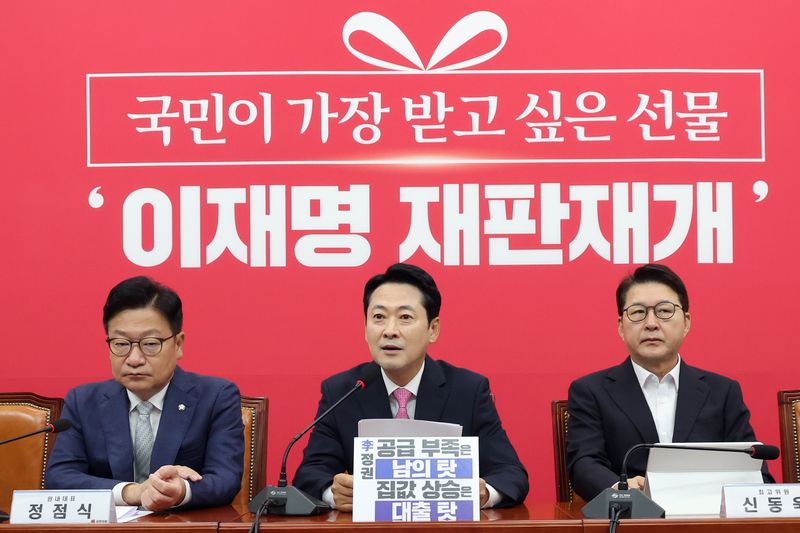
[Financial News] The People Power Party said on the 11th that the U.S.-South Korea alliance was in danger because of the Lee Jae-myung administration’s foreign and security policies, and called for the immediate dismissal of Unification Minister Chung Dong-young and National Intelligence Service Director Lee Jong-seok.
In a Facebook post that day, People Power Party leader Jang Dong-hyeok claimed that “the U.S.-South Korea alliance is moving beyond the level of misunderstanding and heading toward rupture.”
Jang criticized Chung, saying, “Chung Dong-young leaked secrets about the U.S.-South Korea alliance. He sided with North Korea, saying, ‘It cannot be determined that it was a North Korean mine attack.’” He added, “The NIS under Lee Jong-seok was criticized as the main culprit behind ‘targeted oppression’ during the ‘Coupang incident.’”
People Power Party floor leader Jeong Jeom-sik also claimed at a press conference at the National Assembly that day, “The Lee Jae-myung administration is bringing the U.S.-South Korea alliance crisis upon itself in the fields of foreign affairs, security and the economy, while picking and choosing things that North Korea and Russia would like.”
Targeting Minister Chung and Director Lee, Jeong said, “We should no longer call people who only worry about upsetting North Korea the ‘self-reliance faction.’ It is only right to call them the ‘pro-North Korea faction.’” He stressed, “We must first root out pro-North Korea figures within the government who are causing the alliance to distrust us.”
In particular, criticizing Minister Chung’s remark during a parliamentary audit on the 7th that the land-mine explosion in the Demilitarized Zone (DMZ) could not be identified as a North Korean attack, Jeong said, “There should have been coordination before the Ministry of National Defense clearly announced that it was a violation of the Armistice Agreement and a North Korean provocation.” He called it “an attempt to cover up the truth using his own assessment of pro-North Korean leanings.”
He also called the government’s move to have the ambassador to Ukraine return home, following Ukraine’s disclosure that North Korean prisoners of war had been repatriated to South Korea, “an overreach and a serious blunder.”
Jeong said, “Recalling the ambassador will also harm relations with the European Union (EU), which supports Ukraine,” and asked, “Since when have Israel and Ukraine been the Republic of Korea’s principal enemies?”
He went on to call for the complete scrapping of the policy of providing medical assistance to North Korea, and urged countermeasures including installing loudspeakers aimed at North Korea and imposing unilateral sanctions over its illegal cyber activities.
Chief Spokesperson Choi Bo-yoon also criticized the administration in a commentary that day, saying, “Lee Jae-myung’s diplomacy gets slapped in Pyongyang and glares at Kyiv—what on earth is it following?”
[email protected] Kim Kyung-min Reporter