Jeju moves to add 26 buses after cutting 75, redraws route network
- Input
- 2026-10-11 12:28:33
- Updated
- 2026-10-11 12:28:33
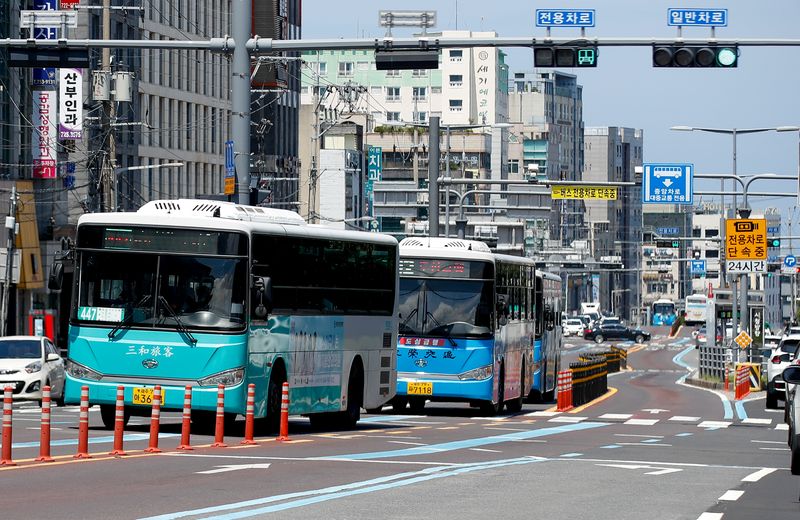
【The Financial News, Jeju = Jung Yong-bok】 Jeju Province, which cut 75 buses in a bid to improve operating efficiency but is now moving to add buses again in response to congestion and complaints about service frequency, is undertaking a comprehensive redesign of its public transit route system.
According to Jeju Special Self-Governing Province on the 11th, the province has commissioned a study titled “Redefining the Public Transit Route System and Developing Implementation Plans,” with a budget of 364 million won, and has begun the process of selecting a contractor. The tender, which opened on September 29, closes on the 12th. A contractor will be selected after proposals are evaluated. The study will run for 12 months from its start date.
The study will go beyond making limited adjustments to the number of services on existing bus routes; it will redesign the role of public transit and how its services connect, in line with travel demand in each area.
Jeju Province plans to analyze ridership and operating conditions on each route, as well as future transportation demand, and comprehensively assess problems residents face with service intervals, transfers and accessibility.
The redesign is drawing attention amid successive changes to bus routes and inconvenience for residents. Jeju Province introduced a quasi-public bus system in August 2017 as part of a comprehensive overhaul of public transit. Under the system, the province manages routes and service patterns while private bus operators run the buses. If fare revenue falls short of operating costs, the province provides financial support.
The system can ensure the public nature of transit, but it also entails a fiscal burden because routes with few passengers must be operated as well.
To address these issues, Jeju Province adjusted overlapping and inefficient routes and cut 75 buses starting in August 2024. At the time, it projected that the cuts would save 15.2 billion won in financial support annually.
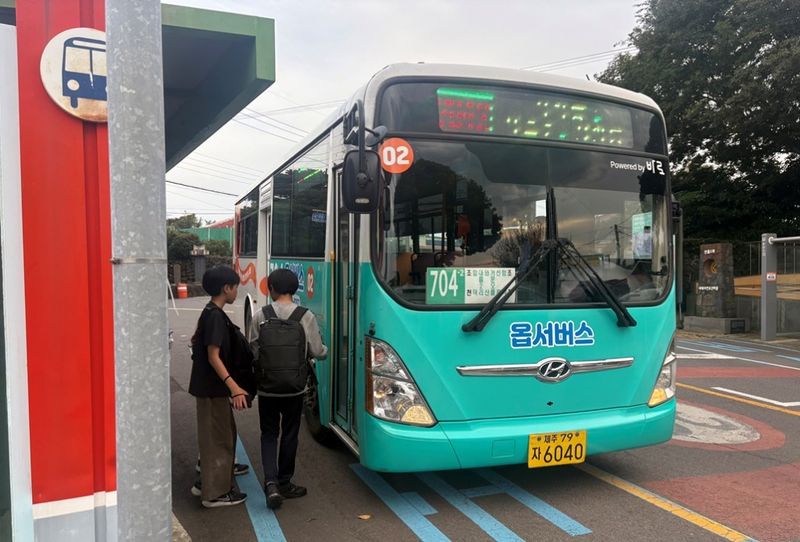
However, after the number of buses was reduced, complaints arose about congestion during commuting and school travel hours and longer service intervals on some routes.
In response, Jeju Province announced a package of supplementary measures this February, based on ridership patterns, transit card data and an analysis of complaints. The measures include adjusting 25 routes and gradually adding 26 buses. In effect, the province is revisiting how to balance cost savings from reducing the fleet with convenient travel for residents.
The fiscal burden is also substantial. Jeju Province said that as of the end of 2024, financial support for bus operators totaled 122.2 billion won, including 119.2 billion won to cover standard operating costs under the quasi-public system and 3 billion won for tourist-area circulator buses. That was 1.5 billion won less than the 123.7 billion won provided the previous year, but large amounts of local public funds are still being invested.
A key challenge in the study will be finding ways to reduce operating costs on routes with few passengers while ensuring travel needs during commuting and school hours are met and the mobility rights of residents in town and township areas are guaranteed.
The core of the new operating system proposed by Jeju Province is to divide responsibilities among trunk, circulator and demand-responsive transit. Trunk buses would serve as central routes linking cities with major transportation hubs, while the province is considering neighborhood circulators that would connect residential areas with facilities needed in daily life, such as schools, hospitals and markets.
The idea is to allow residents of villages far from trunk roads to take a circulator bus nearby to major facilities or trunk-bus stops.
The province also plans to strengthen connections with demand-responsive transit. Demand-responsive transit (DRT) is a service in which buses operate according to passenger demand after users request one by smartphone, telephone or other means. Unlike regular buses that repeatedly run fixed routes at set times, it can respond to actual demand.
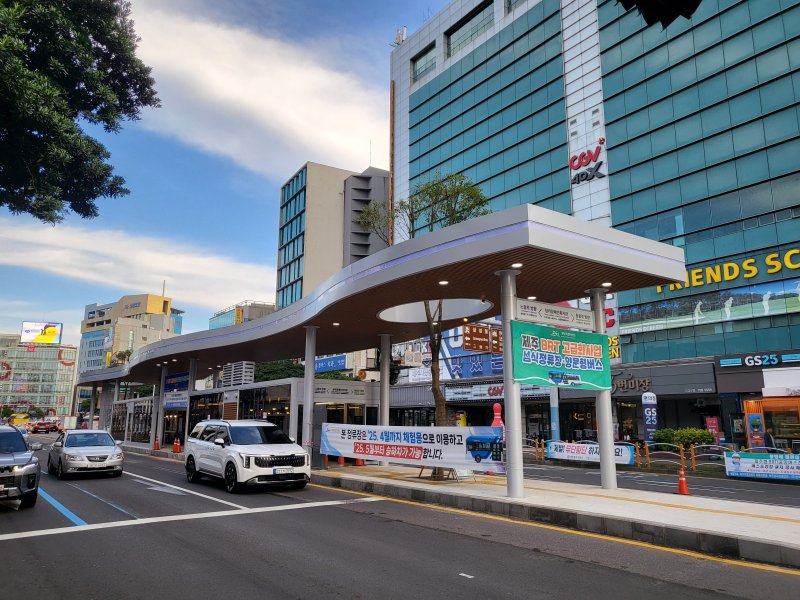
In Jeju, the service operates under the name “Opseo Bus.” After beginning pilot operations in Aewol-eup and Namwon-eup in 2023, Jeju Province expanded the service and, starting this February, made it available in all town and township areas except the outlying islands. The policy aims to improve transportation access for residents who have difficulty using buses in rural areas.
The study will comprehensively examine connections between Opseo Bus and trunk buses, the introduction of neighborhood circulators, and the creation of connecting routes between existing services.
How to design transfers between routes is also important. For example, even if passengers can take a circulator bus near home, their total travel time could actually increase if they have to wait a long time to transfer to a trunk bus or make more transfers. The plan therefore needs to consider not only the number of buses and route lengths, but also actual passengers’ waiting times, ease of transfers and travel time to their destinations.
In particular, conditions in each area need to be reflected in the plan: downtown Jeju City and Seogwipo City must respond to concentrated demand during commuting and school travel hours, while town and township areas need to maintain essential transportation services even with low ridership.
During the study, Jeju Province plans to hold public briefings to hear about local travel inconveniences and requests for improvements, and to consult with relevant agencies and experts. Based on the feedback gathered and the transportation-demand analysis, it will assess the impact and feasibility of adjustments to each route and develop an optimal route network, service patterns and phased implementation plans.
Kang Min-cheol, head of Jeju Province’s Transportation and Aviation Bureau, said, “We will improve access to public transit with neighborhood circulator buses and address inconvenience with service frequency and transfers,” adding, “We will develop route plans that residents can see the benefits of, while taking both operating efficiency and transportation welfare into account.”
[email protected] Jung Yong-bok Reporter