President Lee: “I’ll Communicate More Directly”... Blue House Senior Secretary for Public Communication Seong Gi-hong Also Takes to X
- Input
- 2026-10-11 11:39:47
- Updated
- 2026-10-11 11:39:47
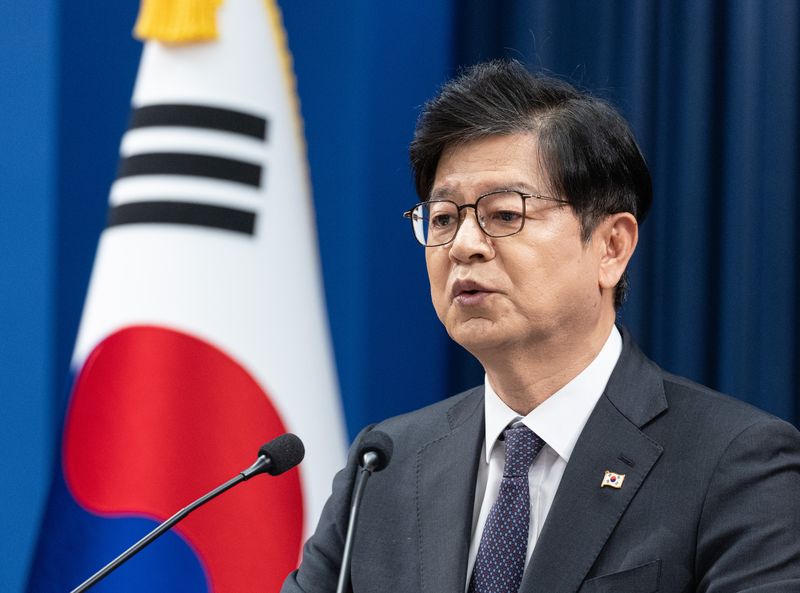
[Financial News] President Lee Jae-myung said, “I reflected. Going forward, I need to work harder to communicate with the people. I need to communicate more directly,” the Blue House’s Senior Secretary for Public Communication Seong Gi-hong said on the 11th.
That day, Secretary Seong posted a message titled “The President’s Communication” on X (formerly Twitter), reporting that President Lee had said this aboard the flight home after completing a state visit to Mexico last month.
Secretary Seong described his experience accompanying the president to last month’s UN General Assembly and on the state visit to Mexico, and highlighted Mexican President Claudia Sheinbaum’s approach to communicating with the public. President Sheinbaum holds a press conference at the presidential palace every day at 7:30 a.m. to explain major government affairs herself, and the briefings are turned into short videos and shared online, he said.
Secretary Seong also cited examples including Indian Prime Minister Narendra Damodardas Modi and former U.S. Presidents Franklin Roosevelt and Barack Obama, saying that the ways national leaders communicate have evolved along with changes in the times and the media environment.
In particular, Secretary Seong emphasized, “In modern politics, social networking services (SNS) are an important means for leaders to show the public their sincerity without an intermediary,” adding, “In an age when people engage with new media, the public has the right to learn the president’s thinking directly, without someone else interpreting or editing it.”
He also highlighted that President Lee is a politician who has used SNS as a key channel of communication, having served as mayor of Seongnam and governor of Gyeonggi Province. The point was that SNS has become a way to explain the intent of policies directly and gauge public reaction, and that this mode of communication has continued since Lee took office as president.
Secretary Seong stressed, however, that the president’s communication is not limited to SNS. He said it was important to expand opportunities to engage with the public through a variety of formats, including press conferences, media interviews, conversations with the public and town hall meetings.
After returning from his visit to Mexico, President Lee wrote on X, “Whether it’s press conferences, debates, visits to the field, Roosevelt-style fireside chats or YouTube livestreams, I will draw even closer to the people, empathize with them and communicate. Politics is ultimately in the hands of the people.”
Secretary Seong said President Lee’s methods of direct communication would become more diverse. This was understood to mean that Lee would go beyond simply expanding his use of SNS to bridge the gap with the public and reflect people’s voices more broadly in the process of governing.
Secretary Seong emphasized, “SNS is just one of several channels for communicating with the public. What the president seeks is not simply ‘SNS politics.’ It is dialogue that narrows the distance between the people and the president, and communication that lowers the barriers between the government and the people.”
[email protected] Choi Jong-geun Reporter