Jeju Education Office, embroiled in controversy over concentration of government-supplied materials, launches nine-member integrity-restoration task force
- Input
- 2026-10-11 10:52:35
- Updated
- 2026-10-11 10:52:35
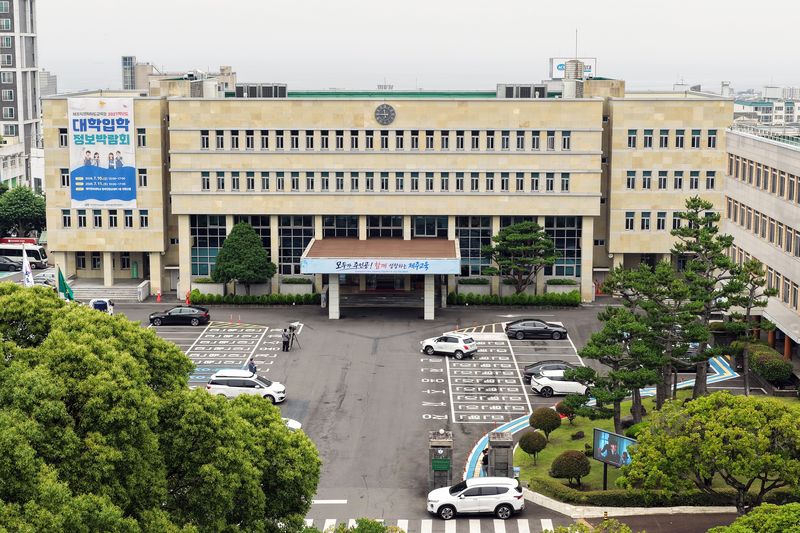
【Financial News, Jeju—By Jeong Yong-bok】 The Jeju Provincial Office of Education, which has faced controversy over the concentration of contracts for government-supplied materials used in school solar power generation equipment, has launched an Integrity and Trust Restoration Task Force to reexamine transparency in contract administration and protections for teachers.
According to the Jeju Special Self-Governing Provincial Office of Education on the 11th, the office formed the Task Force for Restoring Integrity and Trust in Jeju Education, comprising a total of nine members: four outside experts in law, academia, public administration and education, and five internal members.
The task force’s key priorities are ensuring fairness and transparency in contracts for government-supplied materials and improving teacher-protection systems.
The task force’s formation comes amid controversy over the integrity of Jeju education. The Jeju Provincial Office of Education received Grade 3 in the Anti-Corruption and Civil Rights Commission’s 2024 comprehensive integrity assessment of public institutions. It had maintained Grade 1 or 2 since 2012, when the five-grade assessment system was introduced, but fell to Grade 3 for the first time.
In response, the provincial office moved to improve its integrity rating last year, operating a central task force comprising 33 people, including the deputy superintendent and bureau, department and division heads, as well as field-specific task forces involving 157 people.
However, the fairness of contract administration again became a point of contention after allegations emerged in May this year that contracts were concentrated among a particular company during the selection of government-supplied materials for school solar power generation equipment.
At the time, the provincial office said it had complied with relevant laws, including the Public Procurement Act and the Local Contracts Act, and that no violations had been found.
The office cited limited availability of excellent procurement products in Jeju and the region’s geographic characteristics as an island area as factors behind the concentration of contracts with one company. It also emphasized that it operates a committee for selecting government-supplied materials, with the participation of audit, project and contract departments.
Government-supplied materials are goods that ordering bodies such as education offices purchase directly and supply for use in school construction and other projects. Because public funds are involved, not only product quality and price but also vendor selection criteria and fairness and transparency in the contracting process are important.
The task force plans to review these work processes and experience operating the systems, then identify areas that need improvement and recommend ways to address them.
However, the fact that contracts were concentrated with a particular company does not by itself establish that laws were violated or that the company received preferential treatment. Separately from whether existing contracts were lawful, it is important to assess whether the institutional safeguards are sufficient to prevent recurring concentration of contracts.
Protections for teachers are also a major topic of discussion. On September 23, the provincial office appointed 25 attorneys affiliated with the Jeju Bar Association as “Our School Lawyers” and has been providing consultations to teachers across the province on infringements of their educational activities and job-related legal issues.
The task force plans to discuss what needs to be improved in practice, drawing on experience with existing teacher-protection systems.
The task force is an advisory and consultative body that recommends ways to improve systems, not an investigative body with audit or disciplinary powers. Outside experts and internal members will share relevant materials and work experience and develop recommendations for improvement. The provincial office will then review the relevant laws, work standards and feasibility of applying the recommendations in the field, and incorporate them into actual systems and work procedures.
The task force’s recommendations will therefore not automatically lead to changes in the system. In particular, internal members make up a majority, with five of the nine members. The task force will need to operate in a way that ensures objective review by outside experts while drawing on the education office’s internal work experience to improve its systems.
Restoring integrity and trust in Jeju education depends less on forming the task force than on which contract standards and teacher-protection procedures actually change. The topics discussed at its first meeting, the timeline for subsequent improvements and the results of implementing its recommendations are expected to serve as benchmarks for assessing the task force’s effectiveness.
Jeju Superintendent of Education Go Ui-suk stressed, “It is important to explain matters fully in terms residents can understand, grounded in handling work in accordance with laws and procedures, and to continue improving systems and procedures so that similar concerns and controversies do not recur.” The superintendent added, “We will ensure that the task force’s expert and balanced views lead to tangible improvements that increase transparency and fairness in contract administration and strengthen protections for teachers.”
[email protected] Jeong Yong-bok Reporter