The 7,000 mark on the KOSPI slips further away again... What could offset the end of Samsung Electronics and SK Hynix’s share buybacks? [Weekly Market Outlook]
- Input
- 2026-10-11 13:24:59
- Updated
- 2026-10-11 13:24:59
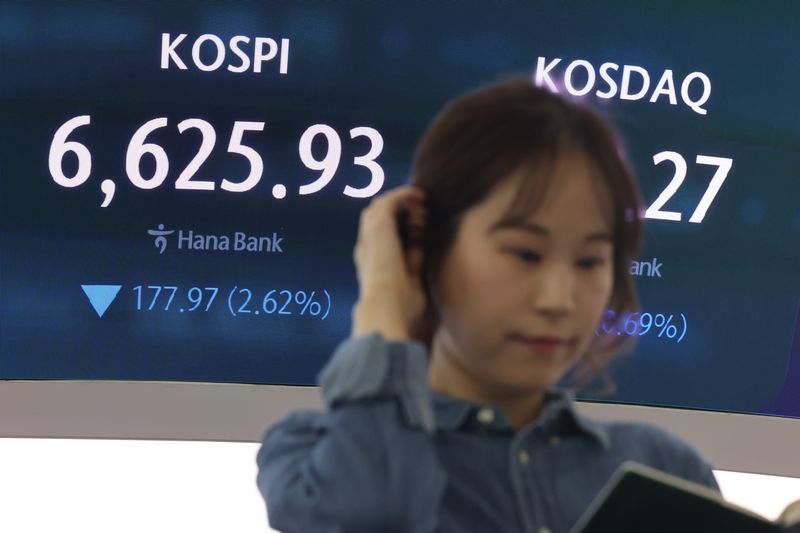
[Financial News] After falling to the 6,600 level, the KOSPI will seek direction this week through momentum from artificial intelligence (AI) and corporate earnings.
According to the Korea Exchange on the 11th, the KOSPI ended last week at 6,625.93, down 5.39% from 7,003.74 the previous week. Samsung Electronics posted unexpectedly strong earnings, but the index was unable to overcome pressure from bond yields and international oil prices and retreated to the 6,600 level.
One of the key factors for the domestic stock market this week is the change in supply and demand following the end of share buybacks by Samsung Electronics and SK Hynix. According to the securities industry, the two companies’ buybacks to date total about 55 trillion won. The question is what happens after the buybacks end. If the buyers that had absorbed shares offered for sale in the market disappear, selling by foreign investors or institutions could have a more direct effect on share prices than before.
Kim Seok-hwan, a researcher at Mirae Asset Securities, explained, “There is no need to interpret the end of the buybacks itself as a signal of falling share prices. During the buyback period, the purchases absorbed shares offered for sale and supported the index floor, but after they end, changes in supply and demand among foreign investors and institutions may be reflected more directly in share prices.”
Improving earnings in the semiconductor sector is seen as a factor that could offset supply-and-demand pressures. In its preliminary third-quarter results released on the 8th, Samsung Electronics reported revenue of 195 trillion won and operating profit of 107.4 trillion won. Securities firms viewed the results as exceeding lowered market expectations.
Lee Jong-wook, a researcher at Samsung Securities Co., Ltd., said, “As the outlook for memory prices and demand becomes clearer, investors’ confidence in the durability of the memory market will grow. In particular, future increases in memory prices and improved competitiveness in high-bandwidth memory (HBM) will be key factors driving share-price gains,” he analyzed.
U.S. inflation data are also seen as a key factor that could determine the stock market’s direction this week. The United States is scheduled to release September’s Consumer Price Index (CPI) on the 14th and the Producer Price Index (PPI) on the 15th. With rising international oil prices and government bond yields in major economies having weighed on stock markets recently, attention is expected to focus on whether inflation is slowing.
Hwang San-hae, a researcher at LS Securities Co., Ltd., said, “The key things to watch during earnings season are big tech’s investment plans—the starting point for liquidity in the AI cycle—and how broadly AI demand spreads. However, given signs that memory earnings are being reflected in rallies among companies benefiting from capital spending rather than in memory-sector companies’ share prices, investors should focus on sectors where the current environment is driving an earnings re-rating.”
[email protected] Han Young-jun Reporter