K-sauce sets first-half export record; likely to surpass $400 million for second straight year
- Input
- 2026-10-11 12:59:26
- Updated
- 2026-10-11 12:59:26
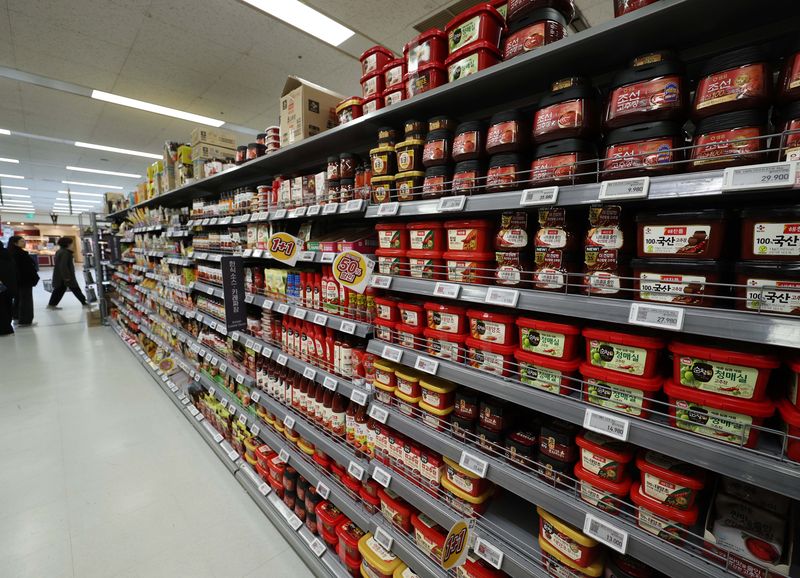
[Financial News] Exports of “K-sauce,” the DNA of K-food, hit a record high for the first half of this year, making it likely to surpass $400 million in annual exports for the second consecutive year, following last year. In particular, sauces such as Samyang Buldak Spicy Chicken Sauce, gochujang and Korean fried chicken sauce, which capture Korea’s distinctive umami and spicy flavors, are gaining ground both on dining tables around the world and with local food service businesses, establishing themselves as a growth engine for K-food exports.
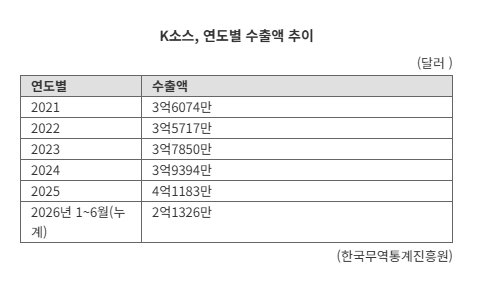
According to the Korea Trade Statistics Promotion Institute on the 11th, exports of Korean sauces totaled $213.26 million in the first half of this year, up 1.8% from the same period a year earlier. This was the highest figure ever recorded for a first half. By product, sauces and preparations for making sauces led at $124.34 million, followed by gochujang at $35.1 million and mixed seasonings at $20.31 million.
Given the seasonal tendency for food exports to be concentrated in the second half of the year, total exports this year are projected to exceed $400 million for the second consecutive year, following last year’s record high.
Korean cuisine sauces refers to sauces and fermented pastes and sauces used to prepare Korean dishes. These include seasonings for meat and stews; seasonings for braised and stir-fried dishes; bibim sauce; tteokbokki sauce; all-purpose jang; kimchi seasoning sauce; sauces for side dishes; and compound seasoning products. K-sauce exports have rebounded since a pause in 2022.
Annual exports dipped from $360.74 million in 2021 to $357.17 million in 2022, but then rose to $378.5 million in 2023 and $393.94 million in 2024. Last year, they reached a record $411.83 million, ushering in the era of $400 million in exports.
With strong first-half results this year adding to that performance, K-sauce has now sustained solid growth for three consecutive years. Its presence in the global market is becoming more diversified, rather than concentrated in a particular region. The United States was the largest export market last year, accounting for 22.4%. Demand for Korean-style hot sauces, tteokbokki and barbecue seasonings surged, fueled by the popularity of K-content. China (14.7%), Japan (9.3%), Russia (6.7%) and other markets (41.2%) followed, with sales growing steadily across Asia and Eurasia.
This growth is driven by major domestic food companies’ localization strategies and their push into the business-to-business (B2B) market. A model of supplying seasonings and sauces in bulk as ingredients to local restaurant chains, catering companies and food processing plants has taken hold, moving beyond the limitations of Korean grocery stores and a business-to-consumer (B2C)-centered approach.
Major companies such as Samyang Foods, CJ CheilJedang and Dongwon Home Food are going beyond simply selling packaged sauces to general consumers and expanding their sales channels by increasing supplies of customized products to overseas restaurant and catering businesses.
While consumption of finished processed foods such as ramen and dumplings can shift with trends, sauces have the advantage of encouraging repeat purchases because they become part of local recipes or serve as basic cooking seasonings. A food industry official said, “K-sauce has crossed the $400 million export milestone and established its own category in the global sauce market.” The official added, “With local B2B supply networks being firmly established, K-sauce’s global expansion is expected to continue for the time being.”
[email protected] Seoyeon Kim Reporter