Mountain ridgelines emerge where color has been scraped away... Woo Byeong-yun’s “A Floating Landscape” [fn Art Snap]
- Input
- 2026-10-11 09:30:00
- Updated
- 2026-10-11 09:30:00
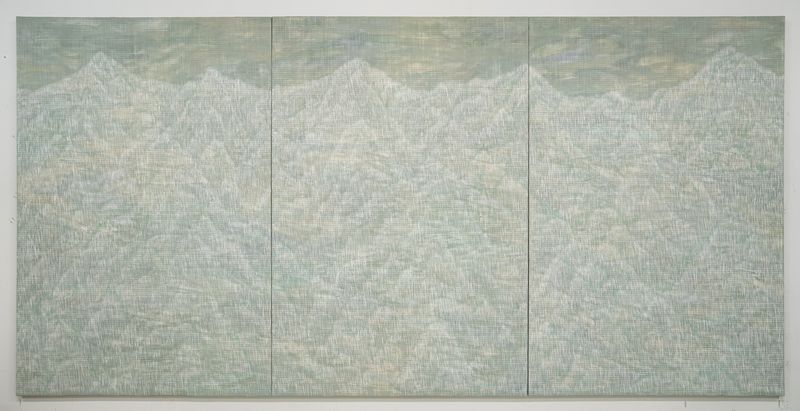
Woo Byeong-yun’s solo exhibition “Layering: A Floating Landscape,” on view in Exhibition Rooms 1 and 2 at Sun Gallery in Jongno District, Seoul, features 32 paintings, including the “Layering” series and the new “A Floating Landscape” works. Born in 1988, the artist is holding his first solo exhibition at the gallery after taking part in its 2024 special exhibition “Longing for a Return to Nature.”■ From layered surfaces to pared-back landscapesThe “Layering” series begins with applying plaster to wooden panels to create an uneven ground. After painting the raised and recessed surface, like ridges and furrows, the artist scrapes it. The gestures of building up the material and removing the color overlap, and the lines flow into forms that suggest waves or mountains.
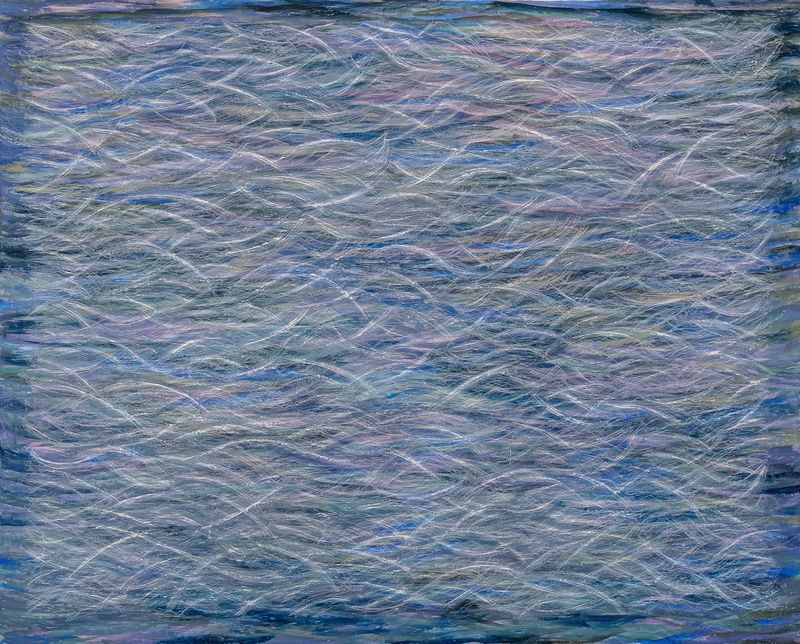
In “Layering 26-01-301” (2026), set against a blue ground, diagonally crossing textures spread like ripples. Compared with the new works in which mountain contours are discernible, the repeated act of scraping creates distinct impressions: the movement of waves and the mass of a mountain.
An introduction to earlier works published by Objecthood Gallery outlines four stages: preparing the ground, shaping the surface, applying color and scraping it away. The technique involves painting plaster with gouache and scraping it with a carving tool. The sculptural act of cutting into the surface intersects with the process of creating an image in painting.
For the new works, the artist changed the step of creating a relief in advance, since the contours of the ground could interfere with the lines used to express the mountain’s mass and depth. He spreads the plaster flat, creates a field of color, then scrapes in one direction to reveal the white ground. The remaining color contrasts with the exposed plaster, dividing the picture into light and dark areas.
The variation between short and long lines, and between dense and sparse textures, determines the mountains’ brightness and volume. Lines that once emphasized the material’s grain now become elements that organize the landscape. Recognizing the mountain and reading the traces of its making happen at the same time.
Composed of three panels, “A Floating Landscape 26-09-330” (2026) stretches the mountain range horizontally. The ridgeline runs across the picture, but the joins between the panels leave visible boundaries. The continuity of the landscape and the framework that divides it come into view together.
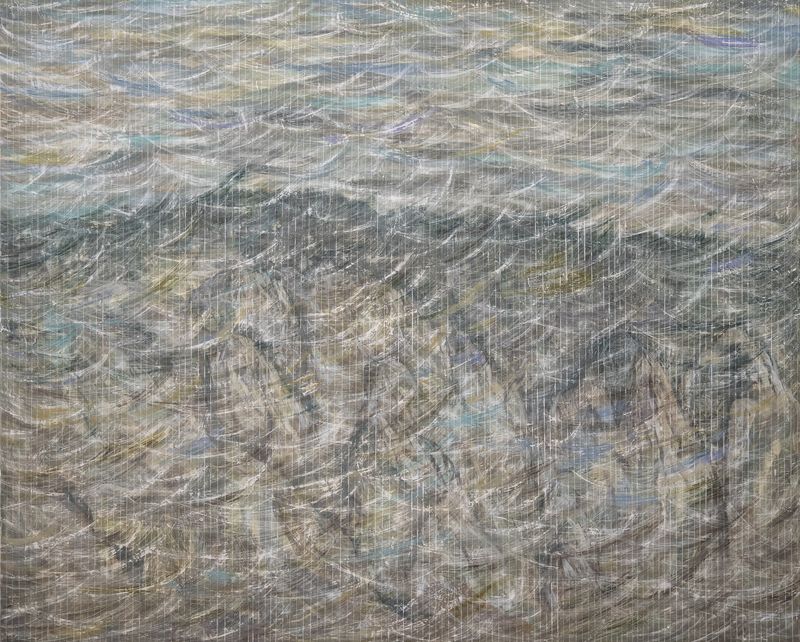
“Floating” in the exhibition title does not simply mean that the mountains are suspended in midair. It describes a state in which the relationship between landscape and abstraction, depth and flatness, is not fixed in one direction. The mountain’s form is clear, but as the eye follows the lines, it can once again read them as traces of the material.
The artist is not aiming to reproduce nature’s likeness with precision. Rather than viewing nature as something to interpret or possess, he sees it as a world that continues independently of the human gaze. That attitude permeates his work, in which material and the movement of the hand come together to create a landscape.
In his artist’s note, Woo Byeong-yun wrote, “I wanted to view nature not as something for me to interpret and possess, but as a world that continues independently of me,” and, “I also thought of myself as a being included in it only temporarily.”
The exhibition runs through November 3. It is open Monday through Saturday from 10 a.m. to 6 p.m., with last admission at 5:30 p.m. It is closed on Sundays and public holidays.
[email protected] Jang In-seo Reporter