Waiting for a unified LCC, Air Seoul puts operational response on the back burner ... and again tops the delay rankings this year
- Input
- 2026-10-11 14:25:55
- Updated
- 2026-10-11 14:25:55
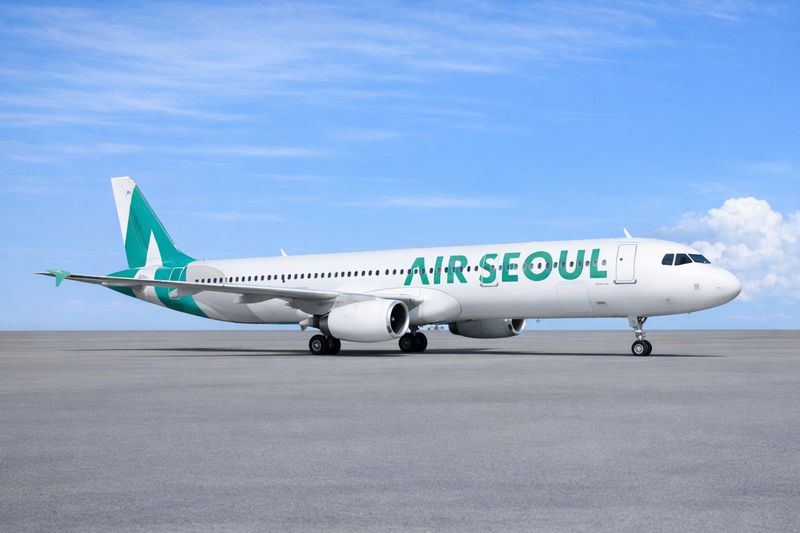
[Financial News] Air Seoul’s domestic and international flight delay rates surged together during this year’s peak season, and on some routes, flights were more likely to be “late” than to depart or arrive on time. The problem has recurred this year after Air Seoul ranked first among domestic airlines for domestic and international flight delays last year. In particular, critics say Air Seoul may be counting on its planned launch of a unified low-cost carrier (LCC) with Air Busan and Jin Air and putting off immediate efforts to strengthen its operational response capacity.
Highest delay rate, worsening further in a year
On the 10th, according to the Ministry of Land, Infrastructure and Transport’s September 2026 Airline Consumer Report, Air Seoul’s domestic flight delay rate last July was 35.9%, up 14.4 percentage points from 21.5% in the same month a year earlier. This was the highest rate among 10 domestic airlines. The delay rate is the proportion of flights whose departures or arrivals are more than 15 minutes later than scheduled.Air Seoul’s domestic punctuality also deteriorated sharply compared with the previous month (10.8%), with its delay rate rising at least twofold—up 25.1 percentage points. Over the same period, the average domestic flight delay rate rose from 12.5% to 17.5%, an increase of 5.0 percentage points. Even taking into account that it was peak season, Air Seoul’s increase was five times the overall average.
The situation was similar for international flights. Air Seoul’s international delay rate nearly doubled, jumping from 12.7% in June to 25.2% in July. The increase was more than twice the 6.0-percentage-point average rise among domestic airlines. In particular, the July delay rate on Southeast Asian routes was 64.3%, far above the overall average of 33.0% and the highest among domestic airlines. In other words, at least six out of every 10 flights were delayed.
Passengers continue to bear the burden, regardless of the integration blueprint
Air Seoul’s exceptionally high delay rate is attributed in part to its small fleet and limited capacity to cope with aircraft shortages. It currently has only six aircraft, leaving little room for spare planes or flexibility in its flight schedule; as a result, delays to earlier flights cascade to later ones.A case in point came last December, when one aircraft went in for heavy maintenance, reducing the active fleet to five and forcing Air Seoul to suspend all domestic flights. Consumer complaints about flight delays continue, and the lack of plans to expand the fleet is also seen as a problem. In Air Seoul’s aviation safety investment disclosure for this year, the sections for last year’s new aircraft acquisitions and its plans for this year and next year were all left blank.
Industry observers criticize Air Seoul for possibly relying on the “unified Jin Air” plan and putting off efforts to strengthen its current operational response capacity. The key concern is that passengers are bearing the burden of repeated delays while the integration is being prepared. Jin Air, Air Busan and Air Seoul signed a merger agreement last August, with Jin Air as the surviving company. They are aiming to launch the unified airline in March next year, but domestic regulatory approvals are still pending, and it will also take time for the integration of their fleets and operating systems to deliver results. This has raised concerns that passenger inconveniences could continue for a long time.
An industry insider said, “It will be difficult for Air Seoul to make bold investments to secure new aircraft as it prepares for the launch of unified Jin Air,” adding, “However, whether this results in passenger inconveniences year after year is a separate issue.”
[email protected] Jeong Won-il Reporter