Jeju Reviews Public Disclosure of 452 Delinquent Taxpayers as Local Tax and Non-Tax Arrears Reach 285.6 Billion Won
- Input
- 2026-10-10 08:22:27
- Updated
- 2026-10-10 08:22:27
【Financial News | Jeju — Reporter Jung Yong-bok】 With arrears in local taxes and non-tax revenue on Jeju totaling 285.6 billion won, the island is stepping up collection efforts, including tracking hidden assets and publicly disclosing the names of high-value, chronic delinquents.
On the 10th, Jeju Special Self-Governing Province said that, as of the end of August, local tax arrears in the province totaled 109.6 billion won and arrears in non-tax revenue amounted to 176 billion won. Local taxes are levied by local governments and include acquisition tax, property tax and local income tax. Non-tax revenue refers to revenue collected outside of taxes, such as usage fees, service charges, penalty surcharges and contributions.
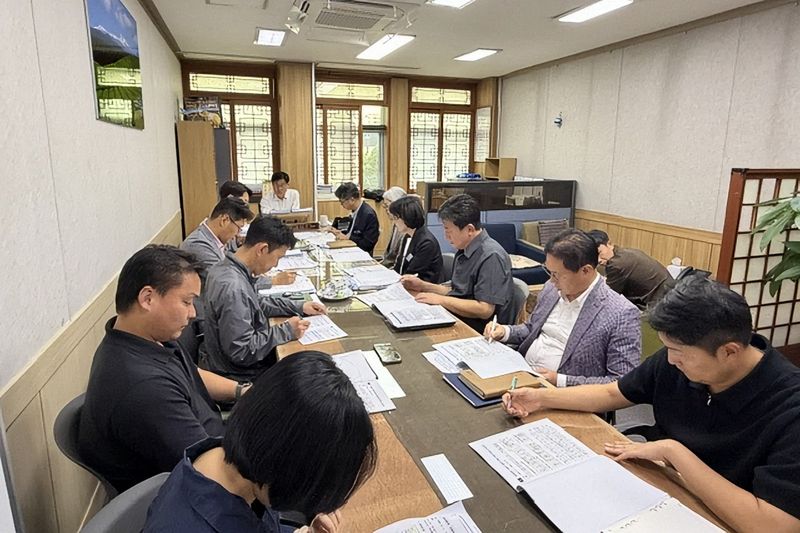
Jeju Island recently held a joint meeting of the tax departments of the provincial government and the two administrative cities to review efforts to secure local tax revenue and agreed to focus on collecting arrears through the end of the year.
The first step is to begin the public-disclosure process for 452 high-value delinquents who owe at least 10 million won. Of these, 319 owe local taxes and 133 owe non-tax revenue.
In March, Jeju Island sent the 452 people advance notices about the planned disclosure and gave them an opportunity to explain their cases. The province plans to post the final list of those selected for disclosure on the Jeju provincial government website in the third week of November.
However, not all 452 people who received advance notice will have their names disclosed. Under the Local Tax Collection Act, names may be disclosed after deliberation by the Local Tax Deliberation Committee if at least one year has passed since the arrears arose and the amount owed is at least 10 million won. Those notified in advance are given six months to explain their cases; the final disclosure list is decided after reviewing their payment status and any appeal procedures, among other matters.
Once selected for disclosure, information including a person's name or a corporation's name, age, address, the types of tax owed and the payment deadline will be made public.
In November last year, Jeju publicly disclosed the names of 164 high-value, habitual delinquents. Their total arrears amounted to 7.6 billion won: 147 local tax delinquents owed 6.8 billion won, while 17 people with non-tax revenue arrears owed 800 million won. Nationwide, 10,621 high-value, habitual delinquents were named that year.
The 452 people who received advance notice this year and the 164 people whose names were actually disclosed last year represent different stages of the process. How much the number of high-value, habitual delinquents has increased from last year can be compared only after the final disclosure results are released in November.
Separately from the public disclosure process, Jeju Island will step up investigations into cases in which people able to pay hide their assets or evade collection actions. To recover arrears from people who own assets but do not pay their taxes, the province plans to ask the Korea Asset Management Corporation to sell seized assets, including real estate.
The sale of seized assets is a compulsory collection measure in which a delinquent taxpayer's property is disposed of through legal procedures and the proceeds are used to cover overdue taxes. Taxpayers who live lavishly or are suspected of hiding assets will be identified through investigations, and, when legal requirements are met, officials will conduct home searches to track down hidden assets.
The scope of investigations into financial assets will also be expanded. The province plans to identify assets that can be seized by checking not only deposits, stocks, wages and accounts receivable, but also virtual assets. It will also seek to request travel bans for people with at least 30 million won in local tax arrears.
Twenty-nine members of the Local Tax Revenue Delinquency Management Team, whose operations are being expanded this year, will be assigned to on-site collection efforts. The team members deployed across Jeju Island, Jeju City and Seogwipo City handle arrears notices and consultations, on-site investigations and the impounding of license plates from delinquent vehicles. A “365 License Plate Impoundment Team,” which conducts year-round enforcement against delinquent vehicles, will also operate.
A different approach will be taken with taxpayers who cannot pay on time because of financial difficulties. Enforcement against arrears will be deferred for six months for small-business owners struggling to pay because of temporary business difficulties or an economic crisis, as well as for taxpayers in arrears due to financial hardship. The deferral may be extended to a maximum of one year if necessary.
Deferring enforcement against arrears does not eliminate the obligation to pay. It gives taxpayers a chance to recover financially by postponing compulsory collection procedures, such as the seizure or sale of property, for a set period. Taxpayers struggling to make ends meet will be connected with social welfare departments, while those carrying heavy financial debt burdens will be informed about credit rehabilitation support.
The key to the measures is to improve the effectiveness of collection by distinguishing cases of deliberate tax evasion from those in which people genuinely lack the ability to pay.
“It is important to administer taxes fairly so that residents who pay their taxes faithfully do not feel relatively deprived,” said Yang Je-yun, head of Jeju Island’s Planning and Coordination Office. “We will do our utmost to manage arrears systematically and secure a stable foundation for local tax revenue.”
[email protected] Jung Yong-bok Reporter