Foreign Ministry on Jung Cheong-rae’s delayed U.S. visa: “It is inappropriate to link it to South Korea-U.S. relations”
- Input
- 2026-10-09 15:27:28
- Updated
- 2026-10-09 15:27:28
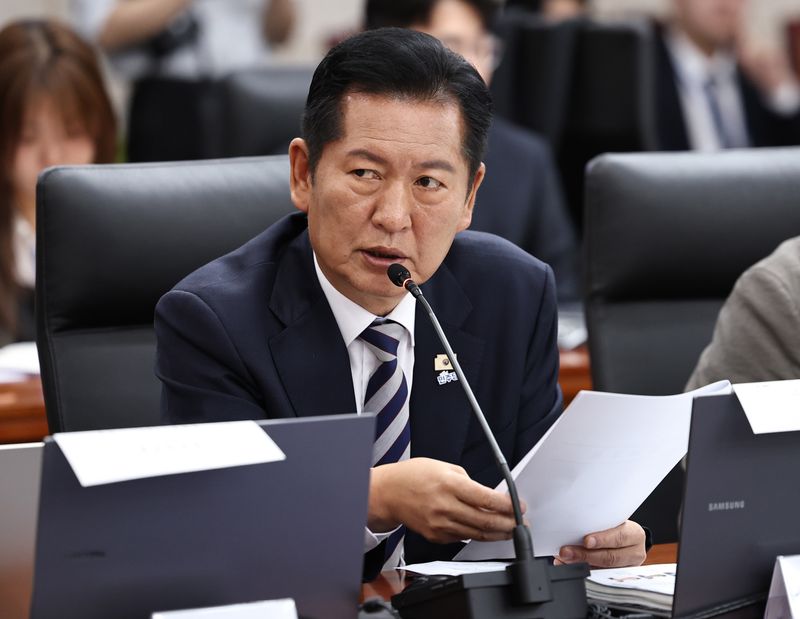
A Foreign Ministry official said that day, “South Korea and the United States communicate and cooperate closely on various issues, and it is not appropriate to link an individual visa matter to South Korea-U.S. relations as a whole.” The individual visa matter cited by the official refers to the delay in issuing the visa Jung needs to travel to the United States for a parliamentary audit.
The official said, “Information related to individual visa applications and review results is handled confidentially under U.S. domestic law and procedures,” and added, “We ask for your understanding that the Foreign Ministry is unable to confirm whether the relevant information is accurate.”
On the reason for the delay in issuing Jung’s visa, the official also said, “Specific details related to the review are not disclosed by the U.S. side, so it is difficult for (the diplomatic authorities) to confirm them.”
Jung, a member of the National Assembly of the Republic of Korea’s Foreign Affairs and Unification Committee, was part of the committee’s Americas team, which oversees parliamentary audits of South Korean diplomatic missions in the Americas, and was scheduled to visit the United States and other countries from the 11th to the 12th. However, unlike other ruling and opposition lawmakers on the Americas team, Jung had not been issued a U.S. visa by the previous day, so he urgently switched to the Europe team, which is responsible for the European continent.
Jung had previously visited the United States in 2012 and conducted a parliamentary audit there. In 2014, he also made a visit to the United States in his capacity as a National Assembly member.
However, he had also been unable to obtain a U.S. visa once before, in 2013, when he was likewise a member of the committee’s Americas team.
In 1989, he led the occupation and sit-in at the U.S. ambassador’s residence and was imprisoned on charges of violating the National Security Act. Some in political circles claim that this history may be the reason for the delay in issuing his U.S. visa.
The People Power Party said that day, “It is difficult to dismiss the question of whether this situation was affected not only by Jung’s past record of anti-American activities, but also by the government’s and ruling party’s diplomatic failures toward the United States and the erosion of trust in the South Korea-U.S. alliance.”
The Democratic Party expressed regret over the delay in the U.S. visa issuance and said, “Restricting even a parliamentary audit by the legislature of an ally is not in keeping with the forward-looking values of the alliance.” It added, “We hope the South Korean and U.S. diplomatic authorities will work to resolve the issue,” and urged the Foreign Ministry to come up with measures.
[email protected] Kim Hyeong-gu Reporter