Rep. Park Sung-hoon focuses on KDB’s relocation to Busan and Air Busan integration at parliamentary audit
- Input
- 2026-10-09 15:21:59
- Updated
- 2026-10-09 15:21:59
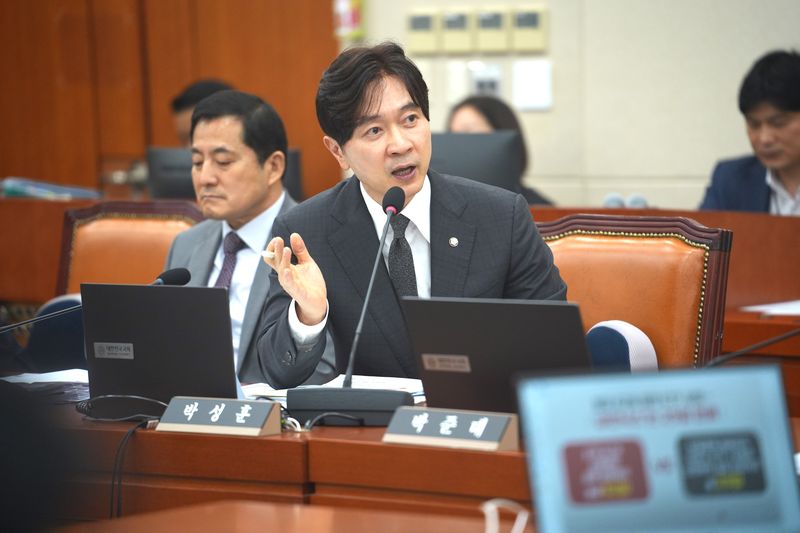
[Financial News] At a parliamentary audit held by the National Policy Committee at the National Assembly on the 8th, Rep. Park Sung-hoon (Busan Buk-gu B, People Power Party) focused on the issues of the Korea Development Bank’s relocation to Busan and Air Busan’s integration.
According to Rep. Park’s office on the 9th, he called on the Korea Development Bank that day to honor its promise to build a second hub based at a regional airport, made when it invested 800 billion won in Hanjin KAL. He also urged the bank to play an active role in ensuring its relocation to Busan is explicitly included in the government’s second plan to relocate public institutions to regional areas.
Rep. Park first raised concerns that, as Air Busan and Jin Air are integrated, Busan could lose its regional hub airline and become subordinate to an aviation industry structure centered on the Seoul metropolitan area.
In 2020, as it pursued the integration of Korean Air and Asiana Airlines, the Korea Development Bank announced that it would invest 800 billion won in Hanjin KAL and build a second hub based at regional airports through the integration of low-cost carriers (LCCs). However, under the merger agreement signed last August, Busan-based Air Busan will disappear, while Seoul-based Jin Air will remain as the surviving company.
Rep. Park said, “If key management powers—including the headquarters, decisions on routes and aircraft deployment—are concentrated in the Seoul metropolitan area, the promise to develop Busan into a second aviation hub is nothing more than an empty slogan.” He added, “This is no different from creating another Busan sales office for a Seoul-headquartered company, rather than building an aviation hub in Busan.”
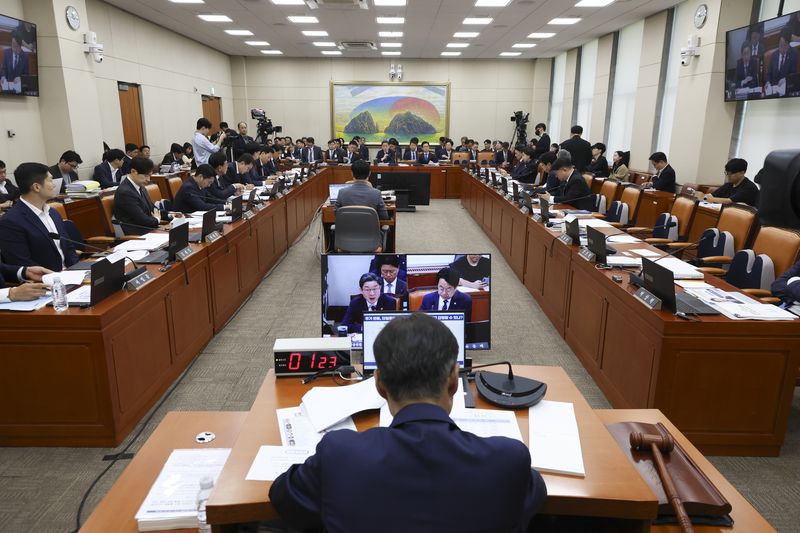
He also stressed that, as of the end of June, the Korea Development Bank held a 10.58% stake in Hanjin KAL, making it a major shareholder, and had secured prior consultation and consent rights under the investment agreement.
Rep. Park rebuked the bank, saying, “After spending 800 billion won in taxpayers’ money and promising Busan residents a second hub, evading responsibility now on the grounds of corporate management autonomy makes no sense.”
Korea Development Bank Chairman Park Sang-jin responded, “It is difficult to reconcile the role of a financial institution with corporate management autonomy,” adding that it would not be appropriate to excessively infringe on the managerial autonomy of private companies.
Forceful questioning also continued on the Korea Development Bank’s relocation to Busan. Referring to the principles of “zero institutions remaining in Seoul” and “clustering and concentration” put forward by the Lee Jae-myung administration ahead of finalizing its second plan to relocate public institutions in the fourth quarter of this year, Rep. Park stressed that relocating the bank to Busan was a national task that could no longer be postponed.
Rep. Park said, “If the principles set by the Lee Jae-myung administration are applied as they are, relocating the Korea Development Bank to Busan is an obvious conclusion.” He added, “If the government demands that other public institutions move to regional areas while leaving only the Korea Development Bank in Seoul, it will be undermining the principle of balanced national development itself.”
[email protected] Byeon Ok-hwan Reporter