Jeju Province touts airport used by 29.53 million a year in bid to bring KAC headquarters to the island
- Input
- 2026-10-09 11:00:05
- Updated
- 2026-10-09 11:00:05
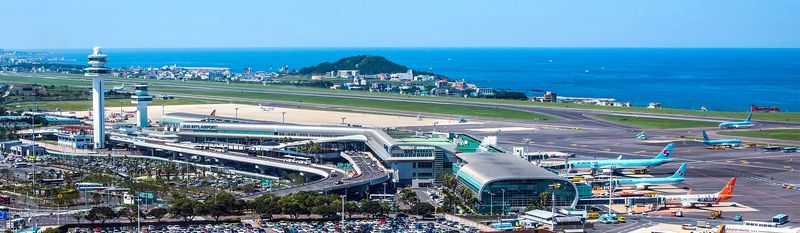
【Financial News, Jeju—Reporter Jeong Yong-bok】 Jeju Province’s strategy to bring KAC headquarters to the island has taken shape, with plans to make Jeju International Airport, used by 29.53 million people annually, a new hub for the corporation’s management and business operations.
According to Jeju Special Self-Governing Province on the 9th, the province has presented a plan to link KAC headquarters with on-the-ground operations at Jeju Airport as a central part of its bid, ahead of the government’s second round of relocating public institutions outside the Seoul metropolitan area. The strategy is to swiftly incorporate issues identified during airport operations into management and business plans, and spread technologies and operational methods proven in Jeju to other airports.
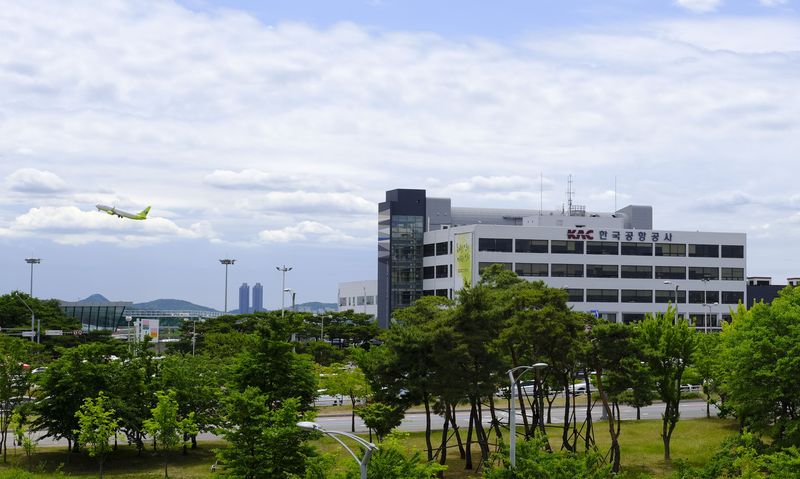
KAC is a public corporation headquartered near Gimpo International Airport in Seoul’s Gangseo District. It operates and manages 14 airports nationwide, including Jeju, Gimpo, Gimhae and Cheongju. Incheon International Airport is operated by the separate public corporation, Incheon International Airport Corporation.
KAC’s main responsibilities include building, managing and operating airport facilities; managing air navigation safety facilities; fostering the aviation industry; developing technology; and pursuing overseas airport projects. Since the corporation is responsible for the stable operation and management of the nationwide airport network—not just Jeju Airport—it is necessary to assess the effects of relocation from a nationwide perspective.
The biggest asset Jeju Province cites in support of its bid is passenger demand at Jeju Airport.
According to KAC’s 2025 air transport statistics, Jeju Airport served 29,527,994 passengers, up 0.6% from the previous year. Domestic passengers totaled 26,513,249, down 1.5%, while international passengers reached 3,014,745, an increase of 23.7%.
The composition of air travel demand is also changing, with domestic demand declining and international passenger numbers rising. Jeju Airport faces a range of operational challenges, including surges in passenger numbers during peak tourist seasons and holiday periods, delays and cancellations caused by bad weather, and terminal congestion.
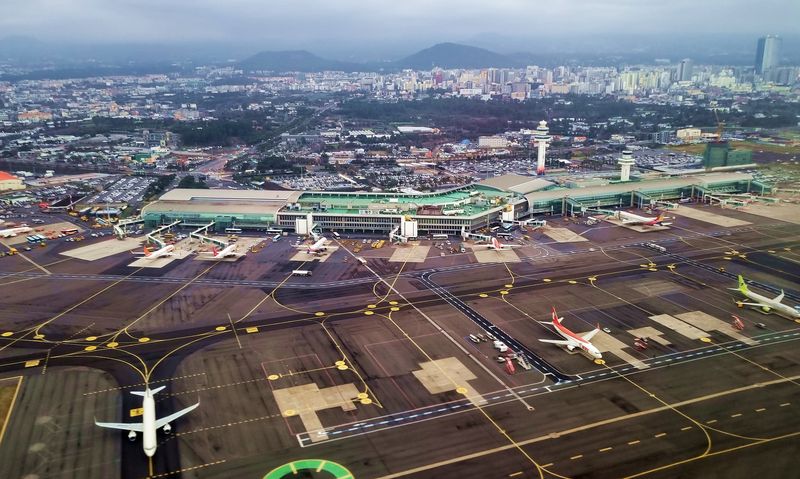
Jeju Province stresses that this on-the-ground experience can be directly linked to the headquarters’ management functions. The province says that improvement needs identified in passenger flows, facility operations and responses to flight delays and cancellations can be reflected in management decisions, and that operational methods proven effective can be extended to other airports.
KAC manages not only airports with high passenger demand, such as Gimpo, Gimhae and Jeju, but also smaller regional airports. According to the National Assembly Budget Office, 10 of the 14 airports operated by KAC—excluding Gimpo, Gimhae, Jeju and Daegu—recorded cumulative losses from 2015 to 2024.
Therefore, alongside leveraging operational experience at Jeju Airport, it is necessary to demonstrate how relocating the headquarters could help improve management at regional airports with lower demand, allocate resources among airports nationwide, and manage airport facility investment and operating costs.
Another argument Jeju Province has put forward for its bid is the future of the aviation industry. The plan is to combine demand for travel connecting Jeju Airport with downtown areas and tourist destinations with KAC’s urban air mobility (UAM) technology, and to use Jeju as a test bed for future air transport.
UAM is a new transportation system that connects urban areas and major transport hubs using small aircraft. Jeju Province believes that linking tourism with transport to and from the airport could expand opportunities to test the technology and commercialize it.
Smart and green airports are also part of the bid strategy. The plan is to use Jeju’s renewable energy resources to test low-carbon airport operations technologies and apply digital technology to make passenger flows and facility operations more efficient.
The plan also calls for applying operational experience and technologies developed at Jeju Airport to overseas airport projects, while expanding the basis for cooperation in related industries such as aviation maintenance, repair and overhaul (MRO)—including aircraft inspections, maintenance and repairs—and logistics.
The outcome of the bid depends on the government’s second public institution relocation plan. The government plans to assess the need to relocate around 350 public institutions in the Seoul metropolitan area, announce a relocation plan in the fourth quarter of this year, and begin relocating leading institutions in 2027. Its main principles are to cluster institutions with related functions around existing innovation cities and strengthen ties with regional industries and universities.
Jeju has selected six institutions as key targets for its bid: KAC, the Korea Racing Authority, the Korea Institute of Energy Technology Evaluation and Planning, the Korea Marine Environment Management Corporation, the Korea Trade-Investment Promotion Agency, and the Next-Generation Numerical Weather Prediction Model Development Project Group. On September 22, the Jeju Special Self-Governing Provincial Council also adopted a resolution calling for public institutions to relocate to Jeju.
The location question must also be resolved in the bid to attract KAC. The government is emphasizing the concentration of institutions around existing innovation cities, while Jeju Innovation City is in Seogwipo City and Jeju Airport is in Jeju City. It remains to be considered how Jeju Province’s plan to locate the headquarters near Jeju Airport would align with the government’s principle of concentrating institutions around innovation cities.
Jeju Province plans to consider sites for the headquarters building and temporary office space, and provide administrative support for site selection and permits. It will also coordinate support programs in housing, education, childcare and transportation to help employees relocating with their families settle in.
However, the official findings of a relocation feasibility review by KAC and its overseeing ministry, the Ministry of Land, Infrastructure and Transport, as well as the views of internal stakeholders such as the labor union, must also be ascertained. In particular, a key consideration may be whether the benefits of closer coordination with Jeju Airport operations would offset the costs and time required to manage airports nationwide and coordinate with central government ministries if the headquarters were moved from Seoul to Jeju.
Yang Je-yun, head of Jeju Province’s Office of Planning and Coordination, said, “Bringing KAC’s management and business functions closer to operations at Jeju Airport would allow on-the-ground needs to be reflected quickly in its business operations and enable it to expand its competitiveness through future air transport and overseas projects.” She added, “We will actively explain to the government and relevant organizations why relocation to Jeju is necessary.”
Ultimately, the key question in this bid is whether Jeju Airport’s high passenger numbers can be translated into greater competitiveness for KAC as a whole. Jeju Province still needs to turn its vision of on-the-ground management and a future aviation industry into concrete plans for actual relocation costs, more efficient airport operations nationwide and the implementation of new businesses.
[email protected] Jeong Yong-bok Reporter