“Monthly rent is 700,000 won, and office workers have taken over the studios near campus”... Provincial students attending Seoul universities are being pushed into goshiwons [Recorder of the Low Places]
- Input
- 2026-10-11 06:00:00
- Updated
- 2026-10-11 06:00:00
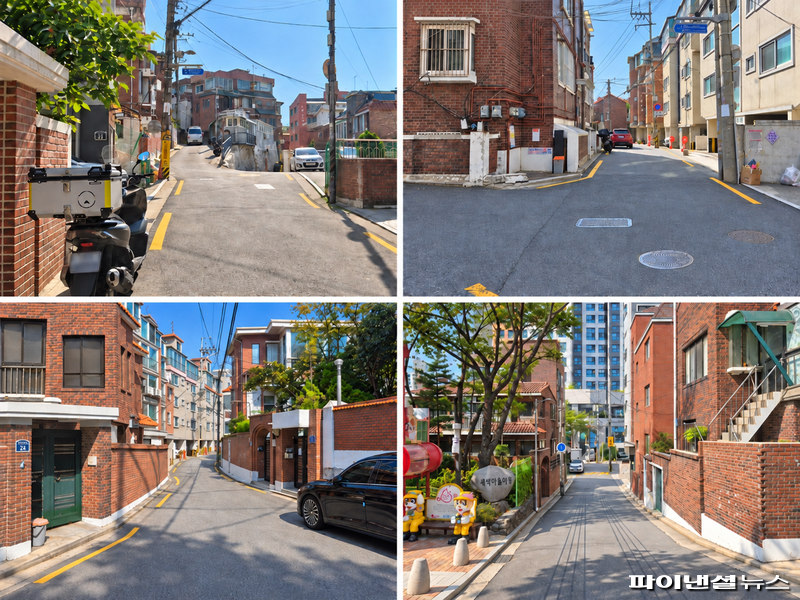
As jeonse listings become harder to find in Seoul’s university districts and rents and maintenance fees continue to rise, students are facing a heavier housing burden. While workers, too, are coming to university areas to look for relatively affordable studios, some students are also searching for goshiwons or shared houses. We met with university students and real estate agents in Hwigyeong-dong and around Hoegi Station, near Seoul’s university districts, to examine the challenges young people face when looking for a place of their own. Editor’s note:
[Financial News]“I want to find a room near campus, but the rent is so expensive. Adding the maintenance fee makes it even harder to afford.”A 23-year-old university student identified as A, whom we met on the 8th around Hoegi Station in Hwigyeong-dong, Dongdaemun-gu, Seoul, said the cost of rent had weighed heavily on them as they searched for a place to live. “It feels like too much to ask my parents to cover the deposit, and it’s hard to ask them to help with the rent every month, too,” they said. “During the semester, I have to juggle part-time work and classes.”
As jeonse listings become harder to find in university districts and monthly rental contracts become more common, students are facing a heavier housing burden. Workers and young professionals looking for relatively affordable studios are also searching for rooms in university areas. Some students who cannot afford the rent and maintenance fees are looking at goshiwons and shared houses as well.
Kyung Hee University (KHU) and Sahmyook Health University are among the institutions near Hoegi Station and Hwigyeong-dong. Real estate agencies that broker studio apartments and officetels are easy to find around the station and throughout the alleys. At three or four agencies visited that day, agents said it was difficult to find jeonse rooms in the price range students wanted.
Licensed real estate agent B said, “Some students and parents want a jeonse, but there aren’t many listings we can recommend. These days, far more clients are looking for monthly rentals than jeonse.” B added, “Students often look for rooms with a deposit of 10 million won and monthly rent of around 400,000 to 500,000 won. It’s hard to find a room that is both close to campus and affordable, so some end up looking in other neighborhoods as well.”
Fewer jeonse listings, and workers are looking for studios too
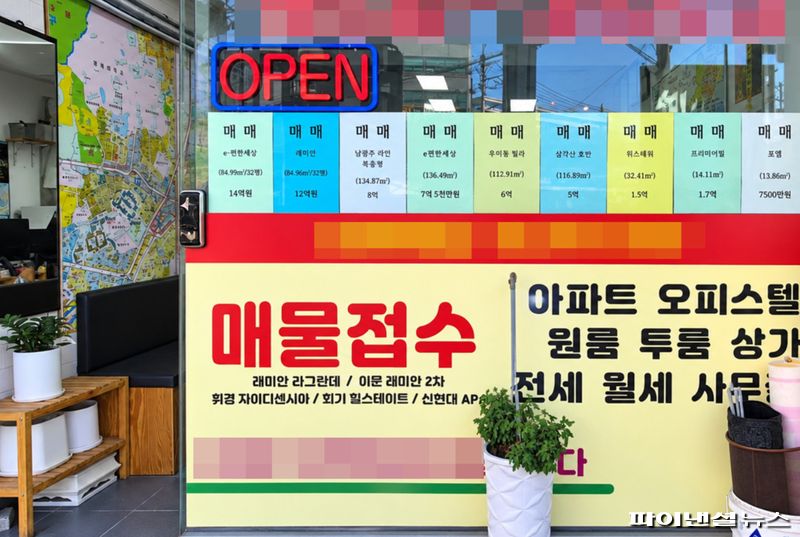
Students are not the only ones looking for studio apartments in university districts. Hoegi Station is served by Subway Line 1, the Gyeongui–Jungang Line and the Gyeongchun Line, so workers commuting to other areas also look for rooms nearby.
C, who runs a real estate agency in Hwigyeong-dong, said, “It’s not only students who come looking for rooms just because they’re near a university. Workers also come to look for studios that make commuting convenient and have relatively affordable rent.” C added, “Students ask how long it takes to get to campus, while workers first ask how close a place is to the station. Both students and workers inquire about the affordable studios near the station.”
The shift toward monthly rentals over jeonse is also evident across Seoul’s rental market. According to the Ministry of Land, Infrastructure and Transport’s July 2026 Housing Statistics, monthly rentals accounted for 69.7% of jeonse and monthly rental transactions in Seoul from January through July this year, up 5.9 percentage points from 63.8% over the same period last year.
Monthly rentals accounted for 78.0% of jeonse and monthly rental transactions for non-apartment housing in Seoul.
Average rent and maintenance fees combined: 709,000 won
As monthly rental contracts have become more common, rents and maintenance fees for studios in university districts have also risen. With maintenance fees climbing alongside rent, students are facing higher monthly housing costs.
A survey released last August by Dabang, a real estate information platform, found that in July the average monthly rent for studio apartments of 33 square meters or less near 10 major universities in Seoul was 625,000 won, based on a deposit of 10 million won. That was up 7.7% from 581,000 won in the same month last year.
The average maintenance fee also rose, from 75,000 won last year to 84,000 won this year.The combined rent and maintenance fee rose from 656,000 won to 709,000 won—an increase of 53,000 won (about 8%). Assuming the same amount is paid each month, that comes to 8,508,000 won a year. The figure excludes the deposit and individual electricity and gas bills, among other charges.
Among the universities surveyed, the combined rent and maintenance fee was highest near Ewha Womans University, at 870,000 won: 767,000 won in rent and 103,000 won in maintenance fees. The figures were 758,000 won near Yonsei University and 755,000 won near Hankuk University of Foreign Studies.
The largest increase in rent was recorded near Seoul National University, where it rose 26.0%, from 423,000 won last year to 533,000 won this year. Rent near Hankuk University of Foreign Studies also rose 15.1%, from 582,000 won to 670,000 won, while rent near Yonsei University climbed 10.4%, from 614,000 won to 678,000 won.
Rent near Chung-Ang University rose 9.4%, from 477,000 won to 522,000 won, while rent near Hanyang University increased 9.2%, from 575,000 won to 628,000 won. By contrast, rent near Sungkyunkwan University fell from 576,000 won to 550,000 won.
Maintenance fees also saw steep increases. The average fee for studio apartments near Chung-Ang University rose 34.2%, from 76,000 won last year to 102,000 won this year. Near Seoul National University, it rose 16.7%, from 78,000 won to 91,000 won, while near Hanyang University it increased 15.7%, from 70,000 won to 81,000 won. Fees near Yonsei University and Hankuk University of Foreign Studies also rose 14.3% and 10.4%, respectively.
Maintenance fees are up, too... Utility costs on top of rent
With costs rising, some students also voiced concerns about maintenance fees. University student E, 24, whom we met at Hoegi Station, said, “At first, I looked for a studio near campus, but it was hard to find a room in my price range,” and“when I find a place with lower rent, the maintenance fees are high or it’s far from campus, so I end up looking in other areas,” they said.
What is included in the maintenance fee varies by building. It may cover shared electricity, cleaning and internet, but in some places residents have to pay their individual electricity and gas bills separately. The student said, “Even if the rent is 500,000 won, if the maintenance fee is 80,000 to 100,000 won, the actual amount you have to pay is higher,” adding, “If electricity or gas bills are charged separately as well, the burden gets heavier,” they said.
Real estate agents also said students ask about their total monthly expenses, including maintenance fees. F, a licensed real estate agent in Hwigyeong-dong, said, “Many students ask how much they’ll have to pay each month including the maintenance fee. Even if the rent is low, they look for another room if the maintenance fee is high.”
Some students look as far from campus as necessary to reduce their rent. But longer commutes and additional transportation costs mean there are more expenses to consider when choosing a room. University student E said, “Sometimes I go to see a place because the rent is cheap, only to find that it takes far too long to get to campus. I compare the costs after adding transportation to the maintenance fee, too.”
Looking at goshiwons and shared houses instead of studios
Students who find studio rent unaffordable are also looking at goshiwons, shared houses and boarding houses.Goshiwons have less private space than studio apartments, but some require a smaller deposit or charge lower rent. In shared houses, residents use common areas such as the kitchen and living room together; boarding houses may provide meals, depending on the terms of the agreement.Real estate agencies said some students ask about other types of housing because of the cost. Licensed agent F said, “Students start by looking for a studio near campus, but if the rent is too much, they look a little farther away or consider a goshiwon. If their parents can contribute only a set amount toward rent, they look for a room within that budget.”
University student G, 22, whom we met near Hoegi Station, had also been looking at goshiwons and shared houses after searching for a studio. “I want to live alone in a studio close to campus, but if the rent is too expensive, I have to look elsewhere,” they said. “I’ll look for a goshiwon or shared house if I can find one that helps me cut costs.”
We record compelling stories of life in print. Even if the words are rough around the edges, we share them just as we gathered them on site. From alleys and markets to someone’s workplace, accounts of the ordinary days we have passed by make their way to you, our readers.[Recorder of the Low Places]To receive it conveniently, subscribe to the reporter’s page.
[email protected] Han Seung-gon Reporter