[Exclusive] Export financing for Indonesian trainer aircraft from 7 years ago still being repaid
- Input
- 2026-10-12 07:59:00
- Updated
- 2026-10-12 07:59:00
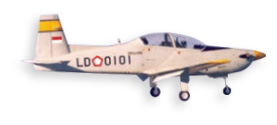
[Financial News] A loan for the cost of trainer aircraft and radar exported to Indonesia in 2019 is still being repaid, it has emerged. The specific items, amount of financial support and terms have not been disclosed, but based on the timing, the loan is believed to be for a trainer aircraft and radar project worth 100 billion won that Korea Aerospace Industries (KAI) won in 2018.
Export financing is generally repaid in installments over the long term, and Korea Eximbank's position is that this loan, too, is being repaid as scheduled under the contract. However, concerns have been raised that recovering export financing worth trillions of won over an extended period could entail significant risks. The amount of such financing is growing as financial support becomes a major factor in the increasingly fierce competition for defense exports, outweighing performance and price.
Repayment of 100 billion won in export financing for Indonesian trainer aircraft still underway ... additional 63 billion won loaned last year
According to Han Min-su, a Democratic Party of Korea lawmaker on the National Assembly's Political Affairs Committee, the only Korea Eximbank defense export financing case still being repaid among those approved over the past 10 years is the 2019-approved export of trainer aircraft and radar to Indonesia.Citing a nondisclosure agreement, Korea Eximbank did not disclose the specific items, amount of financial support or terms. However, based on the timing, the likely exports are three KT-1B basic trainer aircraft and 16 T-50i aircraft under a contract KAI won in November 2018, along with radars and machine guns to be installed on those T-50i aircraft, the Indonesian export variant of the KAI T-50 Golden Eagle advanced trainer. The contract is worth about 100 billion won.
The proportion of the contract value covered by loans has not been disclosed. However, the industry understands that such support typically covers up to 70%. On that basis, repayment of 70 billion won has yet to be completed, even after seven years.
There is also a recent Indonesian export deal for which the amount of financial support has been disclosed. Last March, KAI won a contract for a service-life extension project for Indonesia's KT-1B basic trainer aircraft. The contract is worth 93 billion won. Six months later, in September of the same year, Korea Eximbank announced financial support amounting to about 70% of the contract value, or 63 billion won. A year has passed, but disbursement has yet to begin. The bank is lending an additional 63 billion won even though repayment of the 70 billion won has not been completed.
Egyptian and Polish exports of self-propelled howitzers and tanks worth 10 trillion won: repayment disruptions could have a major impact
Korea Eximbank also said that, based on when it approved the financial support, it had provided financing for Egypt's self-propelled howitzers in 2022, Poland's self-propelled howitzers and tanks in 2023, and Polish tank exports, as well as the Indonesian deal last year.Based on the timing, these appear to be: the 2022 delivery to Egypt and local production of Hanwha Defense's (predecessor to Hanwha Aerospace) K9 self-propelled howitzers, K10 ammunition carrier vehicles and K11 fire direction control armored vehicles; and the 2022 delivery to Poland and local production of K2 tanks and K9 self-propelled howitzers by Hyundai Rotem and Hanwha Defense. The deals are worth 2 trillion won and 8 trillion won, respectively.
All of the projects include local production, which means it takes considerable time to establish production facilities and begin mass production, so the financial support is still being disbursed. Concerns have been raised that recovering financing for projects worth a combined 10 trillion won over an extended period could entail significant risks. Any disruption to repayment could have a major impact given the sums involved.
In recent defense procurement bids, signs are emerging that the scale of financial support, more than performance and price competitiveness, is determining who wins and loses. As competition intensifies, export financing is growing in scale, and the associated repayment risks could grow as well.
[email protected] Kim Yun-ho Reporter