U.S. officials visit both Hanwha’s Geoje and Philly shipyards ... Could warship and submarine contracts follow?
- Input
- 2026-10-08 17:22:47
- Updated
- 2026-10-08 17:22:47
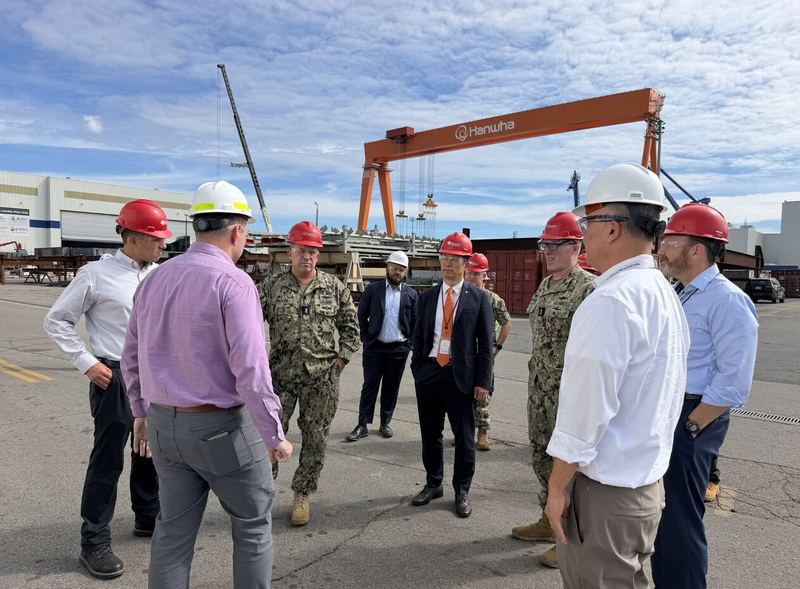
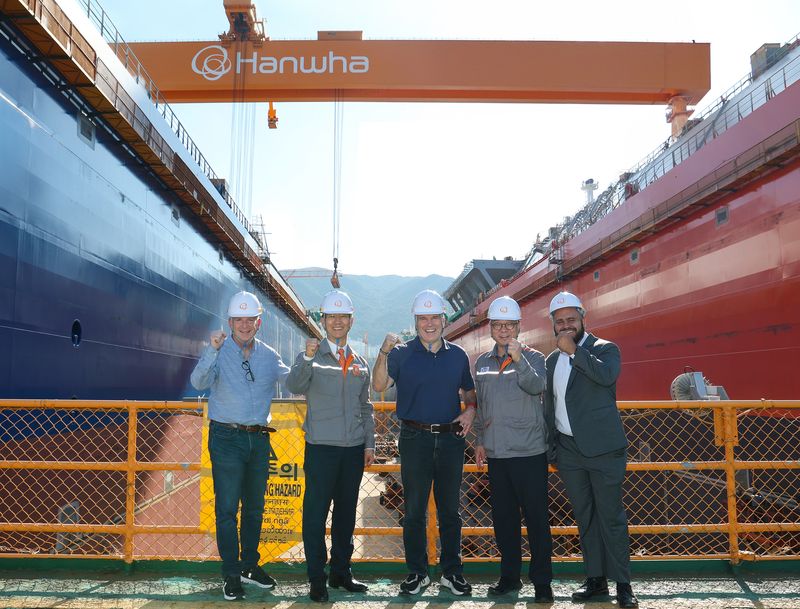
[Financial News] The U.S. Navy and Congress have recently visited both Hanwha Ocean’s Geoje site and Hanwha Philly Shipyard. Attention is focused on whether the visits will lead to contracts for Chungnam-class frigates and submarines.
Hanwha Ocean said on the 8th that U.S. Senator Dave McCormick had visited its Geoje site the previous day. Senator McCormick is a member of the ruling Republican Party and represents Pennsylvania, where Hanwha Philly Shipyard is located.
Senator McCormick boarded the Pyeongtaek, a 3,600-ton state-of-the-art frigate of the Ulsan-class Batch III (Chungnam-class) under construction at the Geoje site, to assess its naval technology. George Lemour, the U.S. Department of War’s deputy assistant secretary for East Asia, who visited the Geoje site last month, is also reported to have toured the Pyeongtaek’s construction site. The U.S. military is considering buying either the Chungnam-class frigate or Japan’s Mogami-class frigate. With U.S. government and Senate officials having inspected it in succession, hopes are rising that the Chungnam class is more likely to be selected.
In August, Richard Breckenridge, the Department of the Navy’s senior adviser for shipbuilding, also toured the facilities of Hanwha Ocean, HD Hyundai Heavy Industries and SK oceanplant.See page 17 of this newspaper’s September 2, 2026, edition.The visit by a key U.S. military shipbuilding official, organized by South Korea’s Defense Acquisition Program Administration, is seen as a sign that contracts to build new U.S. warships may be imminent. Hanwha Philly Shipyard already won a contract from the U.S. Maritime Administration in July for a Maritime Missile Test Instrumentation Vessel (MRIV).
U.S. Navy admirals overseeing submarine programs have also recently visited Hanwha Philly Shipyard. The shipyard said on LinkedIn that U.S. Navy Vice Admiral Robert M. Gaucher and Rear Admiral Jonathan Rucker visited and discussed the future of the U.S. shipbuilding industry.
Vice Admiral Gaucher oversees the U.S. Navy’s submarine program, while Rear Admiral Rucker is responsible for submarine design and construction. Rucker oversees major submarine construction programs, including the Virginia- and Columbia-class nuclear-powered submarines. Given the wide range of topics discussed—from cooperation with the U.S. government to strengthen the shipbuilding industrial base to advanced manufacturing, automation and workforce development—submarine construction programs are also believed to have been raised.
Although talks on the South Korea–U.S. MASGA agreement have made little headway, visits by the U.S. side continue because companies in the two countries have already joined forces. Through the South Korea–U.S. Shipbuilding Cooperation Center, which opened in July, shipbuilding companies in the two countries are building a framework for cooperation in design, development, workforce training and supply chains. For example, Hanwha Ocean is jointly designing a global strategic transport vessel with Leidos Gibbs & Cox, a U.S. company specializing in naval vessel design, while Hanwha Philly Shipyard and Delaware County Community College are training shipbuilding workers together.
Hanwha Ocean President Jung In-sub, head of its management support office, said, “We are working to expand production capacity, with a focus on Pennsylvania, to contribute to rebuilding the U.S. shipbuilding industry,” and added, “We will broaden cooperation with local U.S. partners and lead the joint growth of the South Korean and U.S. shipbuilding industries.”
[email protected] Kim Yun-ho Reporter