Half of severe heat alerts fell short of criteria, lawmakers say... KMA says a margin of tolerance should be considered
- Input
- 2026-10-08 17:12:13
- Updated
- 2026-10-08 17:12:13
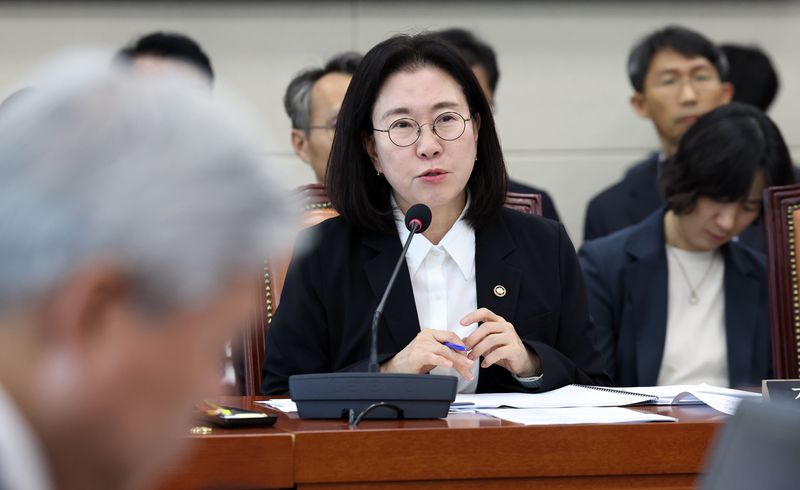
At a National Assembly audit, lawmakers raised concerns that 67 of the 116 newly issued severe heat alerts introduced this year did not meet the criteria for actual observed temperatures. An analysis also found 52 cases in which no alert was issued despite the criteria being exceeded. Korea Meteorological Administration chief Lee Mi-seon said that a margin of about 0.5°C should be allowed for temperature readings and that the agency would review how to operate the system next year based on the results of a review.
At the National Assembly’s audit of the Korea Meteorological Administration on the 8th, Rep. Kim Tae-sun of the Democratic Party of Korea said that an analysis he conducted with experts of meteorological observation data from 83 areas where severe heat alerts had been issued found that 67 of the 116 new alerts (57.8%) did not meet the actual issuance criteria.
The severe heat alert is a system introduced to signal a level of risk higher than that of the existing heatwave warning.
According to Rep. Kim, about 36% of the total 298 cases, including alerts that remained in effect through the following day, also fell short of the criteria. He said this figure was calculated by counting a region as meeting the criteria if even one of its multiple observation stations exceeded the threshold.
He also pointed out that there were 52 cases in which no severe heat alert was issued despite the apparent temperature being at least 38°C and the high temperature exceeding 39°C.
In response, Lee said, “We evaluated the alerts using an apparent temperature of 38°C and a high temperature of 39°C as the criteria, but shouldn’t we allow a margin of about 0.5°C for both?” He added, “There were cases where forecasters issued alerts even when the readings were not exactly 38°C or 39°C,” explaining that the results could change if a margin of tolerance were applied in the evaluation.
Questions were also raised about when the alerts were announced. Rep. Kim said that only 25% of cases followed the principle of announcing alerts at 4 p.m. the previous day, while the remaining 75% were announced after 10 a.m. on the day.
Lee explained that the ratio of alerts announced the previous day to those announced on the day was roughly three to seven. “After the severe heat alert system was introduced, the entire government worked closely together,” he said. “Outdoor work at worksites was being suspended, so we wanted to proceed a little more cautiously.”
He also said that local meteorological offices, local governments and the Ministry of the Interior and Safety communicated the previous day and shared information about areas where the likelihood of a heatwave the following day was at least 70%.
Lee explained, “If an alert is announced at 10 a.m., it takes effect at 11, but actual daytime temperatures rise between 2 and 3 p.m., and sometimes as late as 4.” He added, “We will review how to operate the system better next year based on the results of the review.”
[email protected] Lee Bo-mi Reporter