Wonju Mayor Gu Ja-yeol unveils everyday-life policies and future-industry blueprint on 100th day in office
- Input
- 2026-10-08 17:10:10
- Updated
- 2026-10-08 17:10:10
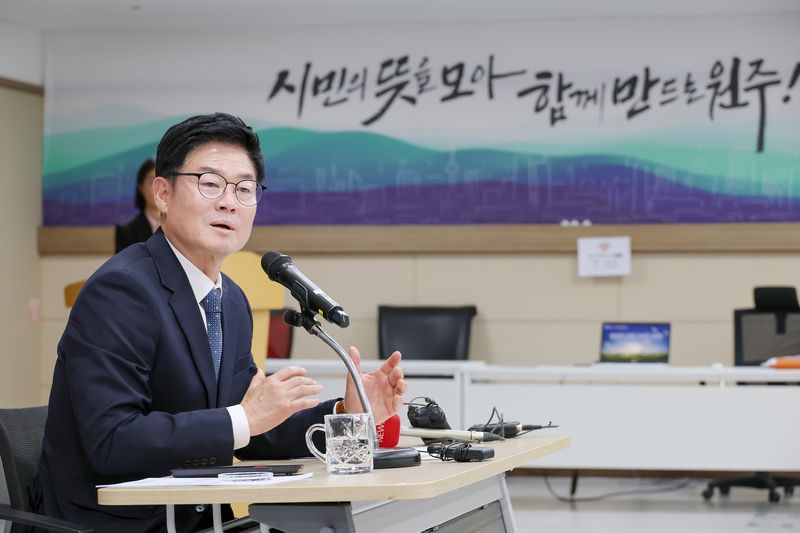
【Financial News, Wonju = Kim Gi-seop】Marking his 100th day in office, Wonju Mayor Gu Ja-yeol has unveiled both policies closely tied to daily life to ease residents’ cost of living and everyday inconveniences, and a future-industry strategy centered on medical AI.
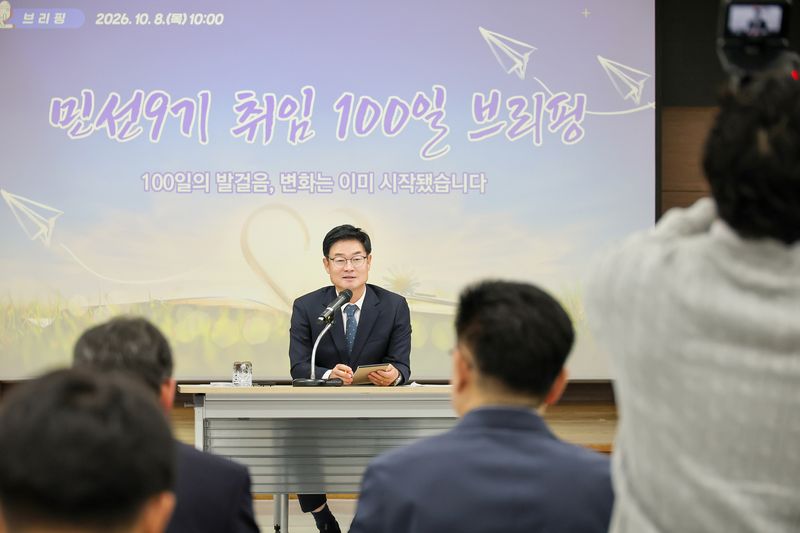
At 10 a.m. that day, Mayor Gu held a briefing marking the 100th day of the ninth popularly elected administration at city hall’s multipurpose hall and announced plans for the city’s future administration. Over the past 100 days, he has visited all 25 eup, myeon and dong districts in turn and held Citizen Sovereignty Neighborhood Meetings attended by around 300 residents to hear their views. He is also preparing to launch the Citizen Sovereignty Era Committee and establish a Citizen Sovereignty Officer post directly under the mayor.
Addressing everyday inconveniences starts with overhauling public transportation. The city will introduce a hub-and-transfer system in townships to improve inefficient city bus routes and long intervals between buses. It will roll out the Wonju Pass, which allows people to use buses, taxis and shared bicycles for a single fare, by 2029, following a pilot program for teenagers in the second half of next year. The city will resolve odor problems during the mayor’s term through the Odor Response Task Force, launched last September, and revive Central Market Building Na, which has been closed since a fire in 2019, as a multipurpose cultural space after repairs, reinforcement and a second-floor renovation.
The half-price initiatives will also be introduced in stages. Fees for public sports facilities will be cut by 50% starting next March. From the second half of next year, the city will fully cover jeonse loans and interest for 100 homes under its 1,000-won housing program for young people and newlyweds. The Wonju-style Growth Voucher will be distributed starting next January, while hourly childcare fees for infants and toddlers will be lowered from 2,000 won to 1,000 won. The budget for half-price agricultural supplies will increase by 1 billion won each year starting next year, reaching 7.5 billion won by 2030.
Public facilities will also be opened to residents. A book-column library will be built in the city hall lobby and opened next year, while the former livestock breeding station site will be used as a temporary public park from the second half of next year. Camp Long Civic Park, built across 330,000 square meters at a cost of 137.4 billion won, will open temporarily this month, starting with areas deemed safe, ahead of its official opening next April.
Healthcare is at the heart of the future-industry strategy. The city will seek to attract an advanced medical complex, establish a medical AI industrial district in the Seowonju area, and pursue a Gangwon medical wellness AI transformation project on the scale of 1 trillion won. It is refining its strategy to attract public institutions ahead of the second round of relocations, which is expected to be announced within the year. The city also aims to become a regional transportation hub through the Yeoju-Wonju double-track railway, scheduled for completion in 2028, and an extension of GTX-D to Wonju.
Wonju Mayor Gu Ja-yeol said, “What residents told me they hoped for over these 100 days was an ordinary day when they could wait less for the bus and open their windows without worrying about bad odors.” He added, “I’ll start by delivering tangible changes, such as half-price sports facilities and 1,000-won homes, and prepare for Wonju’s next leap forward together with its 370,000 residents by attracting public institutions and developing a medical AI industrial district.”
[email protected] Kim Gi-seop Reporter