UN warns El Niño is rapidly intensifying ahead of December peak... could be the strongest since 1950
- Input
- 2026-10-08 15:56:04
- Updated
- 2026-10-08 15:56:04
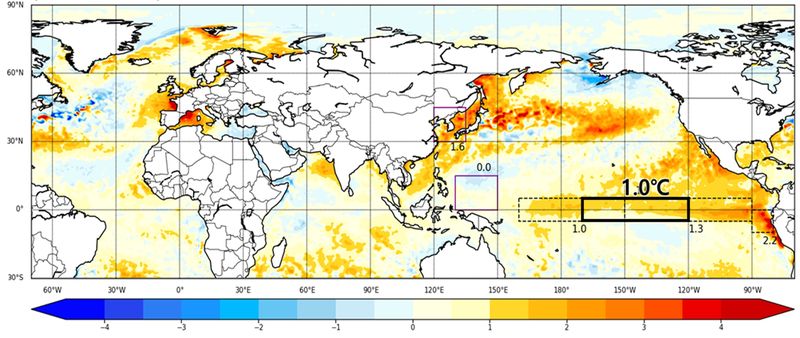
[Financial News] The United Nations warned that El Niño will grow stronger as it heads toward its peak this December. This El Niño is expected to be among the strongest observed since records began in 1950.
AFP reported on the 8th (local time) that the World Meteorological Organization (WMO), in its monthly “Global Seasonal Climate Update,” says El Niño—a naturally occurring rise in sea-surface temperatures—combined with the effects of human-induced climate change will bring record-breaking heat and extreme weather around the world.
The WMO said, “Sea-surface temperatures in the central and eastern equatorial Pacific are forecast to soar to unprecedented levels from October through December,” adding, “This will disrupt global weather patterns and have serious impacts on economies, ecosystems and communities.” The outlook was drawn up based on consensus among 13 major weather centers around the world.
WMO Secretary-General Celeste Saulo stressed, “El Niño is firmly established and intensifying rapidly,” adding, “According to WMO forecasts, the probability that this El Niño will last until February 2027 is close to 100%, and it is likely to be one of the strongest El Niño events since 1950.”
Saulo explained that El Niño is a mechanism that releases heat stored in the oceans rather than adding new heat to the Earth. He added, “The ocean from which El Niño is currently drawing heat is the warmest in recorded history,” and “the amount of heat available for release is greater than ever.”
Indeed, the sea-surface temperature anomaly index in the central and eastern equatorial Pacific, the key region for El Niño, rose from 1.6 degrees above normal in June to 2.5 degrees in August. The WMO expects the anomaly to reach about 3.7 degrees above average from October through December. This would be an all-time high, far surpassing the previous record of 2.6 degrees set in 2015–16.
El Niño, which typically occurs once every 27 years and lasts 9 to 12 months, peaks between November and February, but its effects on global temperatures are felt with a lag. The previous El Niño also made 2023 the second-hottest year on record and raised global temperatures to about 1.55 degrees above preindustrial levels in 2024, setting a new record.
[email protected] Yoon Jae-jun Reporter