Jeju bids for six public institutions and G20; expands residents’ signature drive on Hangul Day
- Input
- 2026-10-08 15:40:39
- Updated
- 2026-10-08 15:40:39
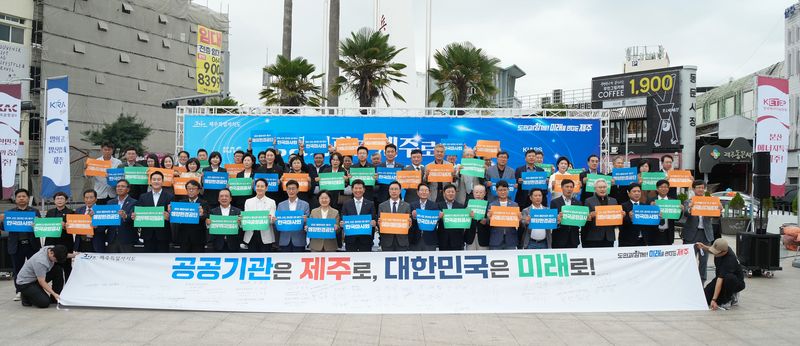
【Financial News Jeju = Jung Yong-bok】 With the government’s announcement of its second plan to relocate public institutions to other regions scheduled for the fourth quarter of this year, Jeju Province is stepping up efforts to expand a residents’ signature campaign to bring six key institutions to Jeju and host the 2028 Group of 20 (G20) Summit. Ahead of two pressing issues—the national balanced-growth policy and the selection of a host city for the international summit—the province is seeking to highlight to the government the potential for linking Jeju’s industries with public institutions and the island’s ability to host international conferences.
According to Jeju Special Self-Governing Province on the 8th, the province will run a promotional booth in the first-floor lobby of the Jeju Provincial Government building from 9 a.m. to noon on the 9th, Hangul Day, to promote the second-phase relocation of public institutions to Jeju and the bid to host the G20 Summit.
In conjunction with the Hangul Day event at Tamna Hall in the provincial government building, the province plans to explain to residents why the two initiatives are needed and how they can take part in the signature campaign.
The most urgent issue is the second-phase relocation of public institutions to other regions. On September 3, the government announced that it would consider relocating around 350 public institutions in the Seoul metropolitan area, finalize a relocation plan in the fourth quarter of this year, and begin pilot relocations in 2027.
The plan is to minimize the number of institutions remaining in the Seoul metropolitan area and cluster related institutions around existing innovation cities, while using links with local universities and industries as a key criterion. Pilot relocations would begin with some institutions, using approaches such as leasing existing buildings before constructing new headquarters.
The six institutions Jeju Province has identified as priority targets are the Korea Racing Authority, Korea Airports Corporation (KAC), Korea Institute of Energy Technology Evaluation and Planning, Next-generation Numerical Weather Prediction Model Development Project Group, Korea Marine Environment Management Corporation, and Korea Trade-Investment Promotion Agency (KOTRA).
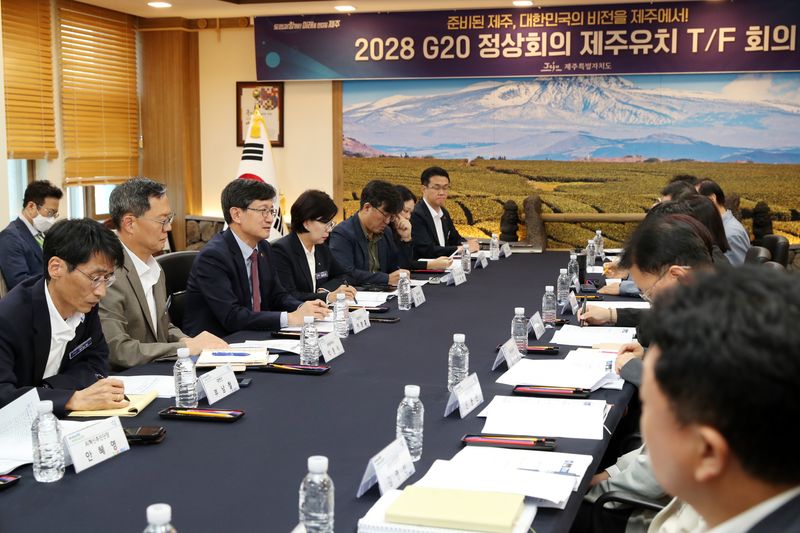
Jeju is putting forward a strategy of linking each institution’s functions with the region’s key industries.
The Korea Racing Authority’s key argument for relocating to Jeju is the island’s existing horse-industry infrastructure, including Jeju Racecourse and Jeju Ranch. KAC is being linked to the aviation industry centered on Jeju International Airport, while the Korea Institute of Energy Technology Evaluation and Planning is pointing to potential cooperation with Jeju’s renewable energy and carbon-neutrality industries.
The Korea Marine Environment Management Corporation is linked to Jeju’s marine environment management and marine industries, while the Next-generation Numerical Weather Prediction Model Development Project Group is linked to the region’s research base in meteorology and climate. Jeju is seeking to attract KOTRA on the grounds that it could strengthen support for Jeju companies entering overseas markets and exporting.
The government plans to decide which institutions will relocate and where they will be placed after reviews by the relevant ministries and deliberation by the Presidential Committee for the Era of Local Autonomy, among other steps. The need for each institution to relocate, its links with Jeju’s industries, the availability of work space, and support for employees settling in the area remain issues to be addressed in the competition to attract them.
Jeju also held activities calling for the relocation of public institutions on September 19, led by the pan-provincial campaign headquarters for attracting the second-phase public institutions to Jeju. The Hangul Day promotional booth is intended to add residents’ participation to the existing efforts to attract them.
Jeju’s bid to host the 2028 G20 Summit is another issue that requires the province to respond to the government’s host-location selection process.
South Korea was confirmed as the country that will hold the G20 presidency in 2028 at last year’s summit. The G20 Summit will be held in South Korea for the first time in 18 years, since the 2010 Seoul Summit. Jeju Province launched the National Committee to Promote Hosting the G20 Summit in Jeju at the Jeju Welcome Center on September 16 and stepped up its bid.
Jeju’s strengths include the conference and accommodation facilities clustered in and around International Convention Center Jeju and Jungmun Tourist Complex, its experience hosting high-level international conferences, and the security and safety conditions afforded by its island geography. The bid also points to the potential to connect policies Jeju is pursuing—including climate change action, carbon neutrality and the energy transition—to the international conference agenda.
However, the bid will not be decided on the basis of conference infrastructure and hosting experience alone. Jeju must present a comprehensive case covering transportation, accommodation, security and event management capacity, and respond to the government’s host-location selection process.
Jeju Province’s decision to promote both the relocation of public institutions and its bid to host the G20 Summit reflects the fact that both initiatives require policy consideration and decisions by the central government.
Relocating public institutions is a medium- to long-term growth initiative that would connect Jeju’s industries with the functions of national public institutions. For the G20 Summit, the key factors are the ability to host an international conference and competition to secure a major national event. Although their policy objectives differ, both initiatives require concrete grounds to persuade the government and support from the local community.
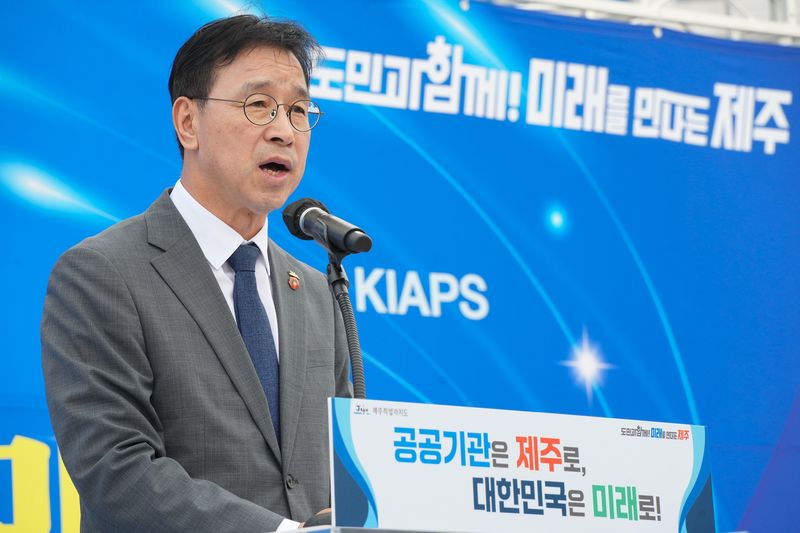
Yang Je-yun, head of Jeju Province’s Planning and Coordination Office, said, “Residents’ interest and participation are a great source of strength for relocating public institutions to Jeju and securing the G20 Summit,” and urged, “Residents attending the Hangul Day event, please join the signature campaign.”
[email protected] Jung Yong-bok Reporter