Guidelines for the safe use of human-tissue-derived ‘Re2O’ shared—how is it applied to different areas?
- Input
- 2026-10-08 15:07:28
- Updated
- 2026-10-08 15:07:28
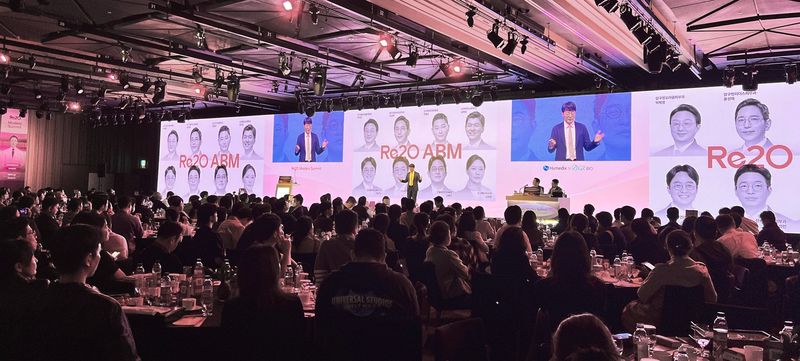
[Financial News] Guidelines for the safe clinical use of skin products derived from human tissue have been presented to medical professionals. At a symposium marking the second anniversary of Re2O’s launch, Humedix shared official usage guidelines and application methods for different areas.
On the 7th, Humedix held the ‘Re2O Masters Summit’ at The Westin Seoul Parnas, with around 500 medical professionals in attendance. At the event, jointly organized by Humedix and L&C Bio, six dermatology and plastic surgery specialists spoke about the management and safety of Re2O’s human-tissue-derived skin ECM, application cases, and the latest clinical insights.
Lee Do-young, director of Konkuk Hill House Dermatology Clinic, presented benchmarks for the safe clinical use of Re2O based on the official guidelines established by Re2O ABM.
Application methods for different areas were also introduced. Lim Hyung-woo, director of Forever Plastic Surgery Clinic, explained how to use Re2O in eye surgery in a presentation titled ‘Re2O for Lower Eyelid Procedures.’ Park Je-young, director of Apgujeong Oracle Dermatology Clinic, presented ‘Re2O Fine for Under-Eye Use,’ while Yoon Seong-jae, director of Apgujeong Leaders Dermatology Clinic, spoke on ‘Layer-by-Layer Application of Re2O.’ Park Seong-su, director of Bonbon Plastic Surgery Clinic, shared various examples of how Re2O can be used in plastic surgery.
A new product was also unveiled for the first time. Shin Dong-woo, director of Nabi Plastic Surgery Clinic, introduced the new ‘Re2O V’ line in a presentation titled ‘Early Clinical Experience with Re2O V,’ describing it as a product that can both rebuild the skin’s dermis and improve hollowness.
The event also included in-depth discussion of safety management systems, given that the products are made using human tissue. Re2O is based on human acellular dermal matrix (hADM), made from posthumously donated human dermis obtained through U.S. tissue banks and then decellularized and purified. The scope of donor consent includes the use of donated tissue in the development and manufacture of products for cosmetic and reconstructive purposes. The product is manufactured under the oversight of the Ministry of Food and Drug Safety after donor suitability assessments, infectious disease screening, viral safety measures, and residual DNA controls. A system is also in place to enable rapid tracing through a tissue transplantation outcome report if an adverse event occurs.
Humedix CEO Kang Min-jong said, “This symposium went beyond introducing Re2O; it was an opportunity for in-depth discussion of the potential for skin reconstruction and functional enhancement under thorough, systematic management based on the Human Tissue Act. We will continue to help steer the ECM industry in the right direction through rigorous management and a strong sense of responsibility, and become a trusted partner in the medical and regenerative fields at home and abroad.”
[email protected] Myeong-jin Jeong, Reporter