PERSAT to try again after failed deployment from Nuri ... Launch in India in December
- Input
- 2026-10-11 14:30:07
- Updated
- 2026-10-11 14:30:07
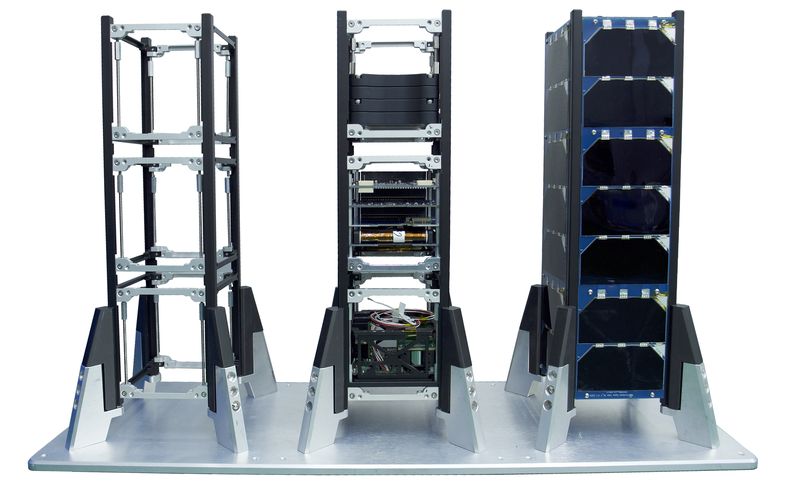
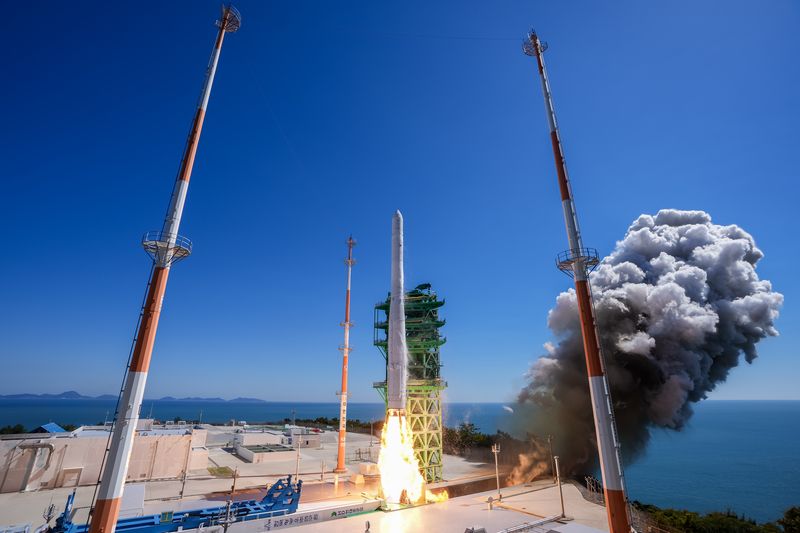
[Financial News] The CubeSat “PERSAT-2,” which left a sense of disappointment after failing to deploy during Nuri’s fifth launch, will try again with a relaunch in December.
According to Quaternion, which developed PERSAT-2, on the 11th, the satellite is scheduled to be launched as “PERSAT-3” in December by Indian private space company Skyroot.
Quaternion Director Ham Gyu-sik said, “We’ll launch PERSAT-3 in India again in December,” adding, “Since PERSAT-2 could not be deployed, we want to use PERSAT-3 to revalidate what we had planned to verify with PERSAT-2. Our goal is to operate the PERSAT series through No. 17.”
Nuri launched on its fifth flight on the 7th carrying a total of 15 satellites: five primary payload satellites, Neonsats, and 10 secondary payloads, CubeSats. Of these, PERSAT-2 was not deployed, leaving just 14 satellites actually separated into space.
PERSAT is a CubeSat developed to analyze the movement paths of marine debris around Jeju Island and the direction of ocean currents. PERSAT-1, carried on Nuri’s fourth launch last November, spent six months in space carrying out its mission and verifying battery operation and the performance of key components. It also successfully transmitted and received signals with the ground, but did not obtain image data.
PERSAT-2’s performance was improved with a focus on acquiring observational data, including images. Its data reception capacity was enhanced by expanding its reception modes and storage capacity, and its components were also made 100% domestic with future commercialization in mind. However, because PERSAT-2 could not be deployed on this launch, its successor, PERSAT-3, is planned to be built with the same configuration as PERSAT-2 and launched.
The Korea Aerospace Research Institute (KARI) is investigating why PERSAT-2 was not deployed properly.
KARI Director Park Jong-chan said on the 7th, the day of the launch, “Nuri sent the cover-separation signal to PERSAT-2 as intended, but the cover did not open,” and added, “We are currently investigating the cause.”
According to KARI and other sources, of the 10 CubeSats carried on Nuri’s fifth launch, the covers for eight were made by the same domestic company, while the remaining two used covers made by their respective satellite developers. The satellites using covers from the same company reportedly had similar basic structures, differing only in size.
KARI said, “The covers for the eight CubeSats were products that KARI purchased through a domestic company; they differed only in size depending on the satellite,” adding, “We plan to disclose the cause of the failed deployment once it is identified, but determining the cause could take as long as several months.”
[email protected] Yeon Ji-an Reporter