Jeju Governor Wi Seong-gon seeks to direct National Sports Festival spending to Seogwipo businesses; proposes AI for building permits
- Input
- 2026-10-08 14:34:49
- Updated
- 2026-10-08 14:34:49
【Financial News Jeju = Reporter Jeong Yong-bok】 With eight days to go before the opening of the 107th National Sports Festival, Jeju Province has begun drawing up measures to direct spending by athletes and visitors to businesses in the Seogwipo area. It will also pursue administrative improvements in Seogwipo City, including integrated management of foreign seasonal workers, surveys of underused public facilities and AI-powered management of building permits.
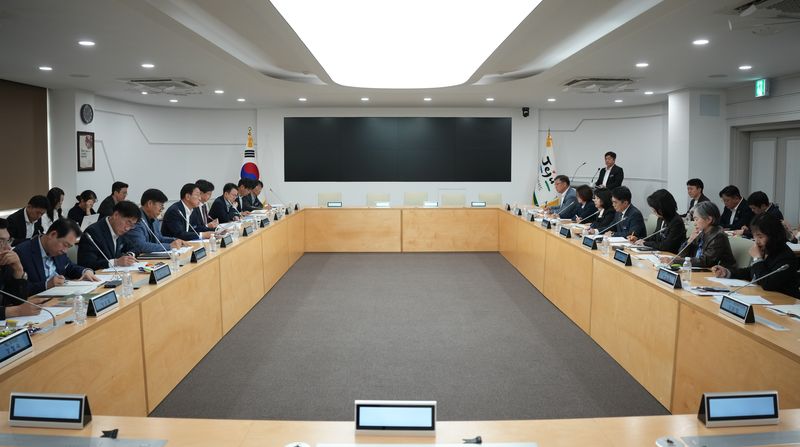
According to Jeju Special Self-Governing Province on the 8th, Governor Wi Seong-gon chaired the 12th meeting on key issues between the provincial government and administrative cities that day at Hallahall in the provincial government building. Seogwipo Mayor Kim Hee-chan and senior provincial and city officials attended. It was the first such meeting with Seogwipo City since Mayor Kim took office.
Governor Wi emphasized the principles guiding provincial administration—“Residents first, livelihoods first, safety first, and acting responsibly”—and called for officials to prioritize preparations for the National Sports Festival, revitalizing the local economy and public safety.
The most urgent issue is the National Sports Festival, which opens on the 16th. The 107th National Sports Festival, hosted by the Korean Sport & Olympic Committee (KSOC) and organized by Jeju Province, the Jeju Provincial Office of Education and the Jeju Sports Council, will be held across Jeju from the 16th to the 22nd. A total of 30,599 people are expected to participate, including athletes, officials and representatives of overseas Korean organizations. The opening and closing ceremonies will take place at Seogwipo World Cup Stadium.
Governor Wi called for thorough checks during preparations for the event, not only on venue safety but also on problems visitors might encounter directly, such as price gouging at lodging establishments and violations of country-of-origin labeling rules at restaurants.
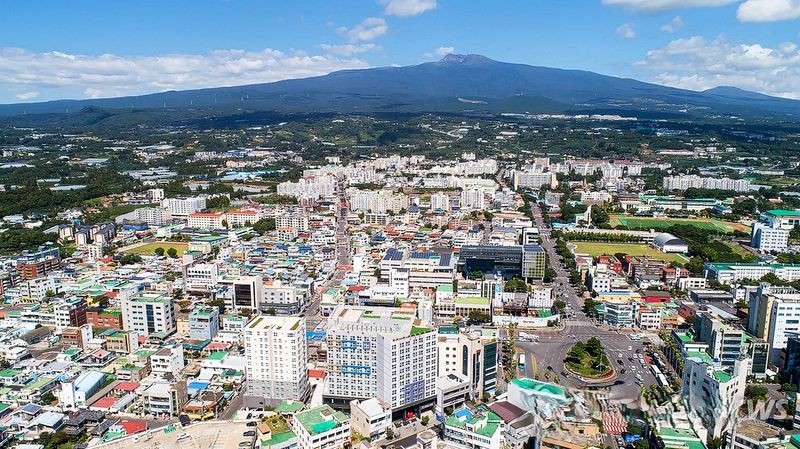
In particular, he called for measures to promote spending by linking restaurants near venues with commercial districts so that athletes’ and visitors’ spending would benefit businesses in the Seogwipo area. The aim is to ensure that the benefits of hosting a major sporting event extend beyond lodging and tourism and translate into sales for local small businesses.
Measures to improve administrative efficiency were also proposed. The time taken to process building permits in Seogwipo City fell from 36.6 days in 2024 to 30.9 days as of July this year. Governor Wi proposed developing an AI-powered system that would allow applicants and relevant departments to check the progress of permit applications.
Building permits involve going through approval or notification procedures with an administrative agency when constructing a new building, adding to one or changing its use. Because reviews by multiple departments may be required, it is important to have a system for checking the stages of processing and the status of an application.
To address the rural labor shortage, he called for improvements to the way foreign seasonal workers in the public program are managed. Under the public seasonal-worker program, agricultural cooperatives and other organizations hire foreign workers and provide labor to farms that need help.
Governor Wi directed officials to draw up an integrated management plan to reduce the costs associated with each agricultural cooperative operating its own program and improve the efficiency of worker deployment. Whether the operational system will actually be reorganized, and the scope of any changes, will require further review.
Underused public facilities were also identified for review. Officials were asked to survey facilities built through village development projects and rural and fishing village development projects that have seen little use or been left idle, and for the provincial government and administrative cities to jointly find ways to put them to use.
Seogwipo City reported on progress in operating public indoor children’s playgrounds, providing integrated medical and long-term care services, managing public safety and other initiatives, in addition to revitalizing local businesses in connection with the National Sports Festival. The meeting also discussed bringing in foreign seasonal workers, preparations for the Jeju Garden Culture Expo and ways to improve building permit processing.
The meeting also reflects Jeju’s administrative structure, under which Jeju City and Seogwipo City operate as administrative cities without separate basic local governments. Since provincial-level policies need to be connected with on-the-ground implementation by the administrative cities, it is important that cooperation between the provincial government and the cities lead to solutions to actual local issues.
“The more directly issues such as livelihoods and the local economy affect residents’ lives, the more closely the provincial government and administrative cities need to work together,” Seogwipo Mayor Kim Hee-chan said. “We will actively share what we hear on the ground and take the lead in resolving matters that the administrative city is responsible for.”
[email protected] Jeong Yong-bok Reporter