“Hangeul is a competitive advantage for K-food” ... Food industry launches all-out marketing campaign for 100th anniversary of Hangeul Day
- Input
- 2026-10-08 14:46:17
- Updated
- 2026-10-08 14:46:17
[Financial News] Marking the 100th anniversary of the establishment of Hangeul Day, South Korean food companies are launching all-out marketing campaigns that put Hangeul front and center. Their strategy goes beyond simple anniversary events, using Hangeul as a key asset that represents their brands’ originality and K-food’s identity.
According to industry sources on the 8th, food companies are stepping up efforts to reach consumers for Hangeul Day, from launching limited-edition products inspired by Hangeul and creating pop-up spaces to introducing products overseas.
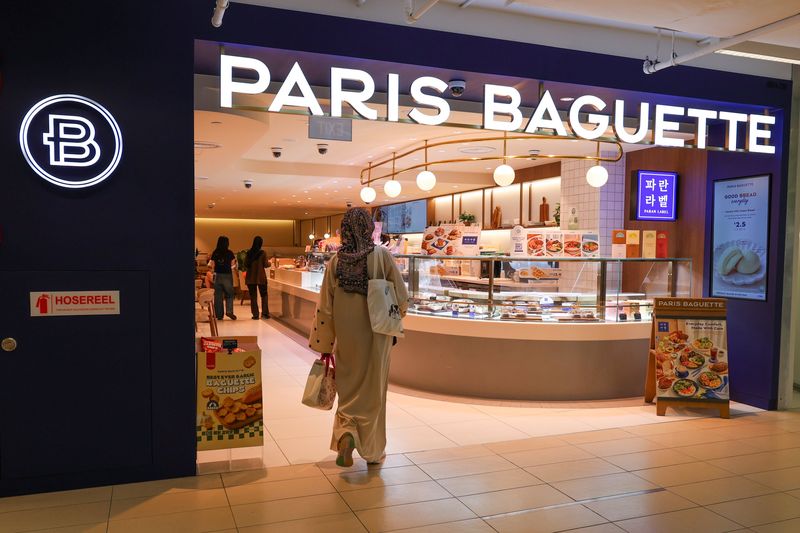
Paris Baguette is expanding its reach among customers at home and abroad by foregrounding Hangeul brand names, packaging and campaigns. It is stepping up branding and marketing that draw on Hangeul and Korean identity, including the healthy bakery brand “Paran Label,” the brand vision “K-Paba” and the campaign “Annyeong K-Paba.” In particular, it uses the Hangeul brand name “Paran Label” unchanged at its stores in Singapore. A Paris Baguette representative said, “Through campaigns that use Hangeul, such as Paran Label, K-Paba and Annyeong K-Paba, we will share what makes Paris Baguette unique with customers at home and abroad.”
Ediya Coffee is running a Hangeul Day campaign to promote the beauty and value of the Korean language. Until the 31st, Hangeul will be used throughout its Ediya Members mobile membership app. The app icon and logo have been changed to Hangeul, and familiar foreign-language terms used in stores, such as drink sizes and temperature options, have also been replaced with Hangeul so users can reflect on the meaning of Hangeul Day.
Nongshim has been running an initial-consonant game since last month, inviting participants to create their own “Ieung-Siot Tangmyeon.” To enter, participants fill in the “ieung-siot” initials on a package in the Hangeul Day multipack with a word of their choice, then post a photo as proof on social media with the required hashtags. Social media feeds are filling with photos of ramen packages bearing entries such as “Unsutangmyeon,” “Apseungtangmyeon” and “Yangsimtangmyeon.”
Through the 11th, Lotteria is hosting the “Matkkallia—Celebrating 100 Years Since Hangeul Day Was Established” pop-up at three locations: its Hongdae branch, its Jamsil Lotte World Mall B1 branch and its Seoul Station branch. Under the theme “The great Hangeul that expresses every taste in the world,” the pop-up features graphics using Lotteria’s own typeface, “Ria,” and its characters, as well as Hangeul Day commemorative sculptures.
The Hangeul marketing trend is not confined to South Korea. One notable example is the use of Hangeul as is on packaging for overseas markets.
Orion is stepping up marketing that features Hangeul on product packaging in overseas markets, including China, Vietnam and Russia. Last month, it changed the name of its four-layer snack “Masita,” sold in Vietnam, to “Kkobuk Chips,” the same name used in South Korea. On “Bungo,” sold in the United States and elsewhere, it also printed the Hangeul name “Cham Bungeoppang” at the request of local buyers. Binggrae will unveil a Hangeul advertisement for Ttaom, a premium chilled juice brand whose name is a native Korean word, in Times Square in New York.
An industry representative emphasized, “As the 100th anniversary of Hangeul Day prompts efforts to combine Hangeul’s originality and aesthetic value with food branding, those efforts are more active than ever. In global markets, Hangeul is one of the most powerful tools for firmly imprinting K-food’s distinctive identity.”
[email protected] Kim Seo-yeon Reporter