“From luxury goods to cosmetics and baby products” ... “Rooting out everyday counterfeits”
- Input
- 2026-10-11 12:00:00
- Updated
- 2026-10-11 12:00:00
The Ministry of Intellectual Property announced on the 11th that it would conduct joint public-private online monitoring from the 12th through the end of the year to block counterfeit goods that threaten consumer health and safety.
The distribution of counterfeit goods, once concentrated on luxury items and high-end clothing, is rapidly spreading to everyday products such as cosmetics, health supplements, and baby products. In particular, as the volume of overseas direct purchases grows, the risk of fake goods disguised as genuine products entering the country is rising, prompting calls for early detection and immediate blocking.
Accordingly, the Ministry of Intellectual Property will first conduct intensive inspections from the 12th through the 30th of this month, covering 35 major brands in categories including cosmetics, health supplements, baby and children’s products, and cleaning products, across 15 online platforms, including online marketplaces and social networking services (SNS).
Artificial intelligence (AI) technology will be deployed throughout this enforcement effort to pre-screen sales listings suspected of offering counterfeit goods. If necessary, products will be purchased directly and assessed by trademark holders for authenticity. If confirmed to be counterfeit, the relevant sales listings and accounts will be blocked immediately.
From November through the end of the year, when peak periods for overseas direct purchases such as Black Friday and Boxing Day fall, the ministry will shift to a continuous monitoring system focused on clothing, fashion accessories, shoes, and other items. Alongside its AI detection system, it will deploy the Korea Intellectual Property Protection Agency’s at-home monitoring team and specialist staff, conducting enforcement operations on holidays and at night during major discount events.
Information on detected counterfeit goods will also be shared with relevant agencies, including the Korea Customs Service and the Broadcasting, Media and Communications Review Commission, as well as trademark holders. The parties will establish a cooperative system to block the goods from entering the country at the customs clearance stage and to ensure that access to websites selling counterfeits is blocked.
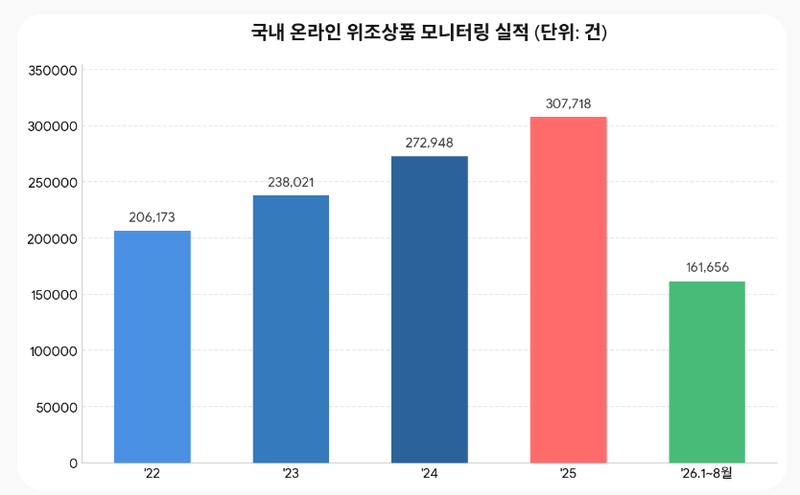
“As counterfeiting methods become more sophisticated, it is important for the public and private sectors to coordinate their capabilities in detection, authentication, and blocking,” said Park Jin-hwan, director-general of the Ministry of Intellectual Property’s Intellectual Property Dispute Response Bureau. “We will swiftly identify and block counterfeit goods that threaten consumer safety.” Meanwhile, online counterfeiting is growing rapidly year after year. According to figures on online sales of counterfeit goods halted by the Korea Intellectual Property Protection Agency’s at-home monitoring team, the number of cases detected each year rose from about 120,000 in 2020 to about 220,000 in 2024. Last year, the Ministry of Intellectual Property placed 388 people under criminal investigation for trademark violations, and the seized counterfeit goods were worth 43.26 billion won based on the value of the genuine products. However, concerns continue to be raised that monitoring staff and technology are not sufficient to keep pace with the speed of online distribution.
[email protected] Kim Won-jun Reporter