Even prominent Japanese companies face risk of being dropped from TOPIX as pressure mounts to improve corporate value
- Input
- 2026-10-08 12:45:41
- Updated
- 2026-10-08 12:45:41
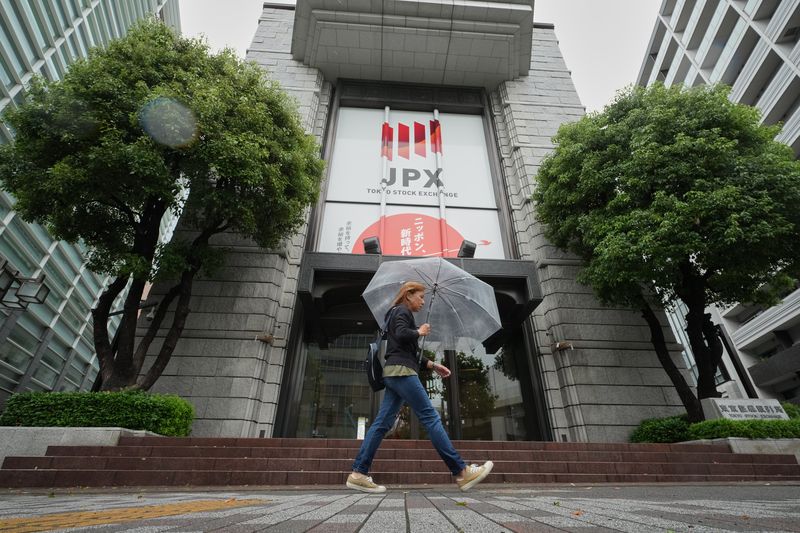
【Financial News correspondent Seo Hye-jin in Tokyo】As the inclusion criteria for TOPIX, Japan’s leading stock index, are tightened, listed companies face mounting pressure to improve their corporate value. Even prominent companies listed on the top-tier market will be excluded from the index if their shares are thinly traded or their free-float market capitalization falls short of the threshold. With the investment targets of index-tracking funds worth about 160 trillion yen (about 1,354 trillion won) set to change, companies are also reassessing their growth strategies and investor communications.
According to The Nikkei and the Asahi Shimbun on the 8th, ITFOR, which supplies bond management systems and other products for financial institutions, failed to meet the retention criteria in the latest revamp. The company, listed on the TSE’s top-tier Prime Market, has sought to boost shareholder returns by setting a dividend payout ratio of 50% or more. It plans to pursue its growth strategy and raise its corporate value through communication with investors.
TOPIX is one of the leading indices of the Japanese stock market, alongside the Nikkei 225. It is similar to South Korea’s Korea Composite Stock Price Index (KOSPI) in that it reflects market trends by aggregating the share prices of its constituents. Investment trusts and pension funds that track TOPIX hold stocks in line with its composition. If a stock’s weighting in the index is reduced or it is removed, funds must also cut their holdings, which can put downward pressure on its share price.
The revamp is intended to address the burden of managing the existing index, which included even stocks with little trading activity. TOPIX automatically included companies listed on the former First Section of the TSE, with no regular replacement of constituents. Companies whose market trading had dwindled because large stakes were held by founders’ families or affiliated companies could also remain in the index.
Asset managers had to trade even these stocks in line with their index weightings. A lack of available shares increases the time and cost involved. Satoru Takahashi, a senior portfolio manager at Nomura Asset Management, said, “The current index includes illiquid stocks that can take several weeks to trade on the market.”
The new criteria focus on trading value turnover and free-float market capitalization. These measure trading activity and the value of shares available for trading on the market, respectively. Shares held long term by founders or affiliated companies are excluded from the free float, putting companies at a disadvantage if the volume of shares actually available for trading is low, even when their total market capitalization is large.
Existing constituents can remain only if they meet a certain level of trading value turnover and fall within the range accounting for 97% of the total when free-float market capitalizations are ranked from largest to smallest.
The Japan Exchange Group (JPX) said the previous day that 986 companies met the criteria, about 40% fewer than the 1,636 constituents at the end of last month. A total of 683 existing constituents fell short of the criteria. Many companies familiar to consumers, including those in food, dining, department stores, railways and broadcasting, were among them.
The Prime Market applies the strictest listing requirements for matters such as stock liquidity and corporate governance. But because listing requirements differ from the criteria for index inclusion, Prime-listed companies are not guaranteed to remain in TOPIX. Even if a company is removed from the index, it will remain listed and its shares will continue to trade.
Meanwhile, opportunities for inclusion have expanded in the Standard Market, which is centered on mid-sized companies, and the Growth Market, which focuses on emerging companies. Thirty-five companies, including Japan McDonald’s Holdings, Workman, Seria, Timee and GO, a taxi-hailing app, will be newly added.
Seiko Giken, which is set to join the index, plans to improve its investor relations (IR) system, including by releasing English-language materials at the same time as its Japanese materials. The company, which manufactures optical connector polishing machines and other products, has seen its share price rise to around 20 times its level before the market reorganization in April 2022, driven by growing demand from data centers. It expects its inclusion in TOPIX to broaden its engagement with investors in Japan and overseas.
The index weighting of constituents that fail to meet the criteria will be reduced in stages starting at the end of this month. If they still fail to meet the criteria in the re-evaluation next October, they will be removed by July 2028. Those that pass the re-evaluation will remain in the index at a 50% weighting.
Starting in October 2028, constituents will be replaced annually. Companies that remain in the index will also have to continue meeting the criteria, while those removed may be readmitted if they improve their standing. The asset management industry expects these regular reviews to encourage companies to improve their management and disclose more information.
[email protected] Seo Hye-jin Reporter