KMA chief: “Supercomputer No. 6 rollout hits snag ... existing equipment’s reliability to be strengthened” [2026 parliamentary audit]
- Input
- 2026-10-08 11:36:55
- Updated
- 2026-10-08 11:36:55
[Financial News] The Korea Meteorological Administration (KMA) has decided to strengthen the reliability of its existing No. 5 supercomputer as the introduction of Supercomputer No. 6 is delayed. It plans to adjust the equipment’s performance specifications and budget, hold a new tender in mid-month, and complete the replacement by the first half of 2028.
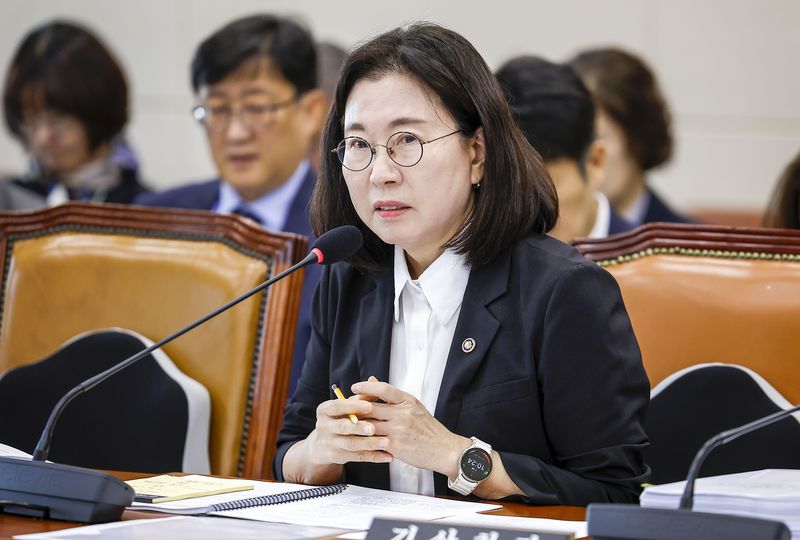
KMA chief Lee Mi-seon said at the National Assembly’s audit of the agency by the Committee on Climate, Energy, Environment and Labor on the 8th, “We will also take steps to improve the reliability of Supercomputer No. 5 to minimize the possibility of disruptions caused by aging.”
The KMA has been working since last year to bring in Supercomputer No. 6 to replace its aging No. 5, but six bidding rounds failed amid rising prices for key components and exchange rates. Supercomputers are essential for operating numerical weather prediction models used in forecasting and for developing the next-generation Korean numerical weather prediction model.
The KMA has adjusted the equipment’s performance specifications, increased the budget, and requested a procurement contract. It plans to issue a tender notice in mid-month, sign a contract in the first half of next year, and bring in the initial units in the second half. The target for completing the full rollout is the first half of 2028.
Development of Cheollian Satellite-5, the next-generation weather satellite, is also delayed. The successor satellite is to take over the mission of Cheollian Satellite-2A, which is currently in operation. It is the country’s first geostationary satellite development project led by a private company.
Lee said, “The contract, originally scheduled to be signed in July, is delayed because the private company selected as the lead organization and the Korea Aerospace Research Institute disagree over the level of technology fees.” The KMA has decided to resolve the differences between the two parties through a technology transfer consultative body and complete the technology transfer within the year. It plans to then shorten the development process by about seven months to meet the 2031 launch schedule.
Lee also stressed that extreme weather events have been occurring in succession recently. He said, “The summers of the past three years, from 2024 through this year, have taken all three spots among the hottest summers since records began.” He added, “Last August, Geoje, South Gyeongsang Province, received extremely heavy rainfall of 124.5 mm in one hour—a record level that statistically occurs about once every 200 years.”
The KMA is strengthening its weather-related disaster preparedness systems to respond to extreme weather, including warning systems for heat waves and tropical nights and emergency disaster text alerts for severe downpours. It also plans to develop a next-generation Korean numerical weather prediction model within the year, using a variable-grid method with spacing of up to 3 km around the Korean Peninsula.
The KMA is also expanding the use of artificial intelligence (AI)-based forecasting technology. Lee stressed, “Protecting people’s lives and safety from hazardous weather, including heat waves and torrential rain, and earthquakes, and providing scientific information on climate change are the KMA’s most important duties.”
[email protected] Lee Bomi Reporter