Acquittal Finalized for Former Black Pearl Investment CEO Lee Jong-ho on Charge of Instigating the Destruction of Evidence on His Phone
- Input
- 2026-10-08 11:07:19
- Updated
- 2026-10-08 11:07:19
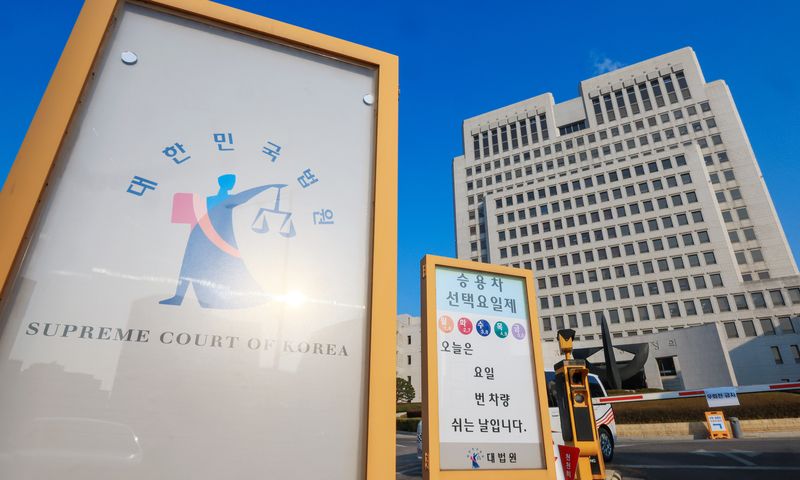
On the 8th, the Supreme Court’s Second Division, with Justice Kwon Young-jun in charge of the case, upheld the lower court’s ruling acquitting Lee of instigating the destruction of evidence and fining Lee’s aide, identified by the surname Cha, 3 million won for destroying evidence. The court dismissed the appeals filed by both the special counsel team and Cha.
Lee became a key subject of the special counsel team’s investigation over allegations that he had lobbied Kim Keon-hee and others to come to the aid of Im Seong-keun, former commander of the 1st Marine Division, who was identified as a suspect in the initial investigation into the death of Marine Cpl. Chae. When the special counsel team seized a phone Lee was using in July 2025, Lee grew concerned that information on another phone he had used in the past could be used as evidence. On the 15th of that month, in the parking lot at Jamwon Hangang Park in Seoul’s Seocho-gu, he threw that phone to the ground and told Cha to smash it and throw it away. Cha repeatedly stomped on the phone until it broke, then threw it in a basketball-court trash can. The special counsel team sought summary orders imposing fines of 5 million won and 3 million won on the two men, respectively, but the court referred the case for a full trial.
The issue was why Lee, who gave the order, and Cha, who carried it out, faced different criminal liability despite both having taken part in destroying the same phone. Under criminal law, the offense of destroying evidence applies only when someone destroys evidence in “another person’s” criminal case. Destroying evidence in one’s own criminal case is not punishable, in keeping with the principle of safeguarding a defendant’s right to a defense. This is the so-called “self-protection” doctrine established by a 1995 Supreme Court ruling. Since the phone in question was evidence in Lee’s own case, he could not have been punished had he destroyed it himself.
However, a person can be punished for instigating the destruction of evidence by having someone else destroy evidence in their own case. A 2016 Supreme Court precedent holds that asking someone else to destroy one’s own evidence is also, in principle, not punishable, but that the offense of instigation is established if the act amounts to an “abuse of the right to a defense.” The first- and second-instance courts viewed Lee as closer to a co-principal who shared in carrying out the destruction with Cha. Still, they found that he had not seriously obstructed the investigation, noting that he had transferred and copied the phone’s information to a new device and that the special counsel team had seized that device. The second-instance court ruled, “It cannot be concluded that the defendant’s conduct amounted to an abuse of the right to a defense.”
By contrast, the phone Cha destroyed contained evidence in the criminal case of “another person, Lee.” The first- and second-instance courts found that Cha had conspired with Lee to destroy the phone, knowing it could serve as evidence in a case under investigation by the special counsel team, and found him guilty of destroying evidence. The second-instance court described Cha’s offense as “obstructing the state’s legitimate administration of criminal justice.”
At the appeal hearing before the Supreme Court, the special counsel team argued that although Lee had been indicted for instigating the destruction of evidence, the court had judged the case on the premise that he was a co-principal without an amendment to the indictment, in violation of the “no trial without an indictment” principle (the rule that a court may not hear or decide a case for which no indictment has been filed). It also argued that Lee’s conduct constituted an abuse of the right to a defense and that he should therefore be punished for instigation. The Supreme Court rejected the arguments, finding no error in the lower court’s understanding of the law concerning co-principals, instigators, or the no-trial-without-an-indictment principle. It also found no legal error in rejecting Cha’s grounds for appeal, in which he argued that the phone was not evidence and that he had no intent to destroy evidence.
[email protected] Kim Dong-gyu Reporter