NEXO earns recognition from Japan’s taxi industry, reaches 11% share of FCEV market
- Input
- 2026-10-08 09:51:39
- Updated
- 2026-10-08 09:51:39
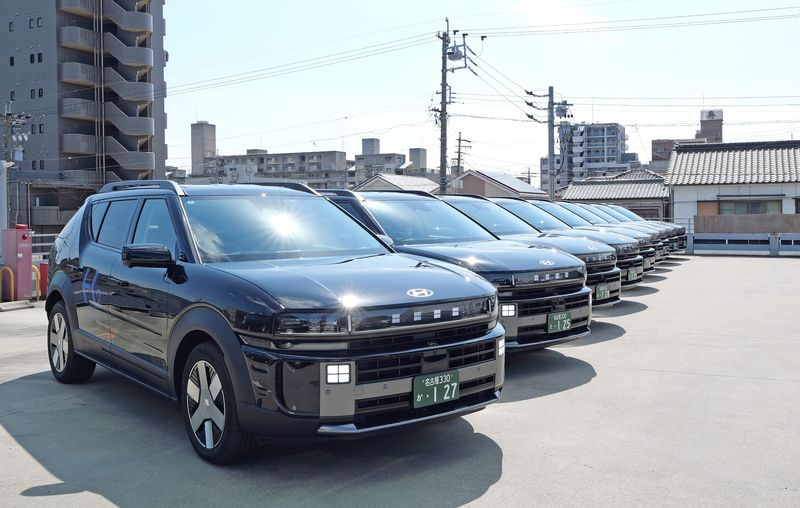
[Financial News] Hyundai Motor Company’s fuel-cell electric vehicle (FCEV), the all-new NEXO, captured a double-digit share of Japan’s passenger FCEV market just five months after entering the market. Adoption is also continuing in the taxi sector, which is dominated by local automakers. With its long driving range, durability and spacious interior, the vehicle is gaining ground in Japan’s commercial mobility market, where imported vehicles face high barriers to entry.
■Market share hits 11% just five months after launch
Hyundai Motor Company said on the 8th that sales of the all-new NEXO, launched in Japan in April, are expanding, particularly among local taxi operators.According to the Japan Automobile Dealers Association, Hyundai Motor Company’s cumulative share of Japan’s passenger FCEV market from April to August this year was about 11%. A total of 20 NEXOs were registered during that period; the figure rises to 35 when vehicles awaiting delivery to customers are included. Of these, 22 have been supplied or are due to be supplied to taxi operators in Tokyo and Aichi.
Although sales volume remains modest, securing a double-digit share just five months after entering Japan’s FCEV market is significant. Japan’s taxi market, in particular, has long been dominated by domestic automakers, and foreign brands are considered to face considerable barriers to entry.
The NEXO’s strengths are its long-distance driving performance and durability. Japanese taxis often travel 50,000–100,000 km a year, making vehicle reliability and operating efficiency more important than for ordinary passenger cars. They must maintain stable performance during long hours of operation and frequent starts and braking.
The NEXO incorporates hydrogen fuel-cell technology developed by Hyundai Motor Group over about 30 years. The fuel-cell system’s rated output is 94 kW, up 11% from the previous model, while the high-voltage battery’s output has doubled, from 40 kW to 80 kW. Durability has also been improved with technology to prevent damage to the electrolyte membrane and a reinforced stack design.
Driving range is another strength. The NEXO can travel up to 720 km on a single charge, and its range reaches 1,014 km under Japan’s WLTC certification standards. It also offers 510 liters of trunk space and more room in the second row, helping it meet the needs of Japan’s taxi market, which serves many tourists and business travelers.
Models sold in Japan also come standard with V2H (Vehicle-to-Home), which allows the vehicle to supply power externally during a blackout or disaster.
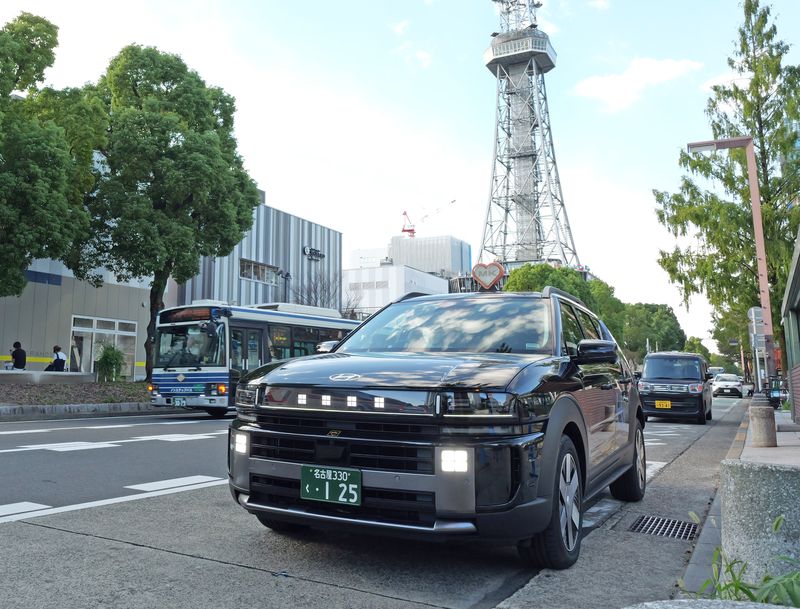
■Taxi rollout gains momentum as Japan expands subsidies
Hydrogen FCEV deployment policies from Japan’s central and local governments are also helping boost NEXO sales. Japan has designated commercial vehicles such as taxis, buses and trucks as priorities for hydrogen mobility deployment, and is expanding support for purchase and fuel costs.Through its “TOKYO H2” project, the Tokyo Metropolitan Government aims to deploy 600 hydrogen FCEV taxis by 2030 and 10,000 commercial FCEVs by 2035. Taxi operators can receive up to ¥1.3 million a year to cover the difference between the costs of refueling with liquefied petroleum gas (LPG) and hydrogen.
Aichi Prefecture also aims to introduce 250 hydrogen FCEV taxis by 2030 and provides a purchase subsidy of ¥3.5 million per vehicle. It also subsidizes hydrogen fuel costs at ¥576 per kilogram, reducing the burden on transport operators.
Hyundai Motor Company is also expanding customer engagement through experiential programs linked to local policies. During the last Asian Games, it provided seven NEXO taxis as official vehicles for South Korea’s national archery team. It also deployed NEXOs at the dedicated hydrogen taxi stand at Nagoya Station and ran a ride-experience program for guests at local hotels.
A Hyundai Motor Company official said, “Japanese taxi operators, who are sensitive to durability and convenience, are showing interest in the all-new NEXO.” The official added, “The all-new NEXO taxi will help make imported passenger cars and FCEVs more accessible and lead to positive evaluations.”
[email protected] Dong-ho Kim Reporter