Seoul designates ‘road’-classified land citywide as land transaction permit zones, aiming to stamp out speculation through share-splitting
- Input
- 2026-10-08 10:00:00
- Updated
- 2026-10-08 10:00:00
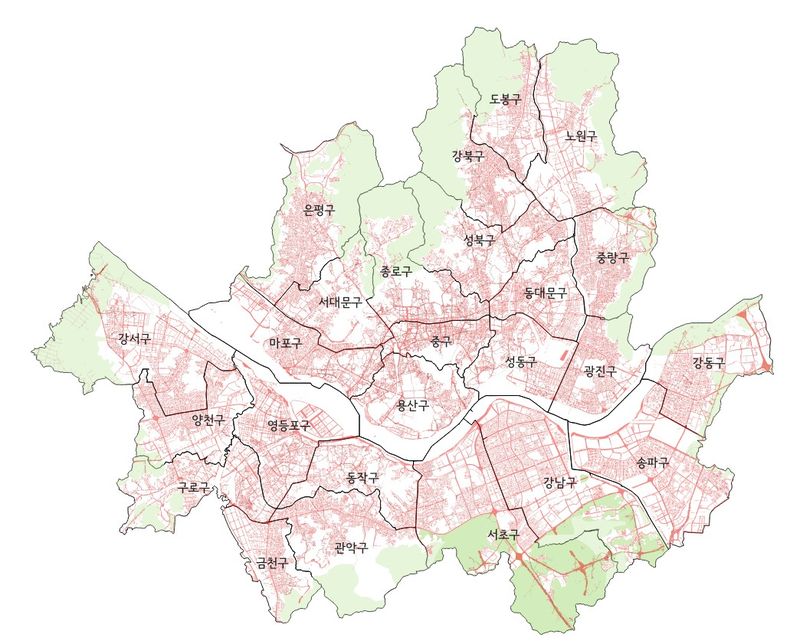
According to the Seoul Metropolitan Government on the 8th, the city held its 16th Urban Planning Committee meeting on the 7th and newly designated land classified as ‘road’ across Seoul as land transaction permit zones. The measure was taken to screen out speculative transactions in advance and protect innocent victims, as similar transactions—including the splitting of road ownership stakes—have recently spread even in areas with little connection to development projects, while concerns have grown that conflicts surrounding development projects could delay them. The city plans to block speculative transactions while ensuring the system does not impose unnecessary restrictions on normal transactions based on genuine demand.
The designation will be in effect for one year, from the 17th of this month through October 16 next year. Specific details about the areas and properties covered will be announced in the Seoul Metropolitan Government Gazette on the 12th. Not all real estate across Seoul is covered; the designation applies only to transactions involving land classified as ‘road.’ A permit is required for areas exceeding 6 sq. m in residential zones, 15 sq. m in commercial and industrial zones, and 20 sq. m in green zones.
The city’s move to block such transactions across the board is intended to extend citywide the effects of its management of private roads in some planned development areas, including Moa Town, as land transaction permit zones since September 2024. The city plans to closely scrutinize the purpose of acquisition and plans for use during the permitting process to curb the spread of speculation fueled by expectations of development.
The sale of roads itself is not prohibited. Normal transactions will be approved without issue if a genuine need for use based on actual demand is recognized and the transaction meets the permitting criteria under relevant laws. The city plans to initially set the designation period at one year and administer the system flexibly while monitoring market conditions and the impact on transactions based on genuine demand.
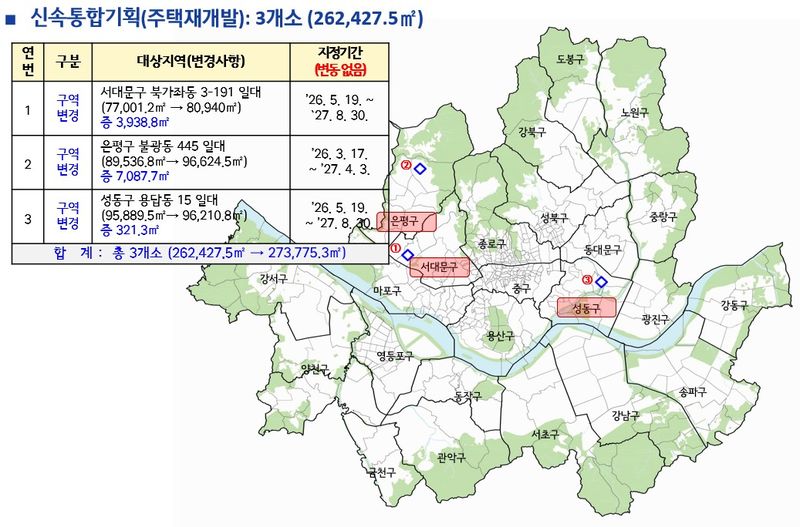
Meanwhile, the Seoul Metropolitan Government has made partial adjustments to the boundaries of three housing redevelopment zones under the Rapid Integrated Planning program to facilitate redevelopment. The sites are around Bukgajwa-dong 3-191 in Seodaemun District (77,001.2 sq. m → 80,940 sq. m), Bulgwang-dong 445 in Eunpyeong District (89,536.8 sq. m → 96,624.5 sq. m), and Yongdap-dong 15 in Seongdong District (95,889.5 sq. m → 96,210.8 sq. m). The land transaction permit zones will be realigned to match the revised boundaries.
Myeong No-jun, director of the Seoul Metropolitan Government’s Housing Office, said, “This designation is not intended to restrict normal transactions involving roads, but to screen out speculative transactions in advance, such as repeatedly splitting road ownership stakes into smaller portions and trading them. We will operate the system to prevent harm to citizens from speculative share transactions while ensuring that normal transactions based on genuine demand are not inconvenienced, and we will closely monitor market conditions after the designation.”
[email protected] Jeon Min-gyeong Reporter