Former U.S. official: Russian plague may be more serious than thought
- Input
- 2026-10-08 10:33:14
- Updated
- 2026-10-08 10:33:14
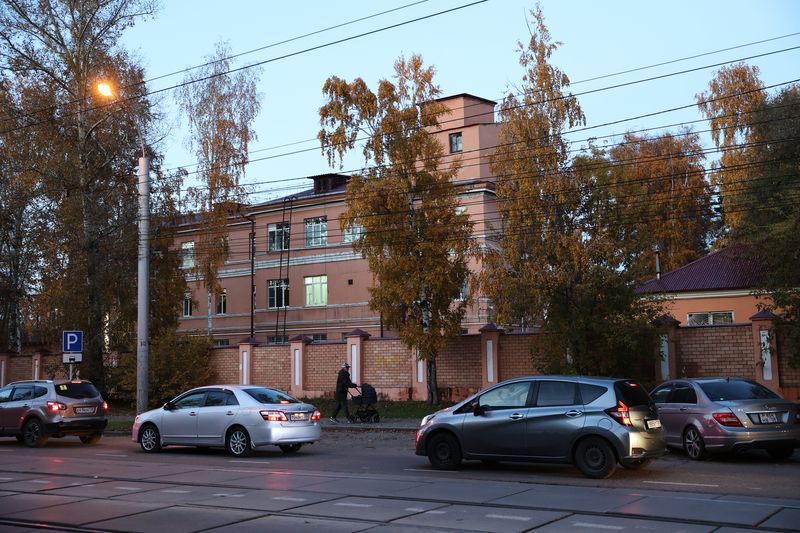
[Financial News] A former senior U.S. official has raised the possibility that the death of a researcher in their 20s who worked at a major Russian infectious disease research institute and died of pneumonia of unknown cause may be connected to classified biochemical weapons, including a “variant plague (Black Death)” developed during the Soviet era.
On the 7th (local time), Fox News Channel reported that Marshall Billingslea, who served as the presidential special envoy for arms control during the first Trump administration, warned on his X (formerly Twitter) account: “This may not be simple plague. It could be far more deadly.”
He raised the possibility that the incident was connected to classified biochemical weapons, including the Black Death, developed during the former Soviet era.
Former envoy Billingslea cited testimony by Ken Alibek, who was second-in-command of the Soviet biological weapons program, from when Billingslea worked on the U.S. Senate Foreign Relations Committee in the 1990s. Alibek, whose real name is Kanatjan Alibekov, defected to the United States in 1992. He had revealed that the Soviet Union developed genetically engineered plague bacteria resistant to antibiotics and “genetically recombined pathogens” combining two or more pathogens.
Alibek had reportedly identified the “Irkutsk Research Anti-Plague Institute of Siberia and the Far East,” where the recent researcher death occurred, as one of the key hubs of the biological weapons development program.
The researcher who died was a 28-year-old woman affiliated with the institute. She had recently developed symptoms of pneumonia of unknown cause before her death.
Founded in 1934, the Irkutsk institute has researched high-risk infectious diseases such as plague, cholera and anthrax. The death under unclear circumstances has once again intensified international suspicion and concern over Russia’s secret biological weapons development, which has continued since the Cold War.
Russian authorities officially announced that no pathogens associated with the institute were found in the researcher’s body and that she was not infected with plague. The World Health Organization (WHO) also said it had received a report from Russian authorities that no high-risk pathogens, including plague, had been detected among the deceased’s contacts. According to the report, testing of about 60% of the contacts so far found only two COVID-19 cases and two cases of rhinovirus, which causes the common cold.
However, international biosecurity experts have expressed doubts about Russia’s announcement.
Professor Kevin Esvelt of the Massachusetts Institute of Technology (MIT) said, “Genetic analysis can quickly identify the pathogen responsible. It is highly unusual for a healthy 28-year-old adult to die with no pathogen identified, and for Russia to claim that it has been unable to determine the cause.”
A U.S. State Department official said of the incident, “Russia continues to maintain an aggressive biological weapons program and is violating the Biological Weapons Convention (BWC.” The official added, “Since the specific facts of the Irkutsk incident have not been confirmed, we will refrain from speculation, but transparent disclosure of information by the Russian authorities is essential.”
U.S. Secretary of State Marco Rubio also said he was monitoring the situation, warning that “if an infectious disease outbreak occurs, there is a risk it could spread across borders in an instant.”
[email protected] Yoon Jae-jun Reporter