'Scandal' Director Jung Ji-woo: “Nana said she thought Heeyeon would want to die, but... dying for love is an outdated notion”
- Input
- 2026-10-08 09:47:17
- Updated
- 2026-10-08 09:47:17

[Financial News] It has been 23 years since the 2003 film Untold Scandal was released. In that time, the world has changed, as have audiences’ views of love and desire. Revisiting a familiar story today called for a reason.
For his Netflix drama Scandal, director Jung Ji-woo returned not to the film familiar to Korean audiences, but to the French novel that inspired it, Les Liaisons dangereuses. Published in 1782, the epistolary novel is set in the aristocratic society before the French Revolution and portrays the seduction, revenge and downfall of the Marquise de Merteuil and the Vicomte de Valmont, who treat love and desire like a game. Jung revisited the original through a contemporary lens.
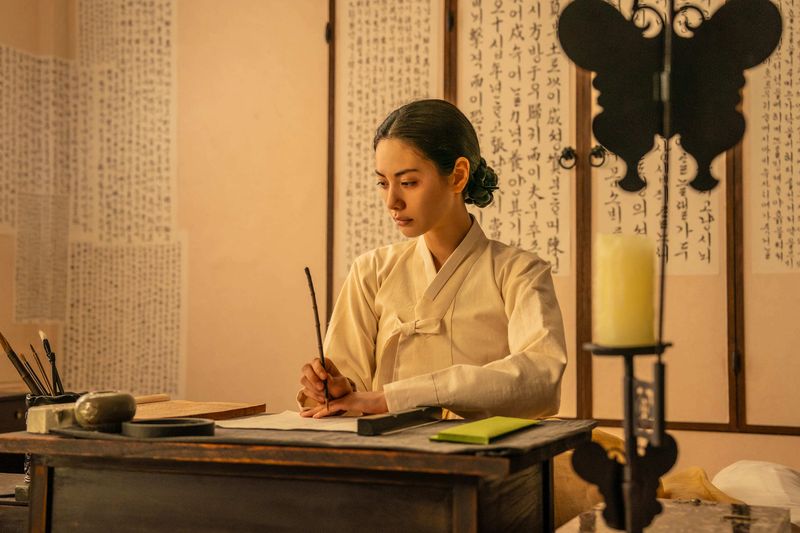
The biggest changes, as a result, were to the three characters who drive the story. Lady Jo, in particular, was given a larger role. She is no mere villain, but a character who seeks to break through the barriers of her time with her talent and desire. Heeyeon, meanwhile, becomes a woman who survives by her own will even after being betrayed in love. The womanizer Jo-won was also reimagined as someone whose tangled feelings of love, obsession and revenge are not easy to pin down. Since its release last September, the series has fallen short of expectations in terms of entertainment and buzz, but its attempt to reinterpret the three characters in light of changing times is worth noting.
Nana’s Heeyeon: surviving even after being abandoned by love
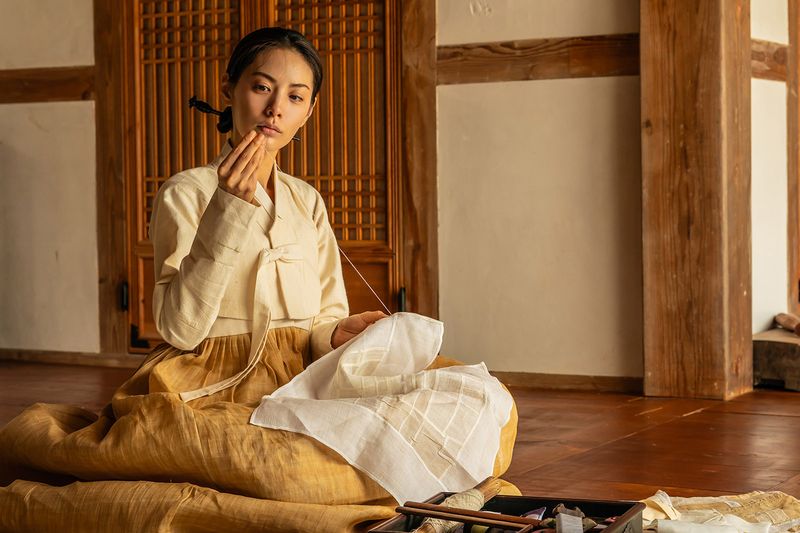
Casting Nana, whose raw image is part of her appeal, as the widowed Heeyeon was also in keeping with this approach. Jung wanted an actor who could convey emotions vividly, rather than someone with looks suited to a traditional image of femininity. He said he had taken notice of Nana in Mask Girl. In a roundtable interview after Scandal’s release, he said, “The way she uses emotion, and her willingness to approach it in a raw, unvarnished way, were the most important reasons for casting her.”
What decisively makes Heeyeon a new character is the choice she makes after learning the truth. The story of a woman forced to die who finds the will to live through love is a familiar one. But can she go on living after discovering that the love was a game and that she herself was the object of a wager? That was precisely where Jung wanted to change the familiar tragic ending.
“In a traditional narrative, Heeyeon would have no choice but to die, but I didn’t want that,” he said. “I wanted her to become someone who survives by her own will.” Her love for Jo-won awakens in Heeyeon the desire to live, but it could not be the sole reason for her life.
There were lengthy discussions on set about this choice, too. Nana said that, given Heeyeon’s feelings, she thought she would want to die. Jung persuaded her: “She mustn’t die here. Risking your life for love is a thing of the past.”
Heeyeon’s choice is shaped not only by love but also by her Catholic faith. Judging from the premise that Hwaseong Fortress is under construction, the story is believed to be set in the mid-1790s, during the reign of King Jeongjo of Joseon. It was a time when new ideas, including Silhak (Practical Learning) and Western Learning, were filtering in even as the Neo-Confucian order remained firmly entrenched. Heeyeon, widowed without even having seen her husband’s face, is expected by her mother-in-law and society to uphold her chastity, die and become a “virtuous woman.” But after encountering Catholicism and meeting Jo-won, she chooses her own life for herself.
“Heeyeon’s transformation doesn’t begin with Jo-won alone,” Jung said. “My thinking in making this work in 2026 was that Heeyeon must not die.”
Jung took responsibility as the director for some of the criticism of Nana’s appearance, including her plump lips. The conversations he had with the actor over a long period were about emotion and inner life, not appearance. “The visual information within the frame is the director’s responsibility,” he said.
[email protected] Shin Jin-a Reporter