Jeju Province to Generate and Use Electricity in Apartments and Villages, Pursuing Three Models for Phase 2 Distributed Energy Special Zones
- Input
- 2026-10-08 08:40:53
- Updated
- 2026-10-08 08:40:53
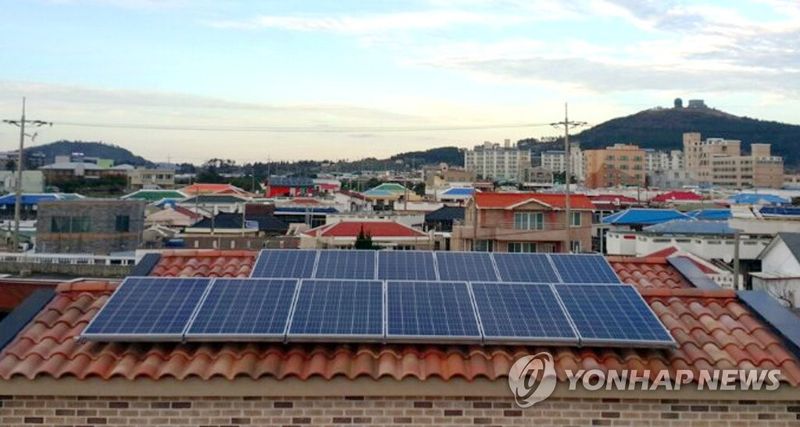
【Financial News, Jeju = Jeong Yong-bok, Reporter】 Jeju Province is expanding the distributed energy special zone initiative it launched last year with a focus on businesses to residential communities this year, including apartments, villages and industrial complexes. The model involves generating electricity in an area and consuming most of it there. The housing-and-village area in Namwon-eup, public rental housing in Jocheon-eup and the Yongam Seawater Complex are being considered as three key models for Jeju’s second-phase distributed energy special zone.
According to Jeju Special Self-Governing Province on the 8th, the province has drawn up a business plan for the additional designation of a “community microgrid-type” distributed energy special zone and began the public review and comment process on the 6th.
The biggest change in this initiative is that the focus of the special zone is shifting from businesses to residential communities. Jeju was designated last year as a first-phase “new industry promotion-type” distributed energy special zone. While the first phase focused on demonstrating new energy business models for companies, the second phase links power generation and consumption in the places where residents live and go about their daily lives.
Unlike the conventional approach of transmitting electricity over long distances from large power plants, a community microgrid is a small-scale power system that generates electricity from sources such as solar energy within a defined community and supplies it to local consumers.
The government’s requirements for this special zone are also based on the principle of “generating electricity locally and using it locally.” The area must be no more than 6.6 million square meters within a community served by the same substation, and at least 70% of its annual power generation must be consumed within that area.
Based on a preliminary demand survey, Jeju Province has developed three business models. In parts of Namwon-eup, it is considering a “housing-and-village model” that brings homes and a village together. In Jocheon-eup, it is preparing an “apartment model” that links power generation and consumption in an apartment complex centered on public rental housing. At the Yongam Seawater Complex, it is pursuing an “industrial-complex model” combining the electricity demand of industrial facilities with power generation sources.
The three sites have not yet been finalized as special zones. The province is currently preparing the business plan to submit to the government, and the composition of generation facilities and power consumers could change depending on whether residents and businesses participate.
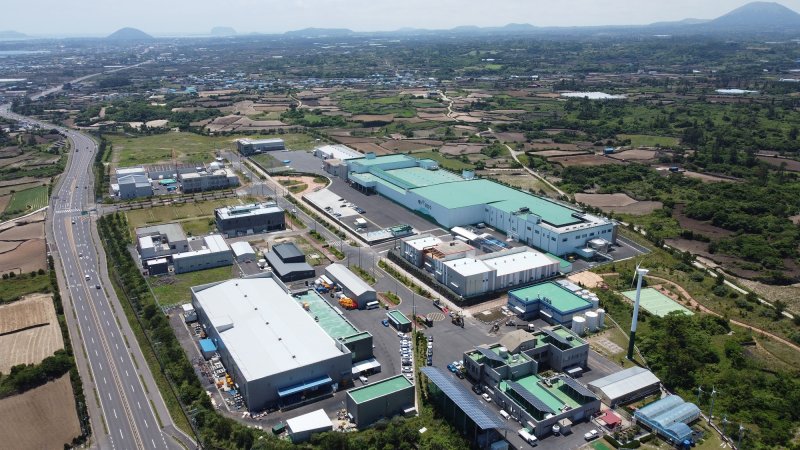
This is also a key factor in the evaluation for this round of applications. Business competitiveness will depend not just on the quality of the plan, but on the extent to which the project secures power sources that can actually generate electricity and consumers that can use it within the same substation area.
That is why Jeju Province is seeking additional private-sector participants alongside the public review. Residents and businesses that can install power generation facilities in apartment and village parking lots, on rooftops or in unused spaces, or that have consumers able to use the electricity produced, can propose ways to participate in the project.
Jeju Province will accept residents’ comments and additional participation proposals from businesses through Nov. 5. After incorporating them and revising the plan, it intends to submit its final application to the Ministry of Climate, Energy and Environment on Nov. 6. Whether additional special zones will be designated will be decided in December.
Behind Jeju Province’s year-long, successive push for distributed energy special zones—from a business-focused model to one centered on residential communities—is a shift in energy policy following the expansion of renewable energy: not only “where and how much to generate,” but also “where to consume the electricity generated” has become important.
Distributed energy is a system that locates power generation facilities close to consumers and balances production and consumption within a region. If generation and consumption can be linked at the community level, there is greater scope to reduce pressure on the power grid while making use locally of energy produced in the area.
The outcome of the designation process is drawing particular attention because Jeju’s models target residential areas, rural and fishing villages, and industrial complexes. Rather than focusing solely on a large industrial facility in one area, the initiative will test whether distributed energy models can be applied in three communities with different patterns of electricity use.
Jo Seon-hee, director of Jeju Province’s Climate and Energy Bureau, said, “If the first phase centered on businesses, the second is a community-based energy self-sufficiency model whose effects residents can feel in their daily lives.” She added, “We will revise the business plan after gathering additional input on participation from residents and businesses.”
[email protected] Jeong Yong-bok Reporter