An era of confiding worries to AI... 21 guidelines for using AI for mental health released
- Input
- 2026-10-08 13:30:00
- Updated
- 2026-10-08 13:30:00
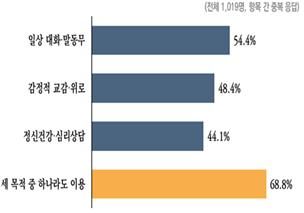
[Financial News] Seven in 10 generative artificial intelligence (AI) users were found to use AI for emotional purposes, such as everyday conversation, comfort and psychological counseling. As cases emerged of users being unable to stop talking with AI or making major decisions, such as quitting a job or ending a relationship, based solely on AI advice—about one in 10 users—the government issued guidelines for using AI for mental health purposes.
The Ministry of Health and Welfare and the Korean Neuropsychiatric Association announced the “Guidelines for the Use of Generative AI for Mental Health Purposes” on the 8th, ahead of the 2026 Mental Health Day (October 10). The guidelines come in two versions: one for all users and another for children and adolescents and their guardians.
Generative AI has recently moved beyond being a tool for work and information searches to serving as a source of emotional connection and a partner for psychological counseling. Behind the advantages of immediate responses and convenience, new risks are also growing, including exposure of personal information, inaccurate mental health information, self-diagnosis of mental illness and excessive dependence. The government had previously announced plans to draw up guidelines on excessive AI dependence through the “Third Basic Plan for Mental Health and Welfare (2026–2030)” and “Government-wide Measures to Prevent Suicide Among Teenagers.”
68.8% of users say, “I also use AI for emotional purposes”
According to a survey conducted by the Korea Institute for Health and Social Affairs of 1,019 people aged 15 to 79 who had used generative AI in the past month, from August 25 to September 4, 81.3% of respondents said they first encountered AI for assignments, work or information searches, but 68.8% now also use it for emotional purposes.
The share of respondents who said they had received help from AI reached 79.9%. They said it helped them clarify their situation (54.9%), learn about mental health information or services they had not known about (49.8%), and reflect on the causes of their emotions (49.7%), among other benefits. On the other hand, 16.3% said they continued conversations even when they tried to focus on real-life tasks, while 9.8% said they could not control how long they talked and that this disrupted their sleep or daily lives. Another 10.6% said they had made major decisions, such as quitting a job or ending a relationship, based on AI advice without consulting people around them.
A total of 86.9% of respondents said the government has a role to play in AI use. The areas cited as most urgently needing support were establishing AI mental health guidelines and improving laws and systems (68.7%), and regulating the storage and use of conversation records while guaranteeing users’ control over them (66.8%).
“Don’t take what AI says as the final word”
The Ministry of Health and Welfare drew up the guidelines in cooperation with the Korean Neuropsychiatric Association and after consulting experts in fields including media and engineering. The guidelines for all users consist of three key messages and 21 recommendations.
The first message is, “Check things and set boundaries before opening up about your feelings.” The survey found that only around 50–60% took steps to protect their personal information when using AI, while 38.0% of respondents were concerned that their conversations could be leaked or used for purposes other than those intended. The guidelines advise users to check in advance the service’s purpose, intended users, evidence of its effectiveness and how it handles personal information, and to verify whether services claiming medical benefits have been reviewed or approved by an authorized institution. They also advise users not to enter personal information such as names, contact details or addresses, or sensitive documents such as medical certificates and prescriptions, and to decide in advance the scope of conversations and when to end them.
The second message is, “Don’t take what AI says about your condition as the final word.” A total of 14.6% said they had taken an AI response as a medical diagnosis; the figure rose to 33.9% among respondents who considered their mental health to be poor. By contrast, only 11.9% had checked AI advice against an expert or official source. The guidelines advise users not to treat an AI diagnosis as definitive and to verify it with experts or validated information from professional associations, government agencies and other sources.
The third message is, “Keep your distance from AI and talk to a person.” Difficulty controlling use and a tendency to rely on AI’s judgment were more pronounced among those who used it for emotional purposes. The share who said they had made major decisions based solely on AI advice was 17.8%, higher than the overall average. In particular, 49.6% of respondents who confided in AI during a crisis, such as depression, self-harm or suicidal thoughts, took no particular action other than ending the conversation. The guidelines advise users not to regard AI as a real person and to consciously create distance when their relationships with family or friends begin to diminish. They also recommend discussing important decisions with another person and, in a crisis, seeking help from specialized services such as the Suicide Prevention Counseling Hotline (109) or the Mental Health Crisis Counseling Hotline (1577-0199).
Half of adolescents say they are “dependent on AI”... Just 2.5% have set rules with their guardians
A total of 69.2% of adolescents aged 15 to 18 used AI for emotional purposes, and the share who said they were dependent on AI was 51.7%, the highest of any age group. The seven recommendations for children and adolescents advise them to consider their own thoughts first rather than simply following AI responses, and to check whether they are treating AI characters like real friends or romantic partners. If they receive an inappropriate response, they should tell a trusted adult, such as a parent or teacher, and find out in advance where they can seek help, such as Youth Counseling 1388.
A total of 83.1% of adolescents said their guardians knew they used AI, but only 2.5% had set rules for its use together with them. Accordingly, the seven recommendations for guardians focus on first understanding what children use AI for and how, rather than unconditionally banning or controlling its use. They advise guardians to establish basic rules together before use; to listen rather than scold when they learn a child is using AI; and to watch for signs that the child is becoming excessively emotionally dependent on AI or experiencing changes in time spent using it or in interpersonal relationships. If signs of crisis, such as depression or thoughts of self-harm or suicide, appear, guardians should immediately seek help from a specialized service.
The Ministry of Health and Welfare plans to develop educational programs to encourage independent AI use and issue tailored guidelines in 2027 for high-risk groups, including people with severe mental illness.
Lee Sun-young, the Ministry of Health and Welfare’s Mental Health Policy Director, said, “Friendly and confident responses do not always guarantee accuracy or safety,” adding, “Starting with these guidelines, we will continue to strengthen mental health policies to address the AI transition, including by expanding user education.”
Choi Jun-ho, chairman of the Korean Neuropsychiatric Association, stressed, “Mental health issues need to be assessed comprehensively, considering not just individual symptoms but also their effects on a person’s life, relationships and daily activities,” adding, “Since AI cannot replace professional assessment and treatment, it is important to seek help from medical professionals in a timely manner when needed.”
[email protected] Jeong Myeong-jin, Medical Correspondent Reporter