Samsung Electronics Co., Ltd. ushers in the era of ‘100 trillion won in quarterly operating profit’—the world’s first tech company to do so (roundup)
- Input
- 2026-10-08 08:24:33
- Updated
- 2026-10-08 08:24:33
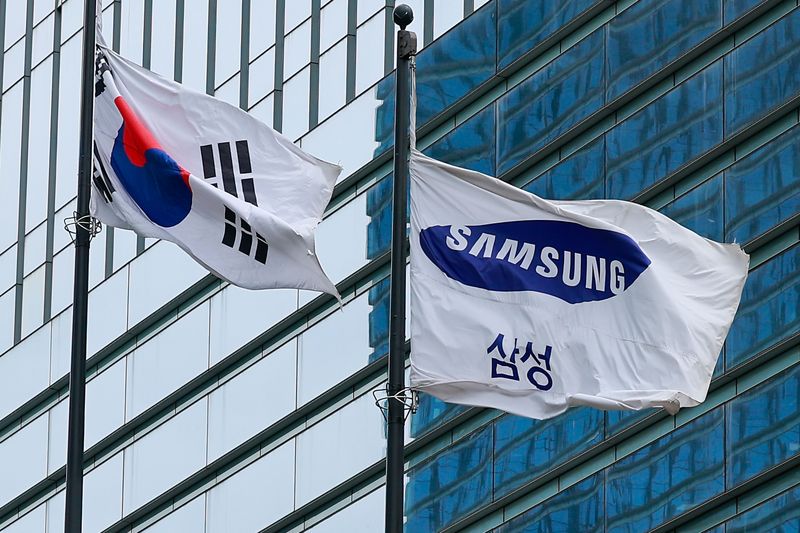
[Financial News] Samsung Electronics Co., Ltd. recorded operating profit of 107.4 trillion won in the third quarter of this year, ushering in the era of 100 trillion won in quarterly operating profit. It marked a record high for the fourth consecutive quarter and was the first such achievement in the history of tech companies worldwide. No Korean company or global Big Tech firm had ever reached this milestone.
Samsung Electronics Co., Ltd. disclosed on the 8th that its consolidated revenue and operating profit for the third quarter of this year were tentatively tallied at 195 trillion won and 107.4 trillion won, respectively. Compared with the same period last year, revenue surged 126.59% and operating profit 782.5%.
The company’s latest results are the largest among tech companies worldwide.
In fact, NVIDIA Corporation, which is leading the AI era, reported revenue of $96.22 billion and operating profit of $63.734 billion for the second quarter of fiscal 2027, announced last August. Those figures equate to approximately 128.915 trillion won and 85.3905 trillion won, respectively.
Since the fourth quarter of last year, the company has set new records for both revenue and operating profit for four consecutive quarters. Its cumulative revenue and operating profit for this year have reached 500.37 trillion won and 254.13 trillion won, respectively. It is now on track to achieve annual operating profit of 350 trillion won this year.
Although detailed results were not disclosed that day, the Device Solutions (DS) division, which handles the semiconductor business, is believed to have accounted for most of the company’s operating profit in the third quarter. The results are thought to have been driven by a memory supercycle—an exceptionally strong boom—fueled by increased AI investment. As investment in AI servers expands, prices for commodity DRAM and NAND flash have risen, while results for high-bandwidth memory (HBM) have also improved, boosting profitability in the memory business.
This is also seen as a result of memory demand holding firm amid competition among global Big Tech firms over AI. The industry expects the semiconductor supercycle to sustain the boom through the fourth quarter and into next year.
Market research firm TrendForce forecast that fourth-quarter prices for commodity DRAM would rise 10–15% from the previous quarter, while NAND prices would increase 15–20%. HBM4, which Samsung Electronics Co., Ltd. was the first in the world to begin mass-producing, is also expected to contribute in earnest to improved results starting next year.
However, the non-memory businesses within the DS division, including LSI and foundry, are believed to have continued to post losses of around 1 trillion won. The finished-products (DX) division is also thought to have posted a second consecutive quarterly loss, after recording its first-ever loss in the previous quarter, as surging component prices drove up costs.
Analysts estimate that the mobile (MX) and network businesses may have posted losses of around 1.5 trillion won or more. The TV (VD) and home appliance (DA) businesses may also have recorded losses of about 500 billion won. Samsung Display is estimated to have earned 1 trillion won in operating profit, while Harman is thought to have posted operating profit of 200 billion to 400 billion won.
[email protected] Park So-hyeon, Park Ji-yeon Reporter