“If one ‘Achoo!’ makes you leak a little” ... The season when sneezing is scary [Health Talk]
- Input
- 2026-10-08 08:11:48
- Updated
- 2026-10-08 08:11:48
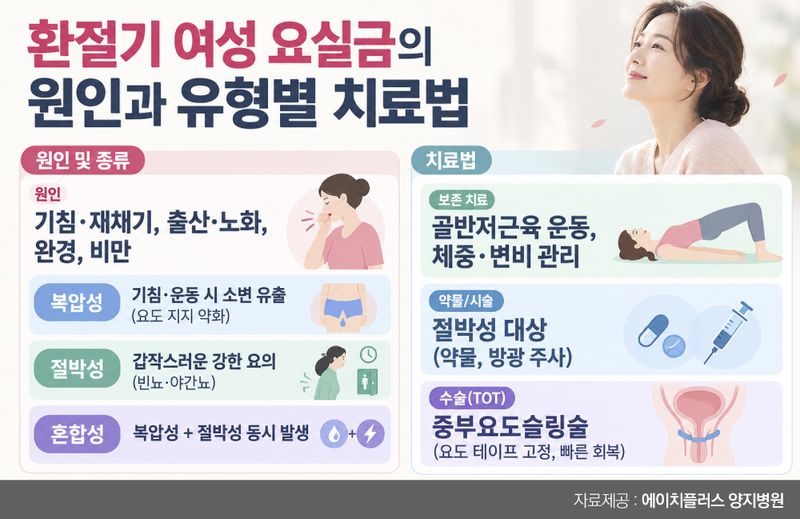
[Financial News] ‘Achoo!’—and your underwear gets wet. If you leak a little urine when coughing or sneezing during the change of seasons in fall, don’t dismiss it as a result of aging; you should consider urinary incontinence.
Stress urinary incontinence, in which urine leaks when abdominal pressure suddenly rises from coughing, sneezing, laughing or exercising, is common in women. It can develop when the pelvic floor muscles and the tissues supporting the area around the urethra weaken due to childbirth or aging. Tissue changes after menopause, weight gain, chronic coughing and other factors that repeatedly increase abdominal pressure, such as constipation, can also play a role.
Urinary incontinence is not life-threatening, but it can greatly reduce quality of life. People may check where the restrooms are before going out and avoid exercise, long-distance travel or social gatherings for fear of leaking urine. As symptoms worsen, they may use pads more often, and anxiety about odor or wet clothes can undermine their confidence and affect their relationships with others. Yet many people delay treatment because they consider it a ‘natural symptom of aging’ or feel embarrassed.
Jeon Jun-seong, a urology specialist at H+ Yangji Hospital, said, “It is easy to think of urinary incontinence as merely an inconvenience, but when symptoms recur, they can affect daily life as a whole.” He added, “Even with the same type of incontinence, treatment varies depending on its cause and type, so it is important to accurately assess the situations in which urine leaks and how much it affects everyday life.”
Stress, urge and mixed incontinence... First, identify the type
Female urinary incontinence is broadly classified as stress, urge or mixed incontinence. Urge incontinence is when a sudden, strong need to urinate leads to leakage before reaching the restroom; it may also involve frequent urination or waking often at night. Because mixed incontinence, in which both types occur, is also possible, treatment should not be chosen based solely on the symptom of ‘leaking urine.’
Taking a medical history to determine when and in what situations urine leaks is important for diagnosis. Doctors check whether urine actually leaks when a patient coughs or strains, and may conduct a urinalysis and measure the post-void residual—the amount of urine left in the bladder after urination. Additional tests, such as urodynamic testing, may be performed if urinary symptoms are complex, the patient has previously had surgery for incontinence, or the diagnosis is unclear.
From muscle exercises to surgery... Treatment tailored to each type
Treatment also varies by type. For stress urinary incontinence, conservative treatments such as pelvic floor muscle exercises are considered first. Regularly practicing exercises that correctly contract and relax the pelvic floor muscles can strengthen the support for the bladder and urethra and help relieve symptoms. People who are overweight should lose weight, and factors that increase abdominal pressure, such as chronic coughing or constipation, should also be managed. Bladder training and medication are the main treatments for urge incontinence; if they are not effective enough, options such as injections of botulinum toxin into the bladder or neuromodulation may be considered. For mixed incontinence, the order of treatment is determined by taking into account the symptoms that bother the patient most.
Surgery may be considered if symptoms persist and cause significant discomfort despite an adequate course of conservative treatment. A common operation for stress urinary incontinence is a midurethral sling, in which tape is placed beneath the middle section of the urethra to support it when abdominal pressure rises. Depending on the route taken by the tape, procedures include the transobturator tape (TOT) and the retropubic TVT.
In TOT, small incisions are made in the vaginal wall beneath the urethra and in both groin areas, and tape is inserted. The tape passes through both obturator foramina and is positioned toward the groin, supporting the urethra when abdominal pressure suddenly rises from coughing or sneezing and reducing urine leakage. Because it does not require a large incision in the abdomen, the procedure is relatively less burdensome and recovery tends to be quick. However, each surgical method has its own advantages and disadvantages and potential complications, so the choice should be made after a comprehensive assessment of symptoms, anatomy and urinary function.
Jeon emphasized, “TOT is one surgical option that may be considered for stress urinary incontinence, but it is important to accurately assess the patient’s type of incontinence and urinary function before surgery.” He added, “Treatment satisfaction can be improved by thoroughly checking whether urge symptoms are also present and how much conservative treatment has helped before deciding whether to operate and which method to use.”
[email protected] Jeong Myeong-jin, medical correspondent Reporter