September FOMC minutes: “Another rate hike this year” ... No October hike expected
- Input
- 2026-10-08 06:33:21
- Updated
- 2026-10-08 06:33:21
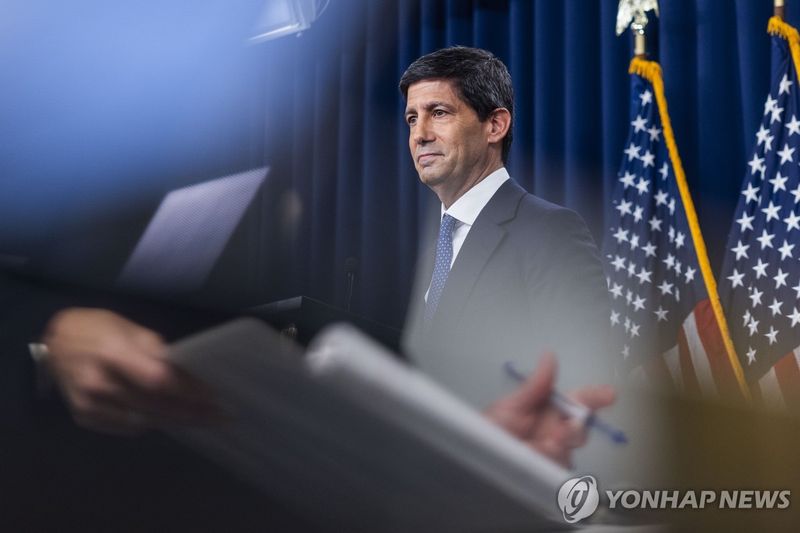
[Financial News] The U.S. Federal Reserve System (Fed) left open the possibility of another rate hike this year at its September Federal Open Market Committee (FOMC) meeting, but did not signal that a hike was needed immediately in October.
The reasons cited for the rate hike included preventing inflation from spreading and managing risks.
According to the minutes of the September FOMC meeting released by the Fed on the 7th (local time), most participants judged that it would be appropriate to raise the target range for the federal funds rate (FFR, the benchmark rate) one more time by year-end.
However, there was no specific mention suggesting that another hike would be necessary at the next meeting, scheduled for Oct. 27–28.
The minutes emphasized that participants approached each meeting with an “open mind” and that decisions at future meetings would depend on incoming information and its implications for the economic outlook and the balance of risks.
At its Sept. 15–16 FOMC meeting, the Fed unanimously voted, with all 12 members in favor, to raise the benchmark interest rate by 0.25 percentage point to 3.75%–4.00%. It was the first monetary tightening in three years and two months, since July 2023.
Members differed over the reasons behind the rate hike.
Many participants viewed it as an insurance-like risk-management measure to guard against the risk that inflation could remain above target because of stronger-than-expected demand or additional supply shocks.
By contrast, some members believed higher rates were needed based on the baseline economic outlook, beyond risk management.
A couple of participants stressed that higher rates were needed to prevent sector-specific price increases stemming from turmoil in energy markets and demand related to artificial intelligence (AI) from spreading across the economy and leading to more persistent inflation.
Several participants also assessed that the current benchmark rate was either not restrictive or only mildly restrictive.
Participants also discussed factors behind the recent rise in yields on longer-term U.S. Treasuries and the functioning of the Treasury market.
The minutes said a few participants noted that the Treasury market had been functioning smoothly in relation to balance-sheet policy, while also stressing the importance of plans to prepare for market stress.
They proposed strengthening the Fed’s strategy, communications and response tools in case market dysfunction occurs, while limiting the Fed’s involvement in the Treasury market.
[email protected] Lee Seok-woo, International Affairs Correspondent Reporter