SpaceX’s Default-Protection Costs Hit Record High ... ‘Raising $40 Billion to Buy Nvidia Chips’
- Input
- 2026-10-08 05:58:33
- Updated
- 2026-10-08 05:58:33
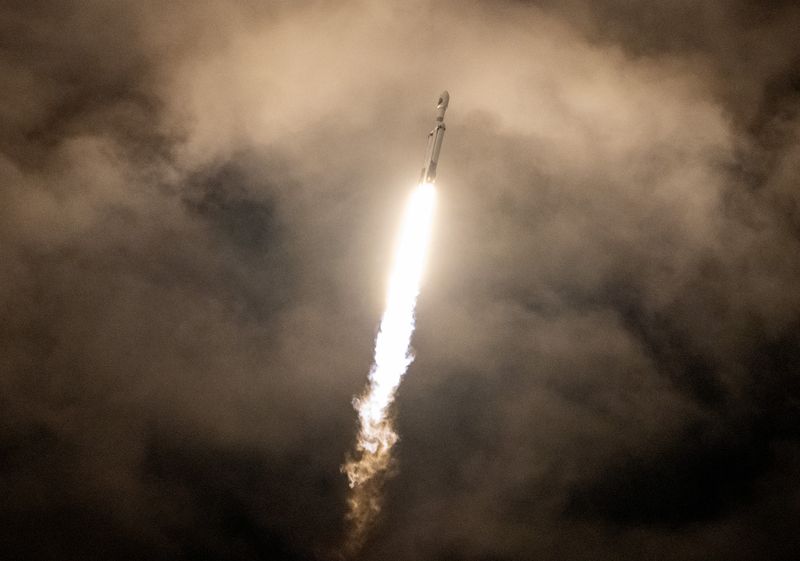
The credit risk of Elon Musk’s space and artificial intelligence (AI) company SpaceX surged to a record high on the 7th (local time). Reports that the company had decided to raise $40 billion (about 53 trillion won) to buy Nvidia chips drove up the market’s cost of insurance against a default.
CDS Costs Hit Record High
According to the Financial Times (FT), the spread on SpaceX credit default swaps (CDS) surged to 1.94 percentage points that day. This means the annual premium required to insure against default on $1 million of SpaceX corporate bonds reached $19,400. SpaceX CDS began trading in June with a spread of 1.10 percentage points.
An FT report that SpaceX was planning to raise $40 billion triggered the sharp rise in its CDS spread.
SpaceX corporate bonds also came under selling pressure, sending yields—which move inversely to prices—sharply higher. The yield on SpaceX bonds maturing in 2056 was 2.36 percentage points above that on U.S. Treasuries with the same maturity that day, up 0.09 percentage points in a single day.
This yield gap, known as the spread, is the premium investors demand for holding certain bonds, such as corporate bonds, instead of U.S. Treasuries, which carry very low risk. In June, SpaceX’s spread was just 1.75 percentage points.
Raising Large Sums for AI Investment
The FT previously reported on the 6th that SpaceX planned to buy Nvidia chips by taking out $10 billion in bank loans and issuing $30 billion in investment-grade corporate bonds. A plan under which private equity firm Apollo Global Management would lead negotiations and PIMCO, a heavyweight in the bond market, and others would provide the funding was reportedly under discussion.
SpaceX is raising money wherever it can to invest in AI. In June, it issued $25 billion worth of investment-grade corporate bonds, and on the 12th of that month it raised $86 billion on the stock market through a record-setting initial public offering (IPO).
Optimism
However, not everyone views SpaceX’s fundraising negatively.
Morgan Stanley analyst Adam Jonas, one of Tesla’s most prominent bulls, criticized some investors who are pessimistic about SpaceX in a research note on the 5th. Jonas expressed confidence in the company, saying SpaceX would “succeed as a major provider of frontier AI models or one day launch computing in Earth’s orbit.”
He said, “I regularly ask clients, ‘Does anyone own SpaceX stock?’” and added, “I asked 40 clients the same question last night, and not a single person raised a hand.” Jonas nevertheless argued that SpaceX would reach major milestones soon and that now was an opportunity to buy the stock. He reaffirmed his Buy rating and $300 price target.
AI Debt Risks Spread Across Big Tech
CDS spreads for big tech companies pursuing large-scale AI projects have recently come under upward pressure.
Oracle’s five-year CDS spread has risen 0.40 percentage points since last month, reaching 2.44 percentage points. Nvidia’s five-year CDS spread has also climbed, from 0.45 percentage points in early July to 0.81 percentage points recently.
Five-year CDS spreads for Alphabet, Meta Platforms and Microsoft (MS) have also surged over the past few weeks and are now approaching record highs.
A U.S. investment banker said of AI stocks, “Everyone is looking for ways to reduce risk in the face of market shocks or volatility.”
[email protected] Song Gyeong-jae Reporter