South Korea’s tourism development ranking rises to 12th worldwide...No. 1 in digital, 65th in price competitiveness
- Input
- 2026-10-08 08:00:00
- Updated
- 2026-10-08 08:00:00
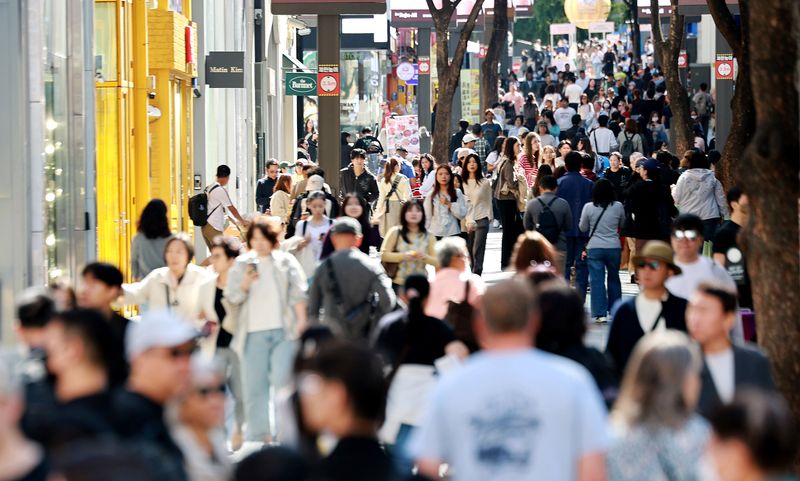
According to the Ministry of Culture, Sports and Tourism and the Korea Culture & Tourism Institute on the 8th, South Korea ranked 12th overall in the World Economic Forum’s (WEF) 2025 Tourism Development Index (TTDI). It ranked third in Asia, after Japan (1st) and China (8th).
The World Economic Forum had previously announced South Korea’s ranking as 14th based on 2023 data. In this report, it revised the ranking for that year to 13th after adjusting the underlying data and other factors. Accordingly, South Korea rose one place, from 13th in 2023 to 12th in 2025.
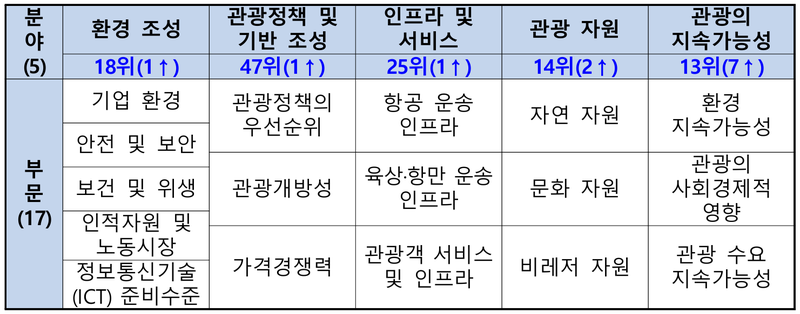
The Tourism Development Index assesses the conditions for developing the tourism industry across five areas, 17 sectors and 102 detailed indicators. Since it examines a broad range of conditions, including safety, health, transport and the environment, its ranking should be distinguished from rankings based on success in attracting tourists.
South Korea improved its ranking in all five areas. Tourism sustainability saw the biggest gain, rising from 20th to 13th, while tourism resources climbed two places to 14th.
The enabling environment (18th), infrastructure and services (25th), and tourism policy and enabling conditions (47th) each moved up one place.
By sector, information and communications technology readiness held onto first place. Ground and port transport infrastructure and non-leisure resources that drive visits for purposes such as business travel and education each ranked ninth, while cultural resources remained 10th.
Among the detailed indicators, the seasonality of international tourist arrivals rose from 33rd to fourth. This means that tourist visits became less concentrated in particular periods.
The Korea Culture & Tourism Institute’s policy report shows that the tourist services and infrastructure sector fell six places, from 47th to 53rd. The number of hotel rooms per capita and labor productivity in the accommodation and food service industries each ranked 69th.
The overall ranking for infrastructure and services, which includes transport infrastructure, rose, but the ranking for the tourist services and infrastructure sector within it fell. It is difficult to interpret the rise in the overall ranking as an across-the-board improvement in conditions for lodging and service provision.
Kang Jeong-won, director general of tourism policy at the Ministry of Culture, Sports and Tourism, said, “We will continue to develop areas where we have secured strong competitiveness while addressing areas that need improvement.”
[email protected] Jang In-seo Reporter