U.S. Treasury sell-off eases as successful auction allays concerns
- Input
- 2026-10-08 02:44:10
- Updated
- 2026-10-08 02:44:10
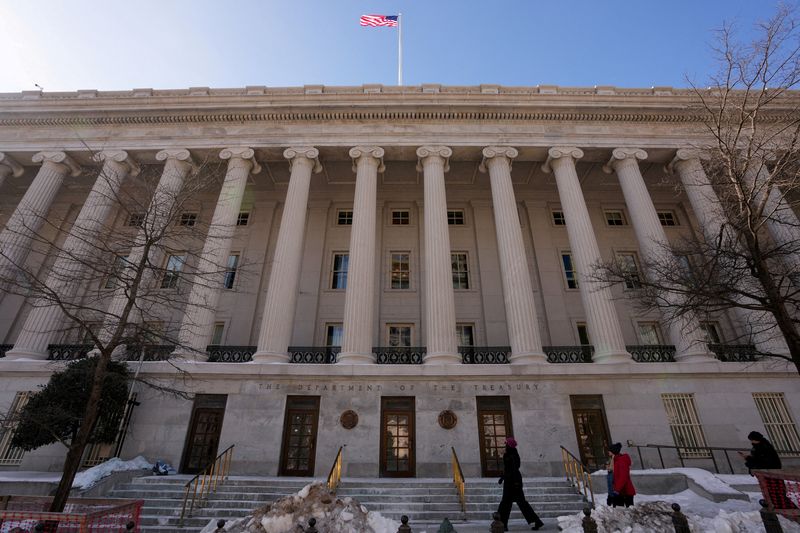
The U.S. Treasury market swung sharply on the 7th (local time).
International oil prices, whose sharp drop had sparked buying the previous day, subsequently reversed course and began rising, prompting investors to sell again. Yields, which move inversely to bond prices, surged.
However, CNBC reported that the successful Treasury auction eased concerns about falling demand, sharply narrowing the rise in yields in afternoon trading.
The benchmark 10-year Treasury yield surged early, setting a new high since 2002. It later jumped to 5.307%, up 0.03% from the previous close.
After the Treasury announced that it had completed the 10-year note auction that day amid solid demand, the increase narrowed further, with the yield at 5.277%, up 0.006 percentage points.
The 30-year yield, a benchmark for long-term interest rates, also hit a 24-year high early on before paring its gains. After the Treasury’s announcement, it traded at 5.658%, up 0.017 percentage points.
The 2-year yield, which reflects market expectations for Federal Reserve (Fed) interest-rate policy, stood at 4.781%, down 0.01 percentage points.
The Treasury sold $39 billion in 10-year notes at auction that day. According to BMO, demand at the auction was solid. Bids from “non-dealers”—those other than primary dealers—came in above average. Primary dealers are large custodial financial institutions such as Goldman Sachs and JPMorgan Chase that are required to participate in auctions, take up securities, and then distribute them in the market.
Indirect bidders—foreign end users that participate through third-party bidding, including foreign central banks, overseas pension funds and foreign institutional investors—took 80.3% of the auctioned securities. That was above the 72.4% average for the past 10 auctions.
By contrast, direct bidders, including U.S. institutional investors and funds, bought 17.1%, slightly below the previous average of 18.3%. Primary dealers bought just 2.5% of the amount issued, well below the average of 9.4%.
Despite solid demand, the 10-year Treasury yield set at that day’s auction was 5.3%, its highest in 26 years, since 2000.
That day’s auction was the second of three Treasury securities sales scheduled for this week, with one more still to come. The Treasury had sold $58 billion in 3-year notes the previous day and plans to sell $22 billion in 30-year bonds on the 8th.
The Treasury will also buy back Treasury securities to stabilize the market, as Secretary Scott Bessent had promised. It plans to buy back Treasury securities with maturities of 20 to 30 years on the 8th. The buyback to support liquidity is expected to total at least $4 billion, about twice the usual amount.
[email protected] Song Gyeong-jae Reporter