“‘Assassin(s)’ poses a risk for student viewers” vs. “Is the National Assembly a film censorship committee?” ... Ruling and opposition lawmakers clash at parliamentary audit
- Input
- 2026-10-08 06:00:00
- Updated
- 2026-10-08 06:00:00
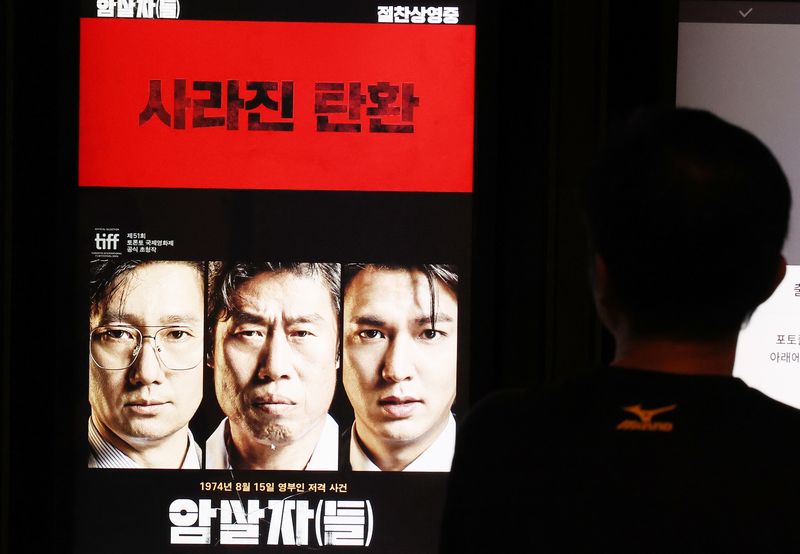
[Financial News] Lawmakers from the ruling and opposition parties clashed during a parliamentary audit by the National Assembly’s Education Committee over students watching the film ‘Assassin(s).’ The People Power Party called for the Education Ministry to respond, saying the film could affect young people’s understanding of history, while the Democratic Party and the Rebuilding Korea Party criticized the move as “film censorship.”
Jeong Seong-guk of the People Power Party, the first lawmaker to question the minister, raised concerns about the film’s impact on students’ understanding of history and asked Education Minister Choi Kyo-jin for his position. Jeong said, “A high school in Ulsan recently moved to organize a group screening based on a student vote, but canceled it as the backlash grew,” and asked, “Isn’t it quite dangerous if the film leaves a lasting impression on students and they believe and talk about these things as fact?”
Park Jeong-hun, a fellow party member, issued a press release that day and pointed out that the assassination of Madam Yuk Young-soo is not covered in elementary, middle or high school textbooks. The conservative-leaning Korean Federation of Teachers’ Associations (KFTA) also issued a statement the previous day, expressing concern that “dealing with actual historical events and real people while blurring the line between confirmed facts, unverified suspicions and cinematic imagination could instill a distorted understanding of history in young people.”
Minister Choi replied that students need to be able to distinguish fact from fiction when they encounter works that add fictional elements to historical facts. He said, “With works that contain fiction based on historical facts, students can in fact become confused about them,” adding, “Personally, I think it is necessary to help them understand by distinguishing fact from fiction.”
In response to Jeong’s point that schools should be cautious when deciding whether to hold group screenings, he said, “I think that is a valid point.” He added, “I think there may be limits to the Education Ministry intervening in every individual case.”
Meanwhile, Kang Gyeong-suk of the Rebuilding Korea Party criticized the move during a procedural remark, saying, “The National Assembly is not a film censorship committee” and “The People Power Party is mobilizing the full force of the party over a single film.” When Education Committee Chair Kim Hee-jung of the People Power Party turned off Kang’s microphone to stop her from speaking, Democratic Party ranking member Go Min-jung objected to the way the proceedings were being conducted, and lawmakers exchanged raised voices for some time.
Baek Seung-a of the Democratic Party brought up remarks made by People Power Party leader Jang Dong-hyuk after he watched ‘The Birth of Korea 2’ last year. At the time, Jang said, “The various ways of recording history and the various perspectives from which it is viewed should all be respected,” and “If there are problems with new facts asserted in a film, they can be proven and verified against one another using objective evidence.”
Baek said, “I think it would be good to provide an education that develops students’ critical thinking skills so they can judge what is fact and what comes from fictional imagination,” adding, “I hope this film becomes an opportunity for them to take an interest in and study that era.”
[email protected] Han Seung-gon Reporter