“The legendary professor who used to come to the lab with snacks”: Congratulations pour in for Japan’s Nobel laureate
- Input
- 2026-10-07 21:52:13
- Updated
- 2026-10-07 21:52:13
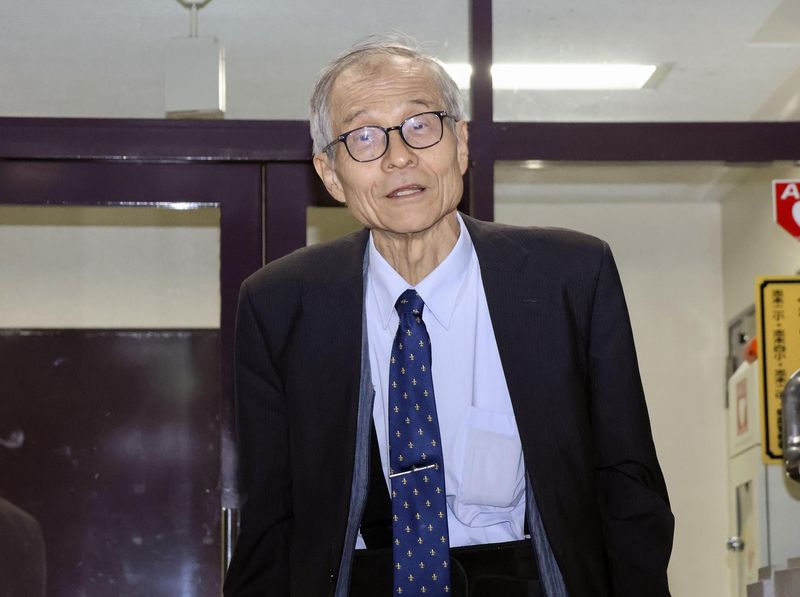
【Financial News, Tokyo = Correspondent Seo Hye-jin】“He is like a child, interested in even the smallest things. His curiosity has never changed.”
News that Genso Soai, a 76-year-old professor emeritus at Tokyo University of Science, had won the Nobel Prize in Chemistry brought to mind for fellow researchers a scholar who had devoted his life to research. Academics saw significance in the recognition of basic research into the origins of life, while students and people in his hometown expressed their pride.
According to NHK, The Nikkei and other outlets on the 7th, Eiji Yashima, a special professor at Taiwan’s National Tsing Hua University who had been in contact with Professor Soai for about 30 years, was delighted, saying, “I thought he would naturally receive it someday, but I didn’t expect it to be this year.” He described Soai as “a sincere gentleman who never boasts about himself” and “a man with the bearing of a scholar of old.”
What particularly caught researchers’ attention was the value of basic science. Professor Kazuaki Ishihara of Nagoya University Graduate School said, “Recent Nobel Prizes seemed to focus on applied fields, but this time basic research was brought into the spotlight,” adding, “That makes this an important award as well.”
Ishihara, who met Professor Soai at a symposium last August, said, “He had a passion for asking questions about topics that interested him and using the answers in his own research,” adding, “He is still someone who conducts research with strong conviction.”
Masahiro Murakami, professor emeritus at Kyoto University, who had worked in the same lab as Soai at the University of Tokyo, said, “He went beyond the bounds of organic synthesis chemistry and provided clues to fundamental questions in science,” adding, “As someone who was junior to him in the lab, I’m proud of him.”
Keisuke Suzuki, a specially appointed professor at Institute of Science Tokyo who received guidance from Professor Soai for his graduation research, also said, “I’m glad that the most fundamental achievement in basic science has been recognized.” He described it as “research that modeled how minute differences between molecules are amplified, causing one form to predominate, and conveys the appeal of basic science.”
Tsuneomi Kawasaki, a professor at Tokyo University of Science who had conducted joint research with Soai for more than 20 years, recalled his perseverance in advancing research and his thoughtful consideration for others. “He had the ability to keep research moving forward without letting it stall,” he said. “Whenever I struggled with my research, he always encouraged me.”
Leo Esaki, the 1973 Nobel Prize in Physics laureate and former president of the University of Tsukuba, also congratulated him, saying, “I’m glad that his achievement in pioneering a completely new field in basic chemical research has been recognized.” He added, “It is of great value to the advancement of science worldwide.”
To students at Tokyo University of Science, Professor Soai was both a “legendary professor” and an approachable senior researcher who would visit the lab with snacks. Graduate student Kaito Sasaki, 23, said, “He sometimes comes to the lab and gives us jelly and things like that,” adding, “His humility and ever-present smile have always made an impression on me.” He continued, “I want to become a researcher in the same field and make further advances.”
Jin-woo Jeong, a 25-year-old master’s student majoring in organic chemistry, recalled attending Professor Soai’s symposium last year. “He’s usually quiet, but he was charismatic when he gave his presentation,” he said. “I’m proud to be studying at the same university as a researcher who offered a clue to a problem that had remained unsolved for a long time.”
Congratulations also poured in from Soai’s hometown of Hiroshima. Chiho Koi, vice principal of Hiroshima University Junior High School, his alma mater, said, “The presence of an alumnus who has made a name for himself around the world is a great encouragement to students.”
Ryoji Makimoto, head of the alumni association for the junior and senior high schools, Acacia-kai, said, “He must have developed free-thinking ideas in a school culture that values student autonomy.” Koji Terao, mayor of Fuchu Town in Hiroshima Prefecture, where Soai is from, also welcomed the news, saying, “It is a great honor for the residents and has given children dreams and hope.”
[email protected] Seo Hye-jin Reporter