‘Nobel Prize While Grocery Shopping’: Soai Calls It ‘One of the Most Thrilling Days of My Life’
- Input
- 2026-10-07 21:58:09
- Updated
- 2026-10-07 21:58:09
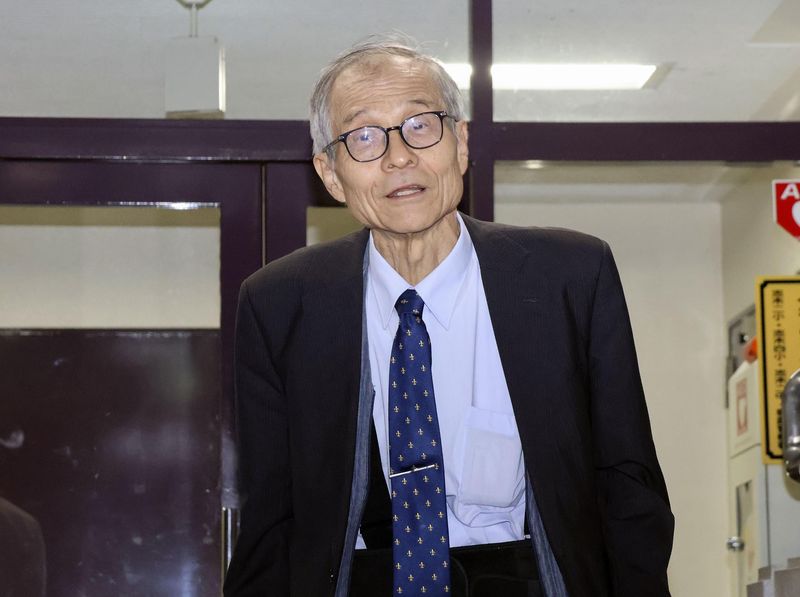
【Financial News, Tokyo—Correspondent Seo Hye-jin】Genso Soai, 76, professor emeritus at Tokyo University of Science and this year’s Nobel Prize in Chemistry laureate, recounted on the 7th the moment he was notified that he had won. Having spent more than 30 years studying the chemical reaction he discovered in 1995, he expressed his joy, calling it “one of the most thrilling days of my life.”
Soai joined a press conference at the Royal Swedish Academy of Sciences by phone that day and said, “It is an honor to receive the award alongside Professor Henri Kagan, whom I admire.” He continued, “I have carried on my research since discovering the autocatalytic reaction in 1995,” adding, “Winning the award is a great surprise.”
The question he pursued was why living organisms use one of the two mirror-image forms of a molecule. The Nobel Committee said the two laureates had provided an answer to a chemical mystery more than 100 years old: “How does homochirality emerge spontaneously?”
Some molecules exist in two forms that are mirror images of each other, like right and left hands, but cannot be perfectly superimposed. This property is called “chirality.” Even when made of the same elements, molecules can have different biological effects depending on their three-dimensional structure.
The amino acids that make up proteins in living organisms are, in practice, in the L-form—the left-handed one of the two mirror-image forms. By contrast, in ordinary synthesis, where no conditions favor either form, the two are produced in equal proportions. How homochirality, in which one form predominates, arose in living organisms is a key question in understanding the origin of life.
In 1986, Professor Kagan discovered the “nonlinear effect” in asymmetric catalytic synthesis. He showed that a small difference in the proportions of forms in a catalyst can appear much larger in the resulting products.
Professor Soai took this a step further. In 1995, he reported an “asymmetric autocatalytic reaction” in which the product itself acts as a catalyst, producing more molecules of its own form. Even when the initial difference in the amounts of the two forms was extremely small, the reaction continued and the predominant form increased further, greatly amplifying the difference. The reaction was named after him: the “Soai reaction.”
The research experimentally showed how an imbalance at the molecular level can develop into a much larger bias. In doing so, it offered an important clue to the process by which living organisms came to use molecules in only one form.
Asymmetric synthesis is also important to the pharmaceutical industry. One form of a drug molecule can produce the desired therapeutic effect, while the other may be ineffective or cause side effects. The two scientists’ discoveries also contributed to the design of reactions that selectively produce the desired form.
However, Professor Soai made clear that his research did not explain every step in the emergence of life. He described it as “a very fundamental problem deeply connected to the origin of life itself,” while adding, “Of course, this is not the final answer.”
Born in Hiroshima Prefecture in 1950, Professor Soai earned a doctorate in science from the University of Tokyo and worked as a postdoctoral researcher at the University of North Carolina in the United States. He became a professor at Tokyo University of Science in 1991 and has continued his research as professor emeritus since 2017.
Professor Soai said he intended to continue his research after receiving the award. Speaking to reporters outside his home in Saitama Prefecture that day, he said, “I would like to devote myself even more to research going forward,” and, “I hope the next generation will further advance this field.”
[email protected] Seo Hye-jin Reporter